The Reality of Dawn and Dusk Birding
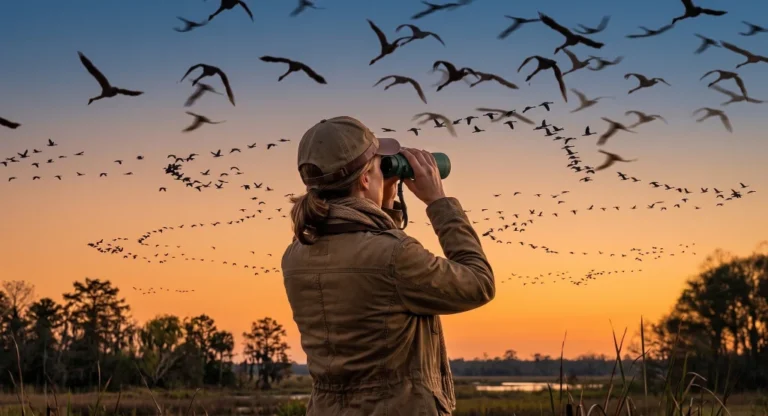
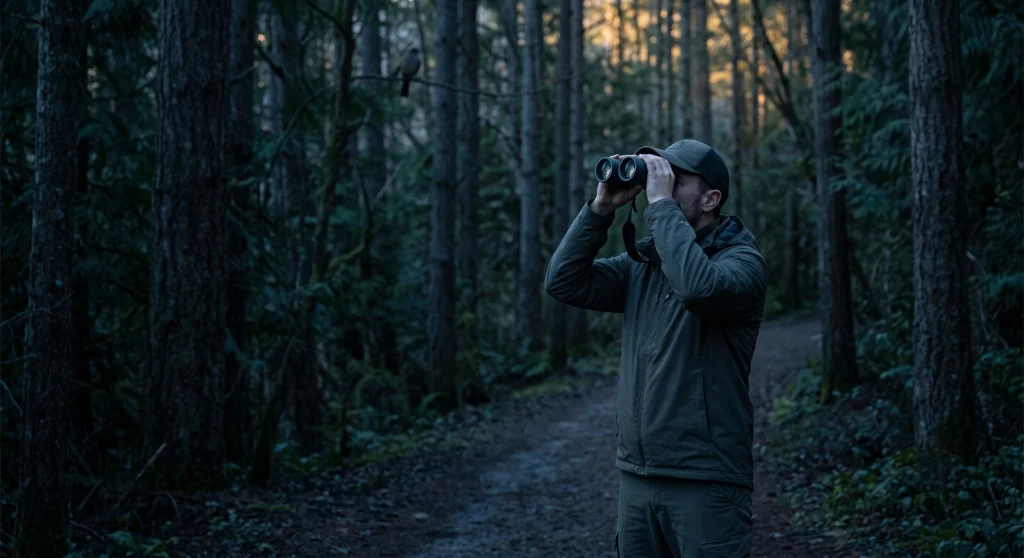
If you want the right binoculars for low light bird watching, you have to look past the numbers that matter at noon. The dawn chorus typically peaks thirty to sixty minutes after first light. This happens at exactly the moment when optical quality makes the most visible difference in the field. You are dealing with long shadows, thick canopy cover, and a sun that has barely cleared the horizon. In these conditions, standard daytime optics simply stop working effectively.
At the optics counter, I watched the same pattern repeat constantly. A birder would come in frustrated that their current pair worked beautifully in bright afternoon sun but left them looking at dark silhouettes at six in the morning. They usually assumed they needed more magnification to pull detail out of the shadows. Increasing magnification actually makes the image darker. To solve the low light problem, you have to fix the exit pupil instead.
Field Note: One of the most common mistakes I saw was a birder upgrading from an 8×42 to a 10×42 specifically hoping it would help them see better in the early morning woods. The math of optics works against that instinct entirely. The 10×42 actually gathers less usable light for your eye, making the dawn birding experience much more difficult.
The Low Light Equation and Your Eyes
The most critical specification for dawn birding binoculars is the exit pupil. This is the literal shaft of light that exits the eyepiece and enters your eye. You find this number by dividing the objective lens size by the magnification. For instance, an 8×42 binocular produces a 5.25 millimeter exit pupil. An 8×32 binocular produces a 4.0 millimeter exit pupil. In the middle of a bright day, that difference is virtually invisible.
If you want to see this physics in action, point your current binoculars at a bright window and hold a piece of white paper a few inches behind the eyepiece. You will see a distinct circle of light on the paper. That is the exit pupil of your instrument.
When the sun goes down, your own pupils dilate to take in more light. A healthy human eye can dilate anywhere from five to seven millimeters in the dark. If you are looking through a 4.0 millimeter exit pupil when your own eye is dilated to six millimeters, the binocular is starving your eye of light. The resulting image feels constrained, narrow, and noticeably dim. You want the exit pupil of the optic to closely match or exceed the dilation of your eye in those early morning hours.
This biological reality is why understanding binocular numbers and their meaning is so crucial before buying new gear. The larger exit pupil of an 8×42 fills your dilated eye with light, providing a significantly brighter image than what you see with your naked eye. Once you understand how this physical limitation works, choosing the right size for your lenses becomes much more straightforward.

High-density optics with XR anti-reflective coatings deliver exceptional edge-to-edge clarity and bright views across a wide 409 foot field of view, even in low light. Argon-purged and O-ring sealed for lifetime waterproof and fog-proof performance, with Armortek scratch-resistant exterior coating. A locking diopter, smooth center focus wheel, twist-up eyecups, and an included GlassPak chest harness round out this full-featured hunting binocular.
Check On AmazonIf you click this link and buy, we earn a commission at no additional cost to you.
The 8×42 Versus 8×32 Decision
Understanding the exit pupil makes the next decision much easier. You have to pick an objective lens large enough to generate a bright image without making the instrument too heavy to carry. This brings up the most common debate in birding optics: choosing between an 8×32 and an 8×42.
In bright daylight, the lighter 8×32 is fantastic. But the dawn chorus is exactly where the 8×32 falls short. Live Science tested this distinction in the field and reached the same conclusion. They found that the 8×32 falls short in low-light conditions, and sizing up to the 8×42 is the practical fix for dawn and dusk observation.
For most people, a 42 millimeter objective lens is the practical minimum I recommend for serious dawn or dusk observation. It provides enough light for early morning while keeping the weight manageable for an all-day hike. If you absolutely must have 10x magnification for distant open fields but still want to bird at dawn, you have to look at a 10×50. The 50 millimeter lens provides a 5.0 millimeter exit pupil, giving you both reach and light. The trade-off is a heavy optic that usually exceeds thirty ounces.
| Configuration | Exit Pupil | Low Light Performance | Typical Weight |
|---|---|---|---|
| 8×32 | 4.0mm | Adequate until sunset. Struggles in deep woods at dawn. | 16 to 20 oz |
| 8×42 | 5.25mm | Excellent all around. Bright enough for the dawn chorus. | 22 to 28 oz |
| 10×50 | 5.00mm | Great reach and brightness combined. Very heavy to carry. | 28 to 34 oz |

Fully multi-coated lenses and phase-coated BaK-4 prisms deliver bright, crisp, color-accurate images across all lighting conditions, with a wide 7.4 degree field of view for easy tracking. The rubber-armored polycarbonate body is waterproof, nitrogen-purged, and tripod-adaptable for extended sessions. Backed by a Celestron Limited Lifetime Warranty and US-based support.
Check On AmazonIf you click this link and buy, we earn a commission at no additional cost to you.
Glass Quality and Phase Correction
At noon on a clear day, a cheap binocular and a premium binocular can look remarkably similar to a beginner. Abundant sunlight covers up a lot of optical flaws. The true test of glass quality happens the moment the sun dips below the canopy. When you need reliable dusk birding binoculars, the chemical coatings applied to the glass matter just as much as the physical size of the lenses.
You need to look for binoculars that are fully multi-coated. This means every air to glass surface inside the barrel has multiple layers of anti-reflective coatings. These coatings ensure that maximum light reaches your eye instead of bouncing around inside the instrument. For roof prism binoculars, you also need phase correction. In flat, gray dawn lighting, phase-corrected prisms keep the contrast sharp so a dark bird actually stands out against a dark branch.
When people ask if expensive binoculars are worth the investment, dawn birding is the exact scenario where the answer is an obvious yes. Budget glass might transmit seventy-five percent of available light, while high-end glass pushes past ninety percent. At a quarter to six in a thick forest, that fifteen percent is the difference between identifying the colors on a warbler and just seeing a gray shape moving in the shadows.
Select HD glass elements with fully multi-coated, dielectric-coated lenses deliver exceptional sharpness, color fidelity, and light transmission, while Armortek coating protects exterior surfaces from scratches and oil. Argon-purged and O-ring sealed for waterproof, fog-proof performance in any conditions. Includes a GlassPak chest harness and backed by Vortex's unlimited, unconditional, fully transferable lifetime VIP Warranty.
Check On AmazonIf you click this link and buy, we earn a commission at no additional cost to you.
What to Avoid When the Light Drops
There are a few optical configurations you should actively avoid if you do most of your birding in low light conditions. The first is any compact binocular, specifically the 8×25 or 10×25 models. If you read our guide to compact binoculars for bird watching, you will see they have their place on sunny hikes. Using them at dawn, however, is an exercise in frustration. An 8×25 optic produces a tiny 3.1 millimeter exit pupil that will completely starve your dilated eyes of light.
Compacts are clearly the wrong tool for the job, but there is a second environmental problem that catches even birders with the right glass. Dawn air is almost always heavy with moisture. A cold morning will instantly fog up cheap, unsealed glass. You need binoculars that are nitrogen-purged and fully waterproof to prevent internal fogging, and you should always keep a lens cloth handy in your harness for the exterior glass.
Choosing an 8×32 specifically to save weight, expecting it to perform just as well as your old 8×42 during the dim morning bird walk.
Accepting a few extra ounces and choosing the 8×42 so you have a bright, usable image when the birds are actually active in the shadows.

Each 6 by 7 inch cloth is made from premium microfiber that lifts and absorbs dust, oil, fingerprints, and smudges without scratching, streaking, or leaving lint behind. Versatile enough for eyeglasses, camera lenses, phones, laptops, and screens of all types. Comes as a set of 6 individually packaged cloths, always clean and ready to use straight out of the bag.
Check On AmazonIf you click this link and buy, we earn a commission at no additional cost to you.
Close Focus Capability at First Light
When birders focus entirely on low light performance, they often forget about the other practical realities of being out in the woods. Dawn is when birds are highly active near the ground, foraging in the brush, and visiting backyard feeders. You need an instrument that gathers enough light but can also focus on a target sitting just a few feet away from you.
I have seen people buy massive optics for the light gathering capabilities, only to realize the minimum focus distance is twenty feet. When a bird hops into a bush eight feet off the trail, the optic is useless. A proper instrument must handle both distance and close range observation. Finding the right balance of these specifications is the core principle behind choosing any good binoculars for bird watching across all environments.
If you are unsure how these specific dawn requirements fit into your overall gear strategy, our binoculars buying guide can help map out your priorities before you make a purchase.

Extra-Low Dispersion glass eliminates color fringing for razor-sharp, true-to-life images, while phase-coated BaK-4 prisms maximize light transmission even at dawn or dusk. The rubber-armored polycarbonate body is fully waterproof, nitrogen-purged, and features built-in tripod adapter threads for shake-free extended viewing. Backed by a Celestron Limited Lifetime Warranty and US-based support.
Check On AmazonIf you click this link and buy, we earn a commission at no additional cost to you.
Making the Right Investment for Dawn
If you are consistently out the door before the sun is up, you cannot cheat the physics of light gathering. It is time to stop struggling with dark silhouettes and frustrating gear. Upgrading to a fully multi-coated 8×42 will solve the low light problem for the vast majority of birders.
Make sure the model you choose has phase-corrected prisms, check that the close focus is under eight feet, and confirm it is fully waterproof to handle morning dew. Once you have those specifications covered, make the investment. Good glass will completely change what you are able to see during the most active birding hours of the day.
FAQs
🦉 What are the best binoculars for dawn birding?
The standard recommendation for dawn birding is an 8×42 configuration. It provides a 5.25 millimeter exit pupil that lets in plenty of light while keeping the weight manageable for carrying all morning.
🌲 Why is 8×42 better than 8×32 for early morning birding?
An 8×42 has a larger objective lens, which creates a wider exit pupil. This delivers significantly more light to your dilated eyes in the dark, whereas an 8×32 often leaves the image feeling dim and washed out.
🦅 Why do my binoculars look blurry or flat in the shadows?
If your image looks flat in low light, your binoculars likely lack phase-corrected prisms or fully multi-coated lenses. Upgrading to glass with these advanced coatings will dramatically improve contrast in the shadows.
☀️ Do expensive binoculars work better in the dark?
Yes, premium binoculars perform significantly better in low light. They use higher quality glass and advanced coatings that transmit over ninety percent of available light, making colors and details pop even before sunrise.
🌧️ How do I stop my binoculars from fogging up on cold mornings?
You need to purchase binoculars that are nitrogen-purged and fully waterproof. This prevents internal fogging. For external fog on the lenses, keep a microfiber cloth handy in your chest harness.