The Decision Has a Right Answer
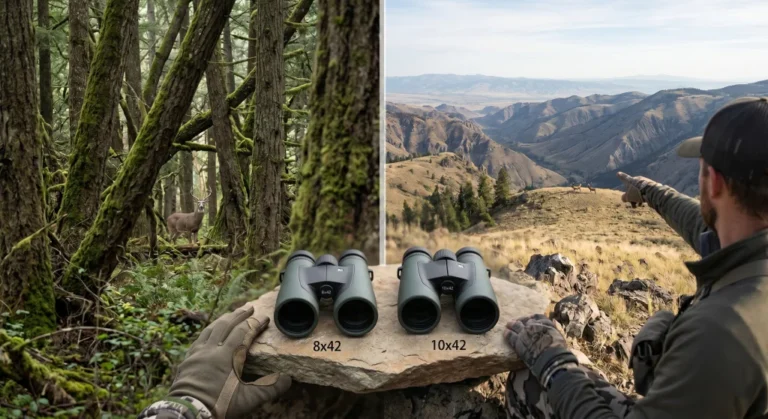
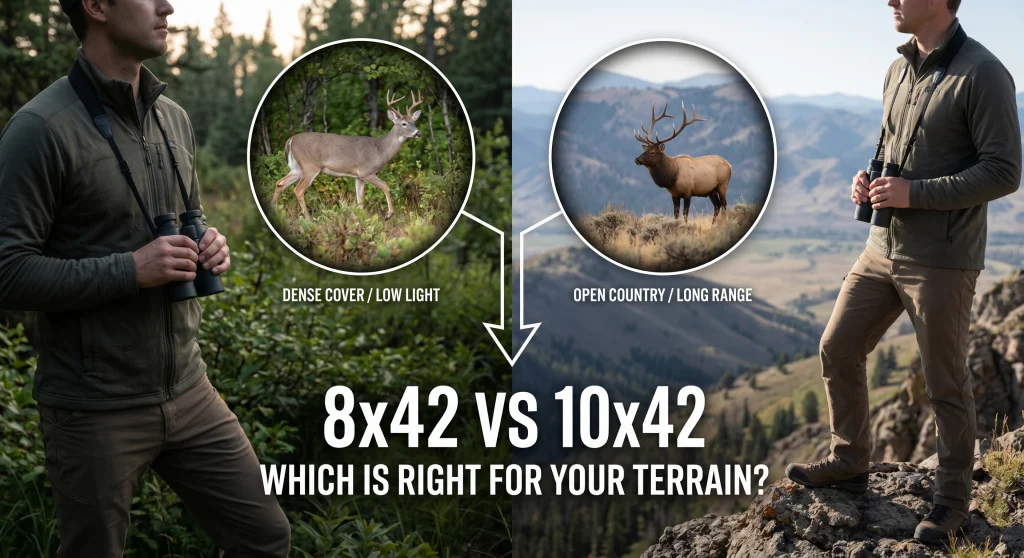
Most people walk up to the optics counter and treat this choice like picking a favorite color. They ask which one is better. When you compare 8×42 vs 10×42 binoculars, there is an objectively right answer, but it has almost nothing to do with what you prefer. It depends entirely on where you plan to stand.
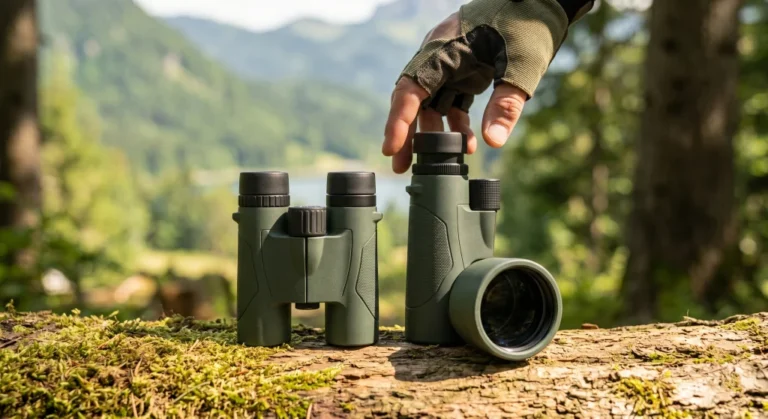
These two configurations share the exact same chassis. They both use a 42mm objective lens to gather light. They belong to the same size class, the same weight category, and usually sit at the exact same price point within a manufacturer’s lineup. If you need a refresher on how these baseline numbers function, my overview on binoculars explained covers the foundational rules.
Because the physical footprint is identical, the comparison is entirely about what a two-power difference in magnification does to your image. Adding that extra magnification does not just make things bigger. It alters the fundamental physics of the light reaching your eye. Understanding the difference between 8×42 and 10×42 binoculars means understanding those hidden optical trade-offs.
Field Note: I have watched this confusion play out more times than I can count at the counter. A customer will buy a 10×42 for walking their local wooded trails. A week later, they return them. They complain the image is too shaky and they cannot find a bird before it flies away. They assume they bought a defective pair. What they actually bought was the wrong magnification for their habitat.

Select HD glass elements with fully multi-coated, dielectric-coated lenses deliver exceptional sharpness, color fidelity, and light transmission, while Armortek coating protects exterior surfaces from scratches and oil. Argon-purged and O-ring sealed for waterproof, fog-proof performance in any conditions. Includes a GlassPak chest harness and backed by Vortex's unlimited, unconditional, fully transferable lifetime VIP Warranty.
Check On AmazonIf you click this link and buy, we earn a commission at no additional cost to you.
The Optical Numbers That Actually Change
To see why these two identical-looking tools behave so differently in the field, we have to look past the magnification number. The most important differences show up in the secondary specifications. For a highly technical breakdown of the math, you can read exactly what 8×42 means and what 10×42 means in my dedicated configuration guides. For our purposes here, we will focus on how they compare.
The Exit Pupil Difference
Exit pupil is the size of the shaft of light that leaves the eyepiece and hits your eye. You calculate it by dividing the objective lens by the magnification. An 8×42 produces a 5.25mm exit pupil. A 10×42 produces a 4.2mm exit pupil.
In bright daylight, your own pupil shrinks to about 2mm or 3mm. Because both shafts of light are larger than your pupil, both binoculars look equally bright. You will not notice a difference at noon. The gap appears at dawn and dusk. When the sun goes down, your pupil dilates to 5mm or more to let in more light. Suddenly, that 5.25mm exit pupil of the 8×42 easily fills your eye with light. The 4.2mm exit pupil of the 10×42 falls short, making the image feel noticeably dimmer and harder to align with your eyes.
The 8×42 vs 10×42 Field of View
Every time you increase magnification, you narrow the window you are looking through. The 8×42 vs 10×42 field of view gap is usually between 15 and 25 percent. This is a massive difference in real-world scanning. When you lift the 8×42 to your eyes, you see a wide chunk of the landscape. When you lift the 10×42, it feels more like looking through a paper towel tube.
Take the Athlon Midas G2 line as a real example. The 8×42 model provides a 426-foot field of view at 1,000 yards. The exact same binocular in 10×42 drops to 341 feet. That means the 8×42 gives you 85 extra feet of visible landscape to catch movement. If a deer steps out of the brush, or a bird flits between branches, the wider view catches it immediately.
| Specification | Typical 8×42 | Typical 10×42 |
|---|---|---|
| Magnification | 8x (Moderate) | 10x (High) |
| Exit Pupil | 5.25mm (Excellent low light) | 4.2mm (Good low light) |
| Field of View | 350 to 430 feet | 300 to 350 feet |
| Handheld Stability | Very steady | Noticeable tremor |
Looking at these numbers, the choice starts to become clear. You are trading a wider, brighter, steadier image for the ability to pull a distant object 25 percent closer.

ED glass combined with ESP dielectric coating delivers razor-sharp, edge-to-edge clarity with accurate color reproduction and exceptional brightness. The lightweight magnesium chassis matches metal durability at reduced weight, while XPL lens coating resists scratches and dirt buildup for lasting clarity in the field. A well-rounded performer for hunting, birdwatching, and stargazing from a dedicated US sports optics brand.
Check On AmazonIf you click this link and buy, we earn a commission at no additional cost to you.
How to Test the 10x Tremor Yourself
I always tell people not to take my word for the 10x stability issue. You can test it yourself before you buy. When you are at the store, pick up a 10×42 binocular and find a fixed point at the far end of the building, like a small sign or a barcode on a display. Focus on it and try to hold it perfectly steady for 30 seconds.
Notice how much the image dances around that point. The fatigue you feel in your arms and eyes trying to stabilize that image is exactly what you will experience in the field. Then, pick up the 8×42 and repeat the test on the same target. The difference in viewing comfort usually makes the decision for you immediately.
When 10×42 Wins the Comparison
Despite the optical penalties in field of view and stability, the 10×42 is the most popular choice for serious western hunters and open-country wildlife watchers. There is a very specific environment where 10×42 or 8×42 becomes an easy choice, and that environment is open terrain at long distances.
If you are glassing ridgelines for elk, watching waterfowl in a massive open marsh, or identifying shorebirds across a coastal flat, the 10×42 earns its keep. In these situations, the animal is usually far away and relatively stationary. You do not need a massive field of view to catch a flying bird. You need raw resolving power to count antler points or identify the specific coloration on a duck’s wing at 300 yards.
Distance identification is genuinely better at 10x. When you have the time to sit down, rest your elbows on your knees to eliminate the hand tremor, and carefully scan an open mountainside, the 10×42 shows you details the 8×42 simply cannot resolve. If your regular glassing happens past 200 yards in spaces where the sky meets the ground, 10x is the tool you need.
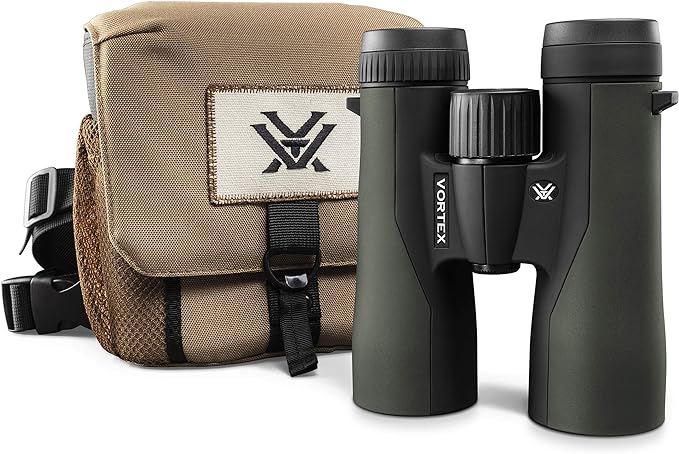
Select HD glass elements with fully multi-coated lenses deliver exceptional edge-to-edge sharpness, color fidelity, and light transmission in a compact roof prism design. Nitrogen-purged and O-ring sealed for waterproof, fog-proof performance in any conditions, with rubber armor for shock resistance and a secure grip. Twist-up eyecups, a center focus wheel, diopter adjustment, and Vortex's unlimited, unconditional, fully transferable lifetime VIP Warranty complete the package.
Check On AmazonIf you click this link and buy, we earn a commission at no additional cost to you.
When 8×42 Wins the Comparison
For almost everyone else, the 8×42 is the superior optic. It dominates in dense cover, in fast-acquisition situations, and in challenging lighting conditions. If you are standing in a forest, the sightlines rarely extend past 75 yards before trees block the view. At that distance, 10x magnification is entirely unnecessary.
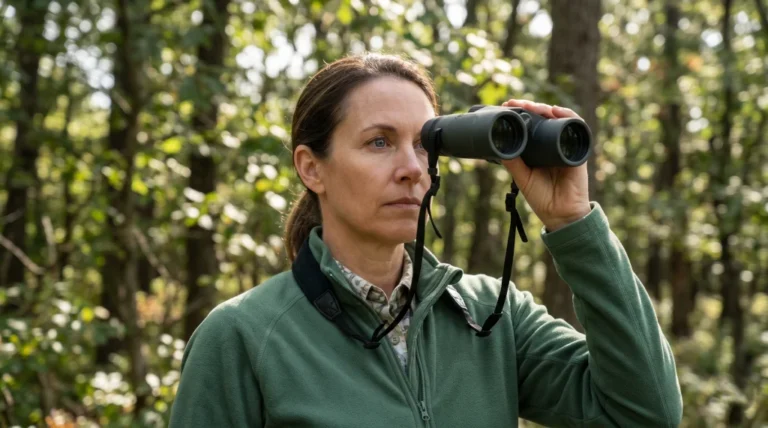
The true power of the 8×42 is target acquisition speed. When a warbler lands in a dense canopy, you have about three seconds to raise your binoculars and find it. The wide field of view of the 8×42 means that even if your aim is slightly off, the bird will still be somewhere in your sight picture. With a 10×42, that same slight error means you are staring at empty leaves. This specific advantage is why the 8×42 is the default configuration recommended in our guide to binoculars for bird watching.
First-Time Buyer Mistake: The most common error I see is a beginner assuming that 10x is simply a “pro” version of 8x. They think paying the same money for more magnification is just smart shopping. In reality, a beginner will struggle to hold a 10×42 steady, and they will constantly lose their subject because the field of view is too narrow. If this is your first pair of serious optics, buy an 8×42. It is vastly more forgiving to learn on.
The Hidden Advantage for Glasses Wearers
There is one specific user group who should almost always lean toward an 8×42: people who wear eyeglasses. This goes back to the exit pupil math we discussed earlier, but it plays out uniquely for someone wearing prescription lenses.
When you wear glasses, your eye sits further back from the eyepiece. Even with the eyecups correctly adjusted, your eye position is slightly less stable than someone resting the rubber directly against their brow. Because an 8×42 produces a large 5.25mm exit pupil, it creates a massive, forgiving window of light. If your glasses slide down your nose slightly, or if you raise the binoculars off-center in a hurry, your eye will still catch the image.
The 4.2mm exit pupil of a 10×42 demands much tighter alignment. If a glasses wearer is even slightly off-axis, they will instantly see dark crescent shadows creeping in from the edges of the image. This causes severe eye fatigue over a long afternoon of viewing. If you must keep your glasses on while observing, the 8×42 makes life significantly easier.

The flagship of Nikon's PROSTAFF line, featuring phase-correction coated roof prisms with dielectric multilayer coating for maximum light transmission, lifelike color, and edge-to-edge clarity across a wide 377 foot field of view. Waterproof, fog-proof, and wrapped in shock-resistant rubber armor over a fiberglass-reinforced polycarbonate body for dependable performance in any conditions. A locking diopter, turn-and-slide eyecups, long eye relief, and oil and water-repellent lens coatings round out this premium package.
Check On AmazonIf you click this link and buy, we earn a commission at no additional cost to you.
The 200-Yard Terrain Decision Rule
Once you understand the optical strengths of both configurations and how they interact with your eyesight, the final decision usually comes down to geography. If you are still wondering which is better 8×42 or 10×42, you can use a very simple distance threshold to make the choice. I call it the 200-yard terrain rule. It removes all the guesswork from the equation.
Think about the physical locations where you spend the most time looking through optics. Estimate the distance to the farthest thing you regularly need to identify in detail. If your target is consistently under 200 yards away, or if you are surrounded by brush and trees, choose the 8×42. If you are regularly glassing open landscapes where your targets sit beyond 200 yards, choose the 10×42.
Choosing a 10×42 for hunting in thick eastern hardwood forests because you want the best possible view of a deer. The deer will appear close, move fast, and the 10×42 will be too narrow to track it through the timber.
Choosing an 8×42 for the eastern woods to maximize speed, and choosing a 10×42 for western alpine ridges where you need to evaluate an elk from two hillsides away.
This terrain rule is exactly why the hunting community is split geographically. Eastern whitetail hunters almost universally prefer an 8×42. Western mule deer and elk hunters strongly favor a 10×42. They are not arguing about preference. They are just buying the right tool for their specific side of the country. You can see this logic applied further in our guide to choosing binoculars for hunting.
What If You Need One Pair for Everything?
Many buyers do not have the budget for a dedicated hunting binocular and a separate birding binocular. They need one optic that can travel in a backpack, sit on the kitchen window sill, and go into the deer woods. If you are buying for mixed use, the 8×42 is unequivocally the better choice.
An 8×42 can do 90 percent of what a 10×42 can do at long distance, but a 10×42 is often entirely unusable in the tight, fast-paced situations where an 8×42 thrives. The wider field of view and brighter low-light image make it the ultimate generalist tool. You only sacrifice the extreme long-range detail, which most casual users rarely need on a daily basis.
Select HD glass elements with fully multi-coated lenses deliver exceptional edge-to-edge sharpness, color fidelity, and light transmission in a compact roof prism design. Nitrogen-purged and O-ring sealed for waterproof, fog-proof performance in any conditions, with rubber armor for shock resistance and a secure grip. Tripod-adaptable and backed by Vortex's unlimited, unconditional, fully transferable lifetime VIP Warranty.
Check On AmazonIf you click this link and buy, we earn a commission at no additional cost to you.
Final Thoughts: Bringing the Variables Together
The debate between 8×42 and 10×42 does not have to be complicated once you stop treating it as a contest. Your terrain sets the baseline, your eyesight requirements filter the options, and your need for versatility makes the final call. If you apply the 200-yard rule and honestly assess how often you glass in the woods versus the open plains, the right tool reveals itself. If you want to see exactly how this framework applies to specific outdoor pursuits, I have broken down the optical math for birding, hunting, and broader comparisons in the related guides below.
Related Deep Dives for This Decision
| Topic | What You Will Learn |
|---|---|
| 8×42 vs 10×42 Binoculars for Bird Watching | How habitat type and close focus requirements decide the winner for serious birders. |
| 8×42 vs 10×42 Binoculars for Hunting | The exact distance thresholds and terrain types that dictate which magnification to pack. |
| 8×42 vs 10×50 Binoculars | How to choose when you are comparing across both magnification and objective size simultaneously. |
FAQs
🦅 Which is better 8×42 or 10×42 for birding?
An 8×42 is better for the vast majority of birding. The wider field of view makes it much easier to track fast-moving birds in the trees, and the better close-focus distance is ideal for observing birds in a garden setting.
🦌 Are 10×42 binoculars too powerful for hunting?
They are too powerful for hunting in dense woods where shots are under 100 yards. However, for western hunters glassing open terrain and ridgelines at 400 yards or more, 10×42 is the standard recommendation.
🌙 Do 8×42 binoculars work better in low light?
Yes. Because they have a larger exit pupil (5.25mm compared to 4.2mm), 8×42 binoculars deliver a brighter, more usable image to your eye at dawn and dusk when your pupils are dilated.
👓 Should I buy 8×42 or 10×42 if I wear glasses?
You should strongly consider the 8×42. The larger exit pupil provides a much wider window of light, making it far more forgiving if your eye position shifts slightly behind your eyeglass lenses.