The Heavyweight Default for Serious Outdoor Glassing
When you look at the default choices for serious outdoor gear, one configuration outsells almost everything else among backcountry hunters and long-distance observers. If you have ever stared at a box trying to decipher the binoculars 10×42 meaning, you are not alone. During my days working behind the retail optics counter, this was the exact setup that experienced users gravitated toward when they needed more resolving power. Most buyers assume that more power is always better, but that is rarely the case in practical field conditions.
To answer the fundamental question of what is 10×42 binoculars in terms of actual field utility, we have to look past the marketing. The numbers on the box represent a specific engineering compromise between pulling far-off details into focus and managing physical limitations. Deciphering the math behind your optics is only the first step. To truly get a sense of how these digits dictate your view, checking out our comprehensive guide on binoculars numbers meaning can help paint the complete picture.
To see why this specific setup dominates the western hunting market, we need to unpack how those two simple numbers—10 and 42—translate directly into your field of view, brightness, and handling.
Decoding the Magnification and Objective Lens
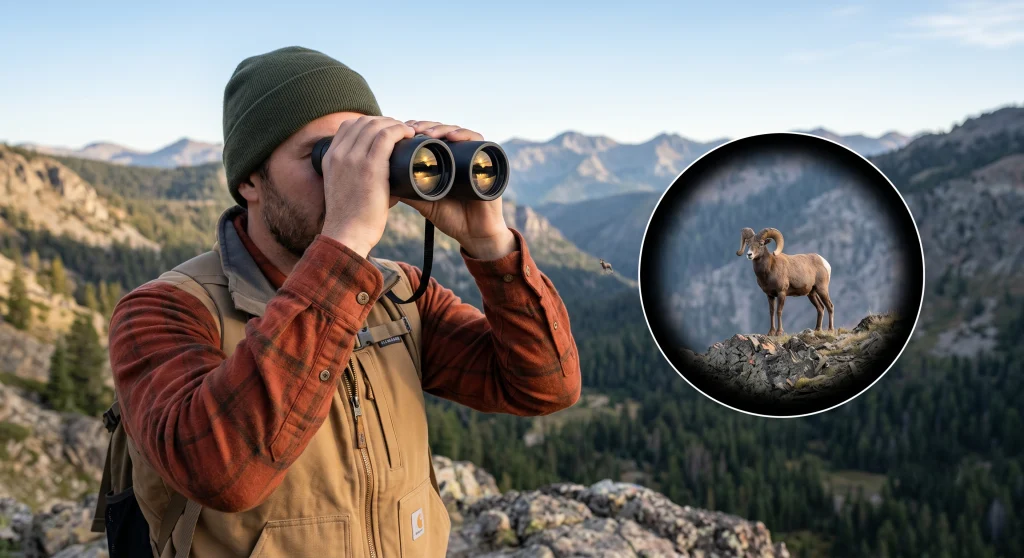
The first number in this standard configuration designates the magnification level. At 10x, objects appear ten times closer than they would to your unaided eye. If you are watching an elk on a ridgeline 400 yards away, the image presented to your brain will appear as if the animal were sitting just 40 yards from your position. This 25 percent increase in magnification over a standard 8x glass has profound effects on detail resolution, helping you identify antler points or distinct plumage marks that lower-power optics might miss.
The second number represents the diameter of the objective lenses, measured in millimeters. The 42 mm front lenses act as the light-gathering engines of the optic, determining how much raw light can enter the barrels. While a larger objective lens captures more ambient light, it also adds physical weight and bulk to the overall chassis. Understanding how these measurements balance against body materials and prism choices is part of the larger framework. For a broader view, our detailed breakdown of binoculars explained offers a complete entry-level overview of all major specs.
Low-Light Performance and the 10×42 Exit Pupil
One of the most critical secondary specifications calculated from these numbers is the exit pupil. The 10×42 exit pupil is determined by dividing the objective lens diameter by the magnification power, which results in a 4.2 mm beam of light leaving the eyepiece. We express this relationship mathematically as 42 ÷ 10 = 4.2 mm. In bright daylight, when the human pupil naturally contracts to around 2 to 3 mm, this beam of light is more than wide enough to cover your eye. The image will appear perfectly bright, crisp, and comfortable during midday scouting sessions.
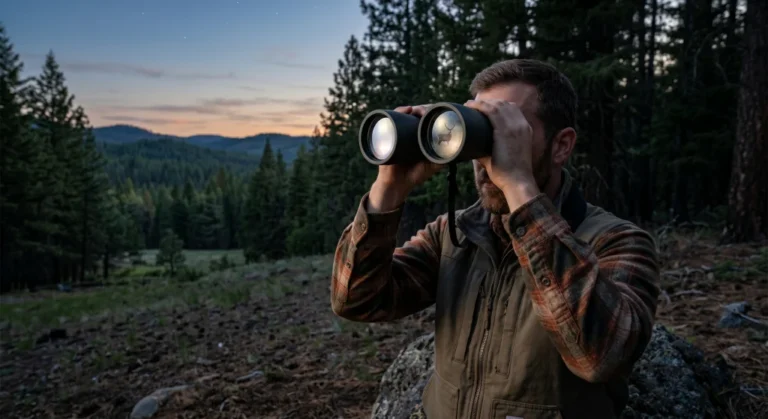
The reality changes dramatically as twilight approaches. At dawn and dusk, the human pupil dilates to between 5 and 7 mm to let in more light. Because the light beam coming through a 10×42 model is capped at 4.2 mm, it can no longer fully fill your dark-adapted pupil. This mismatch creates a noticeable drop in perceived image brightness compared to configurations with larger exit pupils, making targets in deep shadows harder to distinguish.
Field Note: I watched this exact scenario play out repeatedly at the retail counter. A customer came in looking to replace an old pair of low-light binoculars for stand hunting. They were convinced that a 10×42 model would be a massive upgrade because of the high magnification. I had them look through a 10×42 and a larger-exit-pupil model in our dimly lit warehouse corridor. They immediately realized how much dimmer the higher-magnification image felt when their eyes dilated, proving that more magnification can sometimes work against you when the sun goes down.

Select HD glass elements with fully multi-coated, dielectric-coated lenses deliver exceptional sharpness, color fidelity, and light transmission, while Armortek coating protects exterior surfaces from scratches and oil. Argon-purged and O-ring sealed for waterproof, fog-proof performance in any conditions. Includes a glass pak harness and is backed by Vortex's unlimited, unconditional, fully transferable lifetime VIP Warranty.
Check On AmazonIf you click this link and buy, we earn a commission at no additional cost to you.
Field of View and Close Focus Constraints
A higher magnification level inevitably restricts the width of the landscape you can see at one time. In standard 10×42 binoculars specs, you will find a field of view that typically spans between 300 and 360 feet at 1,000 yards. This is roughly 15 to 25 percent narrower than what an equivalent 8×42 model from the same design line would produce. For example, the Athlon Midas G2 8×42 offers 426 feet of horizontal coverage, while the exact same line in 10×42 drops to 341 feet. That narrower window requires more precise panning to track a subject.
This variance is not unique to one brand. A budget Celestron Outland X 10×42 offers a tighter 291-foot field of view, while a mid-tier Vortex Viper HD 10×42 opens up to 341 feet, and a premium Leica Trinovid HD 10×42 delivers 339 feet. The higher you go in manufacturing quality, the better the optical design manages to retain a wider viewing window, even within the same physical configuration constraints.
Another consequence of the 10x optical design is a more restrictive close focus distance. Most 10×42 models struggle to focus on objects closer than 8 to 12 feet, whereas lower-power alternatives can routinely focus down to 5 or 6 feet. This difference comes down to optical physics: to achieve 10x magnification, the ocular and objective lenses require a longer focal length. This design demands greater physical travel from the internal focusing lens. Within a standard mid-size chassis, there is simply not enough physical track for the focusing lens group to move close enough to resolve near-distance objects without causing optical alignment issues.

High-density optical glass with advanced anti-reflective and dielectric multi-layer prism coatings delivers stunning image clarity, true color accuracy, and top-tier light transmission. Argon-purged and O-ring sealed for waterproof, fog-proof performance in any conditions. The compact rubber-armored chassis with Armortek exterior coating handles rugged field use, with multi-position eyecups and a locking diopter for a precise, comfortable fit with or without glasses.
Check On AmazonIf you click this link and buy, we earn a commission at no additional cost to you.
Eye Relief: The Spec That Does Not Scale
One critical detail that the 10×42 specification does not dictate is eye relief. This measurement dictates how far your eye can be from the eyepiece while still seeing the full image, and it varies wildly by model. Some buyers assume that a larger binocular automatically accommodates eyeglasses, but the physical chassis dimensions have nothing to do with the ocular lens design.
If you wear glasses, you need a minimum of 14 to 15 mm of eye relief. I have seen buyers purchase a premium 10×42 only to return it because the 12 mm eye relief produced a dark ring around their view while wearing their prescription lenses. You must check this specification independently for every model you consider.
Handheld Tremor and Stability Challenges
Holding a high-power optic steady requires more physical effort than most first-time buyers expect. At 10x, the natural, involuntary micro-tremors in your hands are amplified by 25 percent compared to an 8x glass. In practical terms, this extra wobble can affect image stability unless you can brace your elbows against a solid surface. Over extended glassing sessions, the constant cognitive effort your brain expends to filter out this visual shake leads to noticeable eye strain.
Aside from image shake, the physical weight of a 10×42 model plays a major role in hand stability. A typical 10×42 weighs between 22 and 32 ounces. This variance comes down to housing materials: magnesium alloy housings are exceptionally strong and lightweight but expensive, while polycarbonate housings are cheaper but can feel bulkier in hand. Pushing a heavy 30-ounce glass to your eyes for hours will wear down your shoulders, amplifying your hand tremors much faster than a lightweight 24-ounce model.
Another stability-related detail is diopter sensitivity. At 10x magnification, the depth of field is shallower, making your diopter adjustment incredibly sensitive. A micro-adjustment on a 10×42 diopter ring results in a much larger shift in focus than it would on an 8x glass. If you frequently share your binoculars with a partner, you will find yourself constantly re-calibrating that right eyepiece, as even a hairline misalignment becomes instantly obvious and causes rapid eye strain at high power.
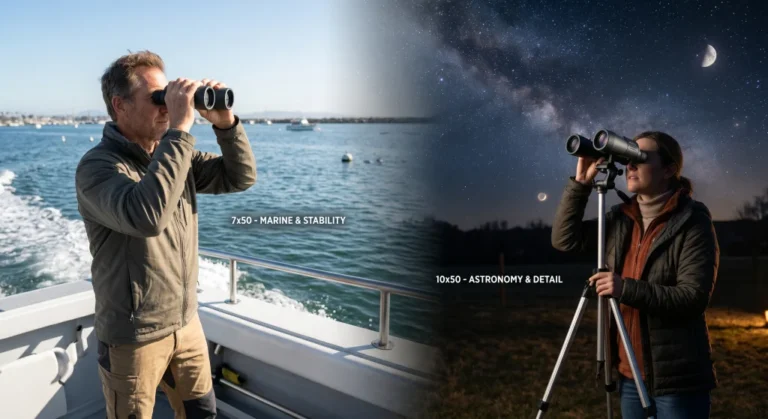
This physical trade-off is why 10x is widely considered the maximum ceiling for handheld outdoor optics. Anything higher typically requires a tripod adapter, whereas a 10×42 is just on the edge of comfortable handheld use for most people. To help visualize how these different parameters balance out, the table below maps out the direct optical consequences of choosing this configuration.
| Optical Specification | 10×42 Performance Metric | Practical Field Consequence |
|---|---|---|
| Magnification Power | 10x (10 times closer) | Excellent resolving power for distant, stationary subjects. |
| Objective Lens Diameter | 42 mm | Standard mid-size weight; balanced daytime light gathering. |
| Exit Pupil Beam | 4.2 mm | Bright in daylight; noticeable dimming during deep twilight. |
| Typical Field of View | 300 to 360 feet at 1,000 yards | Narrower viewing window; requires precise panning. |
| Minimum Close Focus | 8 to 12 feet | Limits observation of subjects at very close range. |

This hook-and-loop strap adapter instantly secures any size binoculars to a standard tripod without tools or screws, making it faster and easier to mount than traditional screw-based adapters. Compatible with virtually any binoculars, including models without a threaded tripod socket, and features a universal quarter-inch 20 screw thread for broad tripod compatibility.
Check On AmazonIf you click this link and buy, we earn a commission at no additional cost to you.

ED glass with multilayer lens and prism coatings delivers vivid, lifelike color and razor-sharp resolution at 10x magnification, with 42mm objectives gathering ample light for clear views at dawn or dusk. A 357 foot field of view keeps distant birds and wildlife in sharp focus at 1,000 yards. Waterproof, fog-proof, and rubber-armored with oil and water-repellent lens coatings, turn-and-slide eyecups, and long eye relief for all-day comfort.
Check On AmazonIf you click this link and buy, we earn a commission at no additional cost to you.
Final Thoughts: Navigating Your Decision in the Field
Ultimately, choosing a 10×42 configuration is a deliberate commitment to prioritize long-range detail over low-light brightness and wide views. The mathematics behind these optics dictate a very specific set of physical realities. If your regular viewing activities involve open valleys, mountain ridges, or coastal shorelines where your subjects are far away and stationary, the extra resolving power is your most valuable asset.
To see how these optical trade-offs compare head-to-head against lower magnification options in the field, move on to our comprehensive comparison of 8×42 vs 10×42 binoculars. For those preparing for a specific trip, you can explore our detailed guide on binoculars for hunting to see exactly how distance thresholds and terrain types dictate your choice of optics. If your next trip takes you into open country where those distant details make or break the stalk, the 10×42 configuration is exactly the tool your hunt requires.
FAQs
🔎 What does the 10×42 configuration mean?
The first number means the binoculars magnify the image 10 times, making distant objects appear much closer. The second number indicates that the front objective lenses are 42 millimeters in diameter, which controls the light-gathering capacity of the optic.
👓 Can I use a 10×42 optic if I wear eyeglasses?
Yes, but you must check the eye relief specification independently because it is not determined by the 10×42 numbers alone. Look for a model that offers at least 14 to 15 mm of eye relief so you can see the full image without dark edges while wearing your glasses.
🦉 Is a 10×42 model good for twilight wildlife watching?
It is functional, but it is not the absolute best choice for deep low-light conditions. The 4.2 mm exit pupil will make the image appear slightly dimmer at dawn or dusk compared to configurations with larger exit pupils, like an 8×42 or 7×50.
⛰️ Do I need a tripod to use 10×42 binoculars?
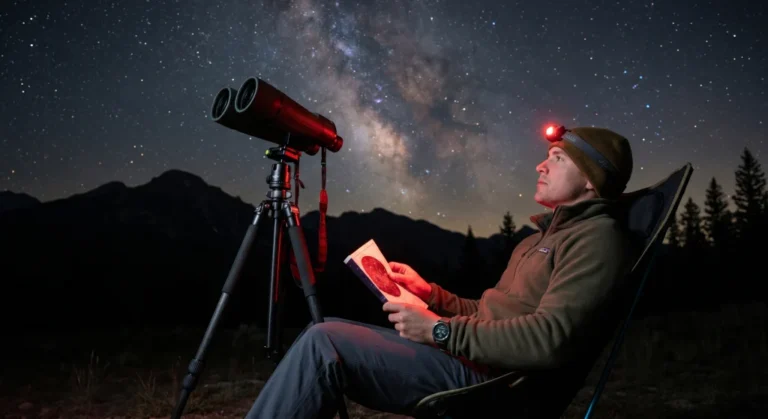
No, most users can hold a 10×42 model steady enough for handheld use, though you will notice more hand shake than with an 8x model. For extended glassing sessions or detailed stargazing, mounting them on a tripod using an adapter will greatly improve image stability.