The Binoculars 10×50 Meaning: A Counterintuitive Trade-Off
If you are looking for the binoculars 10×50 meaning, the simple math is easy to find. The “10x” tells you the magnification power, meaning objects will appear ten times closer than they do to your naked eye. The “50” refers to the diameter of the objective lenses in millimeters. Those are the large lenses at the front that gather light.
That is the textbook definition. Over my years at the optics counter, I noticed that almost every customer who asked what does 10×50 mean on binoculars immediately assumed it was universally better than a 10×42. It sounds like a pure upgrade. You get the same powerful magnification, but with larger lenses to capture more light.
In practice, it is not a direct upgrade. It is a very specific tool built for a very specific lighting condition. When you increase the objective lens size from 42mm to 50mm while keeping the magnification the same, you change the physical geometry of the optic. You gain a massive advantage in low-light brightness, but you sacrifice portability and, surprisingly, you almost always lose some of your viewing angle. To understand if this is the right choice for you, we have to look at what that 50mm lens actually does in the field.
What the 50mm Objective Lens Actually Adds
The primary reason anyone chooses a 50mm objective over a 42mm is light transmission. A 50mm lens has roughly forty percent more surface area than a 42mm lens. That is a massive increase in the amount of ambient light the instrument can physically collect.
This light-gathering capability is measured by a specification called the exit pupil. You calculate this by dividing the objective lens by the magnification. The 10×50 exit pupil is 5.0mm, whereas a 10×42 has an exit pupil of 4.2mm. In the middle of the day, your own pupils shrink to about two or three millimeters. Because both exit pupils are larger than your eye’s opening, your iris physically blocks the extra light. At noon, both configurations look identical in brightness.
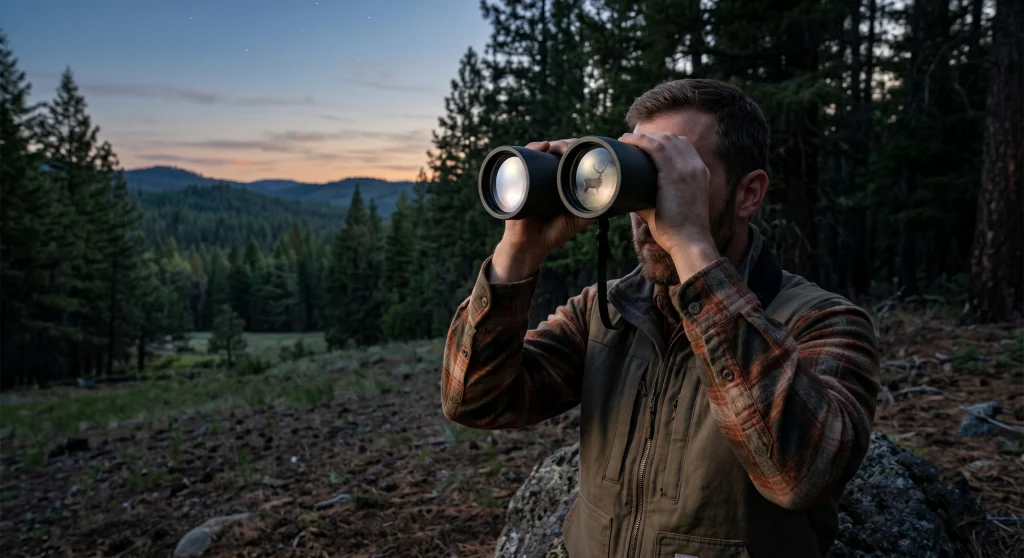
The difference reveals itself entirely at the edges of the day. When the sun drops below the horizon, your pupils dilate to five to seven millimeters to let in more light. This is when the 5.0mm exit pupil of the 10×50 fills your eye with usable light.
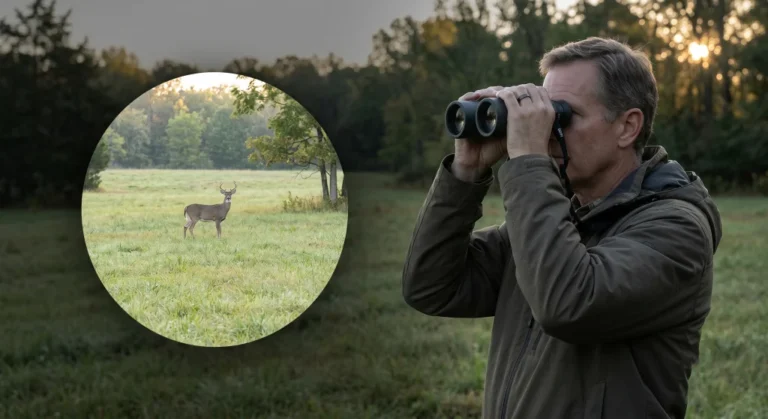
Field Note: This is not just theory. In a head-to-head field test conducted by OpticsForce comparing 10×42 and 10×50 models from the same line, the 50mm objective reliably delivered five to ten minutes of additional viewable light during evening glassing. When you are waiting for a buck to step out of the timber at last light, those five minutes are the entire reason you carry the heavier glass.
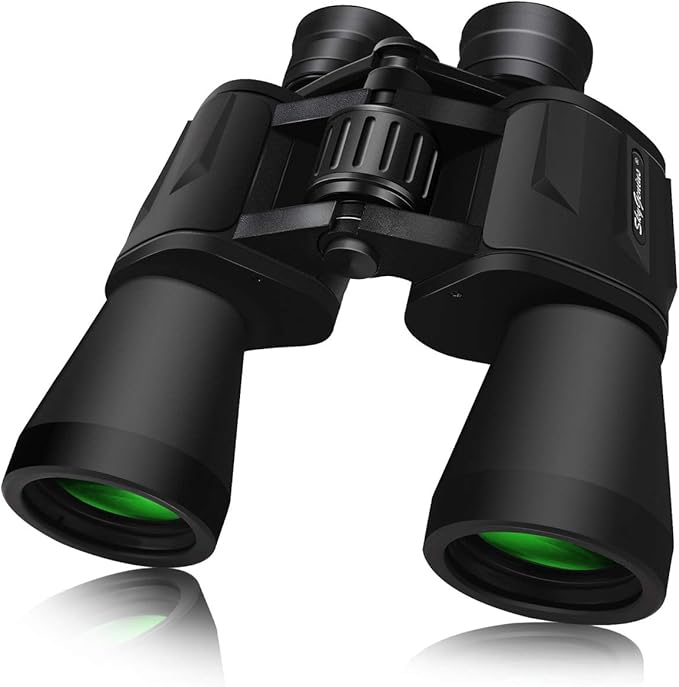
Aspherical lenses with multi-layer coating deliver bright, high-contrast images across a wide 367 foot field of view, making them capable in low light though not in complete darkness. The 50mm objective lens and 10x magnification excel at tracking fast-moving subjects like birds and sports. Odorless rubber armor provides shock resistance and a firm grip, with a smooth center focus knob, diopter adjustment, and twist-up eyecups for comfortable use with or without glasses.
Check On AmazonIf you click this link and buy, we earn a commission at no additional cost to you.
The Hidden Catch: Why Your Field of View Shrinks
This is the counterintuitive reality that frustrates many first-time buyers. When comparing 10×50 vs 10×42 binoculars, logic suggests that looking through a larger front window should give you a wider view of the landscape. The actual physics work the other way.
Field of view is determined by the angle of the eyepiece and the focal length of the optical system. To accommodate a larger 50mm objective lens and maintain focus quality, manufacturers typically have to lengthen the optical path inside the barrel. That longer path directly narrows your viewing angle.
If you look at the specification sheets from premium optics brands, you will see this pattern repeat. For example, the Tract Toric UHD 10×42 model provides a 341-foot field of view at a thousand yards. The exact same optical design in their 10×50 model drops that field of view to 304 feet. This pattern of more light but a narrower view shows up consistently across real-world comparisons, and it is a recurring topic in hunter optics forums like Rokslide. You are getting a brighter image, but you are looking through a narrower pipe.
Key Point: Do not buy a 10×50 expecting to see more of the landscape at once. You will see a brighter image, but you will see less total area than you would with a 10×42.
Weight, Handling, and the Close Focus Penalty
The transition from a 42mm to a 50mm objective lens changes how the instrument feels in your hands. The larger glass elements require larger internal prisms and wider chassis barrels to house them. To put this abstract concept into perspective, let’s look at real numbers from a couple of popular lineups.
| Configuration | Example Model | Weight |
|---|---|---|
| 10×42 | Vortex Diamondback HD | 21.6 oz |
| 10×50 | Vortex Diamondback HD | 25.5 oz |
| 10×42 | Athlon Argos G2 HD | 24.5 oz |
| 10×50 | Athlon Argos G2 HD | 31.5 oz |
An extra four to seven ounces might not sound significant when you hold them at the store counter. It becomes highly noticeable after a six-hour hike in steep terrain. The wider physical barrels can also be harder to grip securely, which exacerbates the natural hand tremors that come with 10x magnification. Because they are heavier and bulkier, 50mm models almost always require a dedicated chest harness for comfortable field carry.
There is one more dimension that shifts when you scale up the lenses: close focus. Most 10×42 binoculars can focus on objects eight to twelve feet away. Step up to a 10×50, and that minimum focus distance often pushes out to ten to fifteen feet. If you are watching a bird in a nearby bush, the larger binocular might not be able to focus at all.

Built from rain-resistant 500D Cordura, this hunting chest pack fits binoculars up to 6 by 7.1 inches and includes a dedicated rangefinder pouch, utility pouch, and MOLLE webbing for customizable gear organization. Silent magnetic closures replace noisy zippers and velcro for stealthy one-handed access in the field. Breathable padded straps adjust to fit all sizes from small to extra-large for all-day comfort on extended hunts.
Check On AmazonIf you click this link and buy, we earn a commission at no additional cost to you.
When the 10×50 Configuration Shines
Despite the weight penalty and the narrower viewing angle, there are specific situations where a 10×50 is the absolute best tool for the job. In these scenarios, the demand for maximum light transmission outweighs every other consideration.
Here is where I consistently recommend this setup over a standard 42mm:
- Static low-light hunting: If you hunt from a fixed position, like a stand or a blind, and your primary activity happens in the thirty minutes before sunrise or after sunset, the 50mm objective gives you a massive advantage. You do not have to carry them far, and the extra light is crucial for identifying target details.
- Amateur astronomy: Using 10×50 binoculars for stargazing is one of my most frequent recommendations. In astronomy, aperture is everything. The 50mm lenses gather enough starlight to resolve faint star clusters and the moons of Jupiter, while the 10x magnification darkens the background sky. You can read our detailed guide on stargazing equipment to see exactly how to mount them.
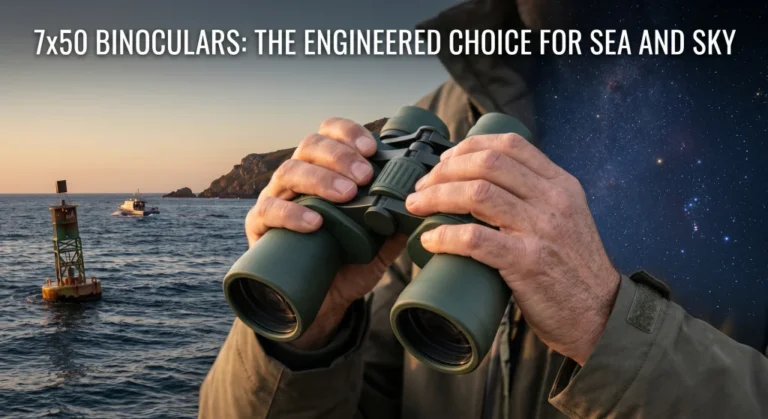
- Marine low-light observation: While lower magnification is usually better on a rocking boat, a 10×50 is highly effective for identifying harbor markers or distant vessels at dusk from a stable, anchored position. If you are debating between magnifications for marine use, our 7×50 vs 10×50 comparison covers the stability issues in depth.
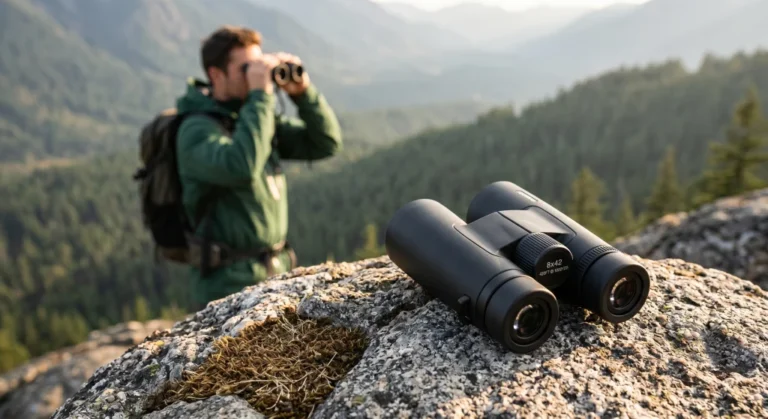
Buying a 10×50 for daytime mountain hiking, thinking the bigger lenses will give you a better overall view. You will just end up carrying unnecessary weight for a low-light advantage you cannot use.
Buying a 10×50 for sitting in a deer blind at dusk, or setting them up on a tripod in your backyard to look at the Orion Nebula.

This simple adapter mounts any porro or roof prism binoculars to a standard tripod for vibration-free, hands-free viewing with added stability. A straightforward upgrade for extended observation sessions where a steady image matters.
Check On AmazonIf you click this link and buy, we earn a commission at no additional cost to you.
When You Should Stick to a 10×42
For the majority of general outdoor users, carrying a 10×50 creates unnecessary bulk. Bird watchers, in particular, should generally avoid this configuration. The reduced field of view makes it significantly harder to find a small, fast-moving bird in a dense forest canopy. The added weight also causes arm fatigue faster, which makes holding the 10x magnification steady even more difficult over long observation periods.
If portability, tracking speed, and overall versatility are your main priorities, the standard 42mm objective is almost always the smarter choice. For a deeper dive into how all these numbers interact with each other in the real world, check out our broader guide on what binoculars numbers mean.

Fully multi-coated lenses and BAK-4 prisms deliver bright, sharp, crystal-clear images at 10x magnification with a wide 1,000 yard field of view. The lightweight rubber-armored body is shock and slip resistant, and twist-up eyecups with a central focus wheel make quick adjustments easy with or without glasses. Note that these are water-resistant rather than fully waterproof.
Check On AmazonIf you click this link and buy, we earn a commission at no additional cost to you.
Final Thoughts: Making the Right Trade-Off
The decision to move up to a 50mm objective lens should always be driven by your lighting environment. It is a specialized tool designed to solve a specific problem. You are actively trading away a wider field of view and lightweight portability in exchange for a few extra minutes of crucial visibility at the edges of the day.
Let’s make this simple. If you are a pre-dawn hunter or a backyard astronomer, the 10×50 is built exactly for you. The extra weight is worth the detail you will pull out of the dark. If you are a daytime birder, a hiker, or someone looking for a general-purpose optic, buy a 10×42. You will get a wider view, a lighter pack, and a much more forgiving experience in the field.
FAQs
🤔 What does 10×50 mean on binoculars?
The “10x” means the binoculars magnify the image ten times closer than your naked eye. The “50” indicates the front objective lenses are 50 millimeters in diameter, which allows them to gather a significant amount of light.
⚖️ Which is better in a 10×50 vs 10×42 binoculars comparison?
Neither is universally better. The 10×50 is superior for low-light situations like dawn hunting or stargazing because it gathers more light. The 10×42 is better for daytime use, hiking, and birding because it is lighter and typically has a wider field of view.
✨ Are 10×50 binoculars for stargazing a good choice?
Yes, they are highly recommended for astronomy. The large 50mm lenses gather enough starlight to show you faint celestial objects, while the 10x magnification provides enough detail to observe the Moon and large star clusters effectively.
👁️ Why does the 10×50 exit pupil matter?
The 5.0mm exit pupil of a 10×50 closely matches the size of a human pupil in low-light conditions. This means the binoculars are delivering the maximum amount of usable light to your eye right when the sun goes down, resulting in a brighter image.