Understanding the Binoculars 7×50 Meaning
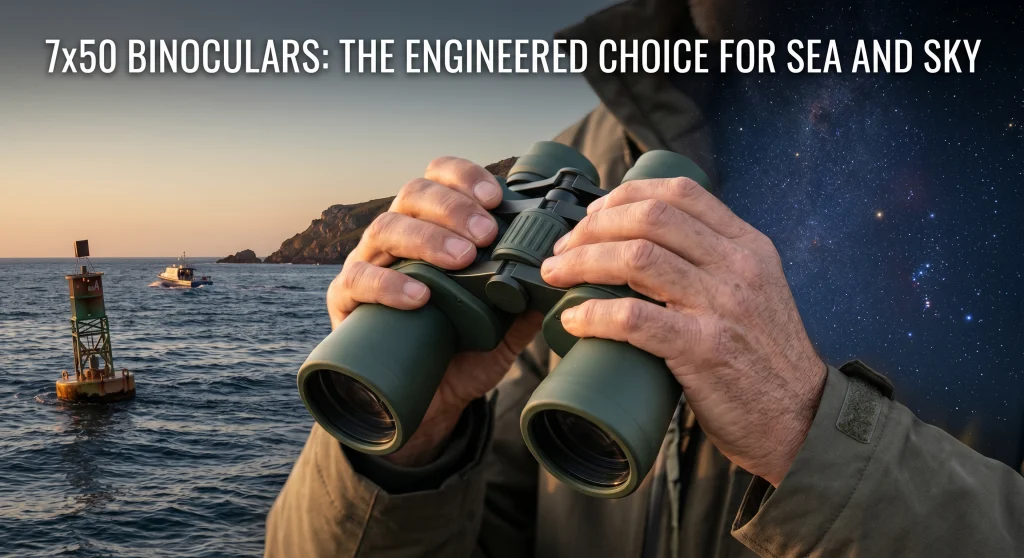
When you look at the box, the numbers tell a very specific mechanical story. To truly grasp the binoculars 7×50 meaning, you have to look at how these two numbers interact. The first number is the magnification. Objects appear seven times closer than they do with your naked eye. A buoy at 700 yards appears as if it were 100 yards away. The second number is the objective lens diameter, meaning the front lenses are 50 millimeters across.
By themselves, these 7×50 binoculars specs sound fairly standard. But the magic happens when you divide the objective lens by the magnification. If you divide 50 by 7, you get 7.14 millimeters. That number is the exit pupil. This is the actual physical shaft of light that exits the eyepiece and enters your eye. At 7.14mm, this is the largest exit pupil of any commonly used binocular configuration on the market.
When I explain how binoculars are explained at a foundational level, I always start with the exit pupil. It dictates how the optic performs in low light and how forgiving it is to look through. That massive 7.14mm column of light is the entire reason this specific size became an industry standard.
Why 7x Became the Marine Standard
Water is a moving platform. This is the single most important factor when choosing marine binoculars. When you stand on a deck, you are dealing with engine vibration, wave chop, and ocean swells. Every bit of that movement travels up through your legs, through your arms, and directly into the optic.
Field Note: I cannot count how many times a customer walked up to the optics counter before a sailing trip, asking for a 10x or 12x model. They assumed more power would help them spot channel markers or distant vessels much easier. I always had to walk them back down to a 7x configuration. Once you explain the physics of a rocking deck, the choice becomes obvious.
Magnification amplifies whatever you are looking at, but it also amplifies your own movement. On solid ground, a 10x tremor is manageable for most people. On a boat, 10x magnification turns a slight wave chop into an unreadable, bouncing horizon. The professional maritime consensus is very clear on this issue. Seven power is the practical ceiling for a handheld optic on a moving vessel. Anything higher becomes next to impossible to hold steady.
The full breakdown of how magnification affects stability across every common configuration is in my guide on binoculars numbers meaning. For marine environments, the Fujinon 7×50 FMTR-SX remains the professional maritime standard precisely because it maximizes usable power for the environment without crossing that stability threshold.

Backed by a top ranking from marine industry publications, the Polaris series features Fujinon's patented EBC coating for 95 percent light transmission and edge-to-edge sharpness thanks to a field flattener lens that eliminates distortion and astigmatism. Legendary optical performance at a surprisingly accessible price point.
Check On AmazonIf you click this link and buy, we earn a commission at no additional cost to you.
The Forgiving Nature of a Massive Exit Pupil
Seven power is justified for stability. But why carry heavy 50mm lenses to get there? Why not just buy a lighter 7×35 model? The answer comes back to the exit pupil.
On a moving vessel, your eye positioning is incredibly imprecise. You are constantly shifting your stance, bumping the eyecups against your brow, and struggling to keep your pupils perfectly centered behind the ocular lenses. A 7.14mm exit pupil creates a wide, forgiving window. Even when your eye shifts slightly off-center as the boat pitches, your pupil is still bathed in that large shaft of light, capturing the full image without blacking out at the edges.
This large window is also practically necessary for reading the built-in compass markings and rangefinding reticles common on marine 7×50 models. You need that extra wiggle room to glance downward inside the field of view to read a bearing without losing the horizon.
Why the Same Logic Applies to Astronomy
It might seem strange that the ideal boating optic is also the standard recommendation for beginners looking at the night sky. But for astronomy, the same engineering logic transfers perfectly, just for different reasons.
At a fixed land position in your backyard, the moving-platform problem disappears. What remains is a massive 50mm objective lens gathering a huge amount of starlight, paired with the widest field of view of any common 50mm configuration. When you want to sweep the Milky Way and take in entire star clusters at once, a wide field of view is critical.
The pupil match is also near-perfect. In total darkness, a healthy human pupil dilates to about 5 to 7 millimeters. The 7.14mm exit pupil closely matches the maximum dark-adapted human eye. You are delivering the absolute maximum amount of light your eye can physically process. This is why it is universally suggested for beginners learning about stargazing with binoculars.
The depth of field on a 7x magnification is also incredibly deep, which leads to another specific advantage: individual eyepiece focus. Many 7×50 models omit the center focus wheel entirely and use an individual focus design. You set the focus for each eye independently. For astronomy, you set them to infinity once, and everything in the sky remains perfectly sharp for the rest of the night. This mechanically simpler design is also highly durable and easier to waterproof, which explains why it dominates the marine market as well. If you are comparing this against higher magnification for the sky, the 7×50 vs 10×50 binoculars debate usually comes down to whether you want a wider sky view or tighter detail on planets.

Designed as an accessible entry point into astronomy, these 7x50 binoculars feature large 50mm multi-coated objectives that gather ample light for bright, detailed views of comets, star clusters, and the Milky Way across a wide 6.6 degree field of view. Tripod-adaptable for steady extended sessions, they also double as capable daytime binoculars with a 26.2 foot close focus. Backed by a Celestron Limited Lifetime Warranty and US-based support.
Check On AmazonIf you click this link and buy, we earn a commission at no additional cost to you.
When the 7×50 Configuration is the Wrong Choice
As good as these specs are for specific tasks, they are terrible for others. I have seen buyers purchase a heavy 7×50 for a hiking trip simply because they thought a bigger objective lens meant a better view. They usually regret it by mile two.
Here is exactly when you should look for a different configuration:
- When portability matters: A standard 7×50 weighs around 35 to 40 ounces. It will swing heavily on a neck strap and takes up significant room in a backpack. The weight is an asset for absorbing vibrations on a boat, but a severe penalty on a steep trail.
- Bright daylight birding: In bright sun, your pupil contracts to about 2 to 3 millimeters. That 7.14mm exit pupil is largely wasted, meaning you are carrying heavy 50mm lenses for no optical benefit at noon. The image can actually feel overly washed out compared to an 8×42.
- When you need distance detail: Seven power is relatively low. If you are trying to identify a hawk on a ridge half a mile away, or count antler points across a canyon, 7x simply won’t give you the resolution you need.
- Indoor storage constraints: These are large, bulky instruments. If you want a pair to keep on a narrow window sill or tucked into a small glovebox for quick views, a full-size 50mm frame will constantly be in the way.
| Activity | Is 7×50 Recommended? |
|---|---|
| Boating / Marine | Excellent. The gold standard for stability and forgiveness on a rocking deck. |
| Astronomy | Excellent. Maximizes exit pupil for dark-adapted eyes and offers a wide sky view. |
| Hiking / Backpacking | Poor. Far too heavy and bulky for extended trail carry. |
| Daytime Birding | Poor. Unnecessary weight; magnification is often too low for distant identification. |

Fully multi-coated lenses and phase-coated BaK-4 prisms deliver bright, crisp, color-accurate images across all lighting conditions, with a wide 7.4 degree field of view for easy tracking. The rubber-armored polycarbonate body is waterproof, nitrogen-purged, and tripod-adaptable for extended sessions. Backed by a Celestron Limited Lifetime Warranty and US-based support.
Check On AmazonIf you click this link and buy, we earn a commission at no additional cost to you.
Final Thoughts: The Purpose-Built Optic
The 7×50 configuration is not a generalist tool. It is a highly specialized piece of equipment designed to solve the problems of darkness and instability. When you understand what 7×50 means on binoculars in terms of real-world physics, you stop looking at it as just another size on the shelf.
Quality 7×50 models built for marine or astronomy use typically sit in the $150 to $600+ range, though professional-grade models can cost more depending on the build standard. If you are heading out on the water or pointing your eyes at the stars, those numbers are exactly what you want in your hands. You are buying stability and maximum light transmission. But if you are heading into the woods on foot or watching birds in your backyard at noon, leave them at home and grab something lighter.
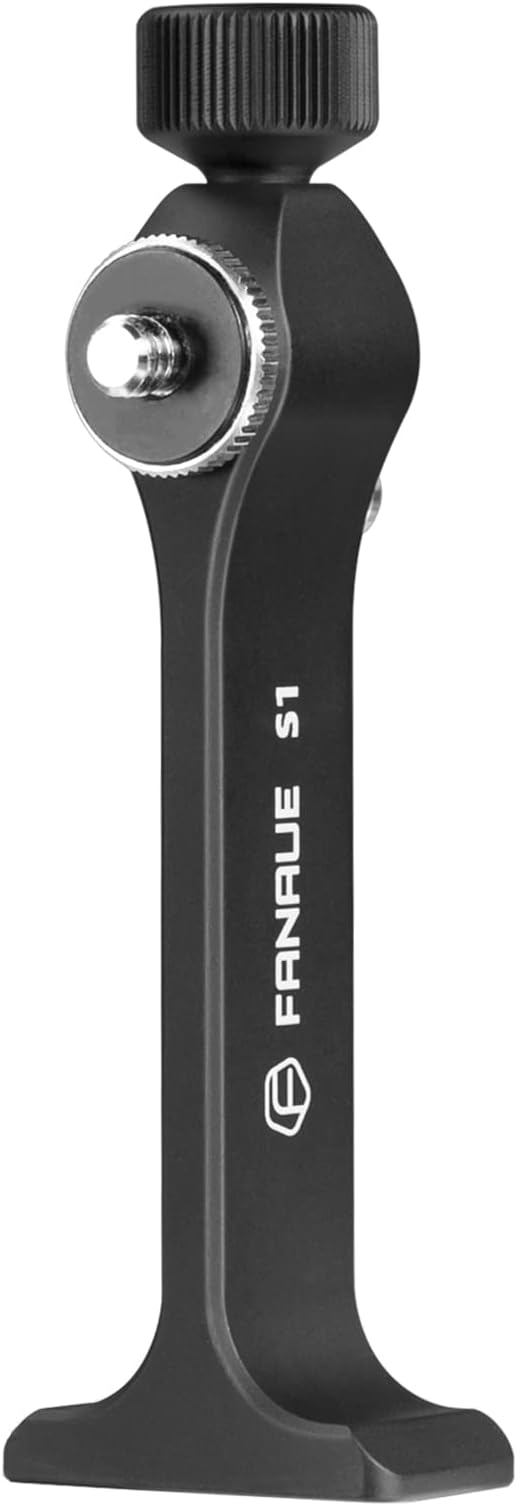
Precision CNC-cut from T6061 aluminum alloy, this sturdy adapter features an Arca-Swiss mount and a standard quarter-inch 20 thread for broad compatibility with most binoculars and tripods. A quick-release mechanism allows fast, effortless mounting and dismounting in the field. Backed by a lifelong warranty from FANAUE.
Check On AmazonIf you click this link and buy, we earn a commission at no additional cost to you.
FAQs
🔭 What does 7×50 mean on binoculars?
The numbers mean the binoculars have 7x magnification and 50mm front objective lenses. This combination creates a massive 7.14mm exit pupil, making them incredibly bright in low light and very forgiving to look through.
⚓ Why are 7×50 binoculars the standard for marine use?
Seven power is the maximum magnification most people can hold steady on a rocking boat. The large 50mm lenses provide a wide exit pupil, allowing you to see the full image even when the boat pitches and your eyes shift slightly out of alignment with the lenses.
🌌 Are 7×50 binoculars good for astronomy?
Yes, they are one of the most recommended sizes for beginner astronomy. The 7.14mm exit pupil closely matches a fully dark-adapted human eye, gathering maximum starlight while providing a wide enough field of view to easily locate constellations.
⚖️ Are 7×50 binoculars too heavy for hiking?
In most cases, yes. They typically weigh over two pounds and are very bulky. For hiking and backpacking, where portability is critical, an 8×32 or 8×42 is a much better choice.