
The Daylight Reality of Compact Binoculars
In full daylight, the view through a quality pair of compact binoculars is nearly indistinguishable from what you get with a full-size model. I have watched this surprise play out more times than I can count at the optics counter. A customer will hold an 8×32 in one hand and an 8×42 in the other, look out the store window at the bright afternoon street, and wonder why the larger pair is considered superior.
They assume their eyes are playing tricks on them or that the spec numbers on the box are just marketing fluff. The truth is much simpler. In bright conditions, your own pupils constrict to roughly two millimeters to protect your retinas from glare. Because both binocular sizes are delivering a beam of light wider than your eye can physically accept, your brain registers the exact same bright, crisp image.
That optical parity holds up beautifully at noon. The gap only appears at very specific times of day. Understanding when that happens changes the entire decision-making process.
What Actually Makes a Binocular “Compact”
When we talk about compact vs full-size binoculars, the difference comes down exclusively to the objective lens. That is the larger lens at the front of the barrel. Full-size models traditionally use a 42mm objective. The compact category covers anything from 25mm up to 32mm.
The physical difference this creates is substantial. Dropping from a 42mm to a 32mm lens reduces the overall weight by 20 to 35 percent. It also makes the barrels noticeably shorter. While five or six ounces might not sound like a heavy burden when you are reading specs online, it is a very real difference when the optics are hanging from your neck on hour six of a steep trail.
Key point: There are two main configurations in this category. The 8×25 is true pocket size and the absolute lightest option available. The 8×32 is considered a mid-compact, offering a larger glass surface that provides significantly better optical performance while still saving weight over a full-size frame.
You have to decide which kind of portability you actually need. If your goal is to slide the optics into a shirt pocket at a stadium, the 25mm is the answer. If your goal is serious outdoor observation without neck fatigue, the 32mm is the sweet spot.
| Format | Typical Weight | Best Use Case | The Main Trade-Off |
|---|---|---|---|
| 8×25 (Pocket) | 9 to 12 oz | Concerts, flights, backup pair | Very poor low-light visibility and a tight eye box. |
| 8×32 (Mid-Compact) | 16 to 20 oz | Hiking, travel, daytime birding | Noticeable dimming during dawn and dusk hours. |
| 8×42 (Full-Size) | 22 to 28 oz | Primary wildlife watching, hunting | Heavy and bulky to carry all day. |
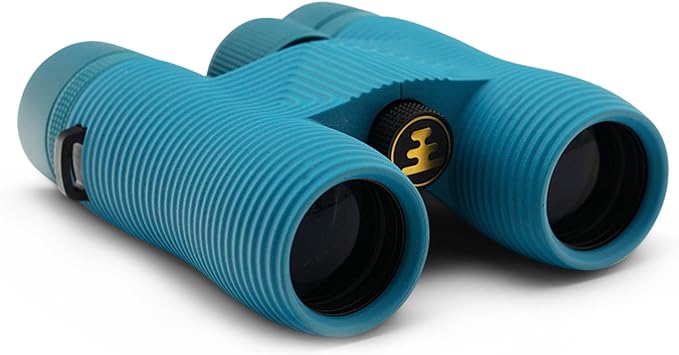
Weighing just 16.7 oz, these compact binoculars feature fully multi-coated optics and a Swiss-designed BaK-4 prism for bright, edge-to-edge clarity across a wide 387 foot field of view. IPX7 rated and nitrogen sealed, they handle submersion up to 3 feet for 30 minutes without compromising performance. A patented wave grip, three-position twist eyecups, and a no-matter-what lifetime warranty make them a confident choice for any adventure.
Check On AmazonIf you click this link and buy, we earn a commission at no additional cost to you.
The Exit Pupil Math and the Low-Light Threshold
To understand what you are actually giving up with a smaller objective lens, you have to look at a specification called the exit pupil. This is the exact width of the light beam that exits the eyepiece and hits your eye. You calculate it by dividing the objective lens size by the magnification.
An 8×25 model produces a 3.1mm exit pupil. An 8×32 provides a 4.0mm exit pupil. A full-size 8×42 delivers a generous 5.25mm of light. As we covered earlier, your own pupil is only about 2mm wide in the midday sun, so all three options provide more light than you can use.
The math changes drastically when the sun goes down. In low-light conditions at dawn and dusk, the human pupil dilates to 5mm or even 7mm to let in as much light as possible. If your pupil is dilated to 5mm, but your 8×32 binocular is only providing a 4mm shaft of light, the image will look noticeably dark and constrained.
Field Note: One of the most common things I heard at the counter was hunters coming in with a pair of 8x25s they bought for a trip. They would tell me the glass was defective because they could not see anything at 6:00 AM. The glass was perfectly fine. They had just hit the physical limit of a 3.1mm exit pupil trying to feed a dilated human eye.
This is the fundamental reality of outdoor optics. You cannot cheat physics. If you want to see clearly into the shadows before sunrise, you need a larger objective lens to gather that light.
How the Optical Gap is Closing
If you used a compact pair of binoculars ten years ago, you might remember them as finicky, dark, and difficult to look through for long periods. Part of that historical problem was the prism design. To keep compact frames slim, manufacturers rely on straight-barrel roof prisms. In older or budget models, these prisms lose light internally compared to the bulky porro prisms.
Modern phase-correction coatings and high-transmission glass have changed that equation entirely, making the current generation of mid-compacts incredibly efficient at passing light to your eyes. This is not just an anecdotal observation from the sales floor. A comprehensive 2023 review by AllAboutBirds looked at 24 different compact models. They confirmed that at the $300 to $500 price tier, several 8×32 models can stand on an even footing with similarly priced full-size binoculars. The engineering has advanced to a point where the daytime performance gap is effectively gone.
This means you no longer have to spend premium alpha-level money to get a highly capable travel optic. The mid-tier options today offer edge-to-edge clarity and color fidelity that would have cost a fortune a decade ago. The only hurdle remaining is that twilight threshold.

Select HD glass elements with fully multi-coated, dielectric-coated lenses deliver exceptional sharpness, color fidelity, and light transmission while Armortek coating protects exterior surfaces from scratches and oil. Argon-purged and O-ring sealed for waterproof, fog-proof performance in any conditions. Rubber armor adds a secure grip, and the compact tripod-adaptable build includes twist-up eyecups and a diopter adjustment for comfortable use with or without glasses.
Check On AmazonIf you click this link and buy, we earn a commission at no additional cost to you.
The Best Scenarios for Choosing a Smaller Frame
Deciding whether compact binoculars are worth it for your specific needs requires looking honestly at your habits. The people who get the most value out of a smaller frame are those who prioritize mobility over the final fifteen minutes of evening light.
The most capable optic in the world is useless if it is sitting in your truck because it was too heavy to carry. A quality pair of 8×32 binoculars for hiking provides the perfect balance. They are light enough to wear on a chest harness all day without neck strain, yet powerful enough to pull in sharp details of a hawk riding a thermal a mile away.
I consistently recommend the compact route for a few specific situations:
- Air travel and backpacking: When every ounce and square inch of luggage matters, an 8×32 is the logical choice.
- Daytime hiking: If you are back at the trailhead by sunset, you will never experience the low-light limitations of the smaller objective lens. Just keep an eye on the weather resistance. To cut weight, compact models often feature less rubber armoring and varying waterproof levels. Verify an IPX7 rating if you expect rain.
- As a supplementary pair: Many experienced birders keep an 8×32 in their car glovebox or travel bag to ensure they always have capable glass nearby.
- Casual outdoor events: For concerts, sporting events, or casual walks in the park, full-size models are simply overkill.
If your activities fall into these categories, the weight savings will actively improve your experience in the field. Here are the 8×32 configurations that consistently prove their worth, broken down by how you plan to use them:

Fully multi-coated lenses and phase-coated BaK-4 prisms deliver bright, crisp, color-accurate images across all lighting conditions, with a wide 7.4 degree field of view for easy tracking. The rubber-armored polycarbonate body is waterproof, nitrogen-purged, and tripod-adaptable for extended sessions. Backed by a Celestron Limited Lifetime Warranty and US-based support.
Check On AmazonIf you click this link and buy, we earn a commission at no additional cost to you.
When the Trade-Off Becomes a Liability
When weighing the pros and cons of compact binoculars, the biggest mistake you can make is lying to yourself about your schedule. If your activity requires early mornings or late evenings, the smaller objective lens will eventually frustrate you.
This is particularly true for serious wildlife observation. The dawn chorus is the most active time of day for birding. If you are regularly stepping onto a forest trail at 6:00 AM, the dense canopy combined with the low sun angle creates an incredibly dim environment. An 8×32 will struggle to show you feather details in the shadows, making species identification difficult.
Another hidden limitation is the close-focus distance. Many compact 8×32 models struggle to focus on anything closer than six to eight feet, whereas a good 8×42 can often focus down to four or five feet. If you enjoy looking at butterflies or insects near your feet, a compact might force you to take a few steps back just to get a clear image.
Buying a lightweight 8×25 pair to use as your primary hunting optic, assuming that magnification is the only spec that matters for spotting game.
Accepting the extra weight of a full-size 8×42 for hunting, knowing that the larger exit pupil is critical for glassing terrain during the crucial twilight hours.
The same rule applies to primary hunting binoculars. The vast majority of animal movement happens right at first light and last light. If you are glassing a tree line at dusk, an 8×42 will give you enough extra light that the scene is still usable when the compact has already gone dim. In the field, that extra window of visibility is often the entire reason you are out there.

Multilayer-coated lenses with silver-alloy prism coating deliver vivid, sharp images from dawn to dusk. O-ring sealed and nitrogen-purged, they stay clear through rain, snow, and humidity. The fiberglass-reinforced polycarbonate body with rubber armor keeps them lightweight yet durable, with turn-and-slide eyecups for comfortable all-day use with or without glasses.
Check On AmazonIf you click this link and buy, we earn a commission at no additional cost to you.
Final Thoughts
The decision to drop down in size is no longer a massive optical compromise. The technology has reached a point where daytime performance is spectacular across the board. You just have to be realistic about when you intend to use them.
If you are a daytime hiker, a traveler, or someone tired of a heavy strap digging into your neck, a mid-compact is likely the perfect tool. Understanding where they fit into the broader types of binoculars available is crucial to making an informed choice. If you want to look at the entire landscape of options before pulling the trigger, check out our complete binoculars buying guide.

Phase-coated Swiss-designed BaK-4 prisms and fully multi-coated optics deliver true-to-life color and sharp, distortion-free views across a wide 429 foot field of view. A standout close focus of under 6 feet lets you fill the frame with fine nearby details like insects or flowers. IPX7 rated and nitrogen sealed for submersion up to 1 meter, with a patented wave grip, three-position twist eyecups, and a no-matter-what lifetime warranty.
Check On AmazonIf you click this link and buy, we earn a commission at no additional cost to you.
Deep Dives: Choosing the Right Compact Binoculars
If you have decided that a smaller, lighter frame is the right choice for your needs, the next step is matching the specific specs to your activity. I have broken down the most common decisions and use cases below.
| Guide | What It Covers |
|---|---|
| Are Compact Binoculars Worth It? | The exact twilight threshold where the weight savings outvalue the low-light optical compromise. |
| 8×32 vs 8×42 Binoculars | Where the 10mm objective difference actually shows up in the field, including the hidden eye box issue. |
| Compact Binoculars for Bird Watching | When size is the right trade-off for birders and exactly when the smaller exit pupil becomes a problem. |
| Compact Binoculars for Travel | What to prioritize when luggage space and carrying weight are your absolute primary constraints. |
| Compact Binoculars for Glasses Wearers | The specific eye relief problem nobody warns you about when shopping in the compact category. |
FAQs
🔭 What size is considered a compact binocular?
Compact binoculars generally feature objective lenses between 25mm and 32mm. The most common configurations you will see are 8×25, 10×25, and 8×32. These are designed specifically to reduce weight and overall physical footprint.
🎒 Do smaller binoculars work well for bird watching?
Yes, but only in good lighting. An 8×32 is excellent for daytime casual birding or traveling. However, if you regularly bird during the dawn chorus or in heavily shaded forests, the dimmer image will make species identification difficult.
👓 Are smaller frames harder to use with glasses?
Often, yes. Many pocket-sized models have very short eye relief due to their compressed physical design. If you wear glasses, you must check the spec sheet and look for a minimum of 14mm of eye relief to avoid a restricted field of view.
🌙 Why do my travel binoculars look so dark in the evening?
Your travel binoculars have smaller objective lenses, which produce a smaller exit pupil. At dusk, your own eyes dilate to gather light, but the binoculars cannot match your dilated pupils with enough light, resulting in a dim image.