
Why Size Is Only Half the Equation in Birding
When someone asks me if they should use compact binoculars for bird watching, my first question is never about how much weight they want to carry. My first question is always about what time they usually set their alarm clock. The physical size of your optics dictates how much light they can capture, which completely changes what you can see at dawn and dusk. If you understand that specific limitation, you can figure out if a smaller pair is going to help or hinder your time in the field.
I have watched this confusion play out more times than I can count at the optics counter. A customer will come in looking for the smallest, lightest pair of binoculars they can find, assuming that less weight automatically equals a better birding experience. They are partially right. Carrying less weight around your neck for six hours is undeniably more comfortable. However, they are often unaware of the performance they are trading away to get that comfort.
Compact binoculars are a genuine compromise in certain specific birding situations. In other scenarios, they are actually the smartest choice you can make. The trick is simply learning how to match the tool to the environment you plan to spend the most time in. If you find yourself asking, “are compact binoculars worth it,” the answer always starts with your timing and your terrain.

Fully multi-coated lenses and phase-coated BaK-4 prisms deliver sharp, color-accurate images across a wide 7.4 degree field of view in a compact, lightweight frame. The rubber-armored polycarbonate body is waterproof, nitrogen-purged, and tripod-adaptable for steady extended sessions. Backed by a Celestron Limited Lifetime Warranty and US-based support.
Check On AmazonIf you click this link and buy, we earn a commission at no additional cost to you.
When Smaller Optics Actually Work Better in the Field
There are several specific situations where I will readily recommend a compact binocular over a full-size model for birding. The most obvious is travel. If you are flying to Costa Rica or hiking deep into the backcountry, every ounce in your bag matters. A high-quality 8×32 binocular will give you fantastic views of canopy birds in bright tropical sunlight, and it will take up a fraction of the space in your carry-on luggage compared to a traditional 8×42.
Another area where they shine is casual, mid-day walking. If you treat birding as a secondary activity while you are primarily out for a hike, a heavy optic is going to end up left in the car. A lightweight pair that slips easily into a jacket pocket ensures that you actually have glass on hand when a hawk suddenly circles overhead. The best compact binoculars for birding are simply the ones you are willing to carry with you consistently.
If you are looking at different compact binoculars, you will notice they generally fall into two distinct physical sizes. There are the true pocket models, usually in an 8×25 configuration, and the mid-compact models, usually in an 8×32 format. For birding, the 8×32 is almost always the better middle ground, as it offers a wider field of view and a more forgiving image while still saving significant weight over a full-size setup.
Field Note: One of the most common things I saw at the counter was birders coming in to buy a compact pair to use as a “backup” to their primary 8x42s. What often happened was that the backup pair became their primary pair for quick weekend walks. Once you get used to not having two pounds of glass pulling on your neck, it is very tempting to stick with the lighter option on bright, sunny days.
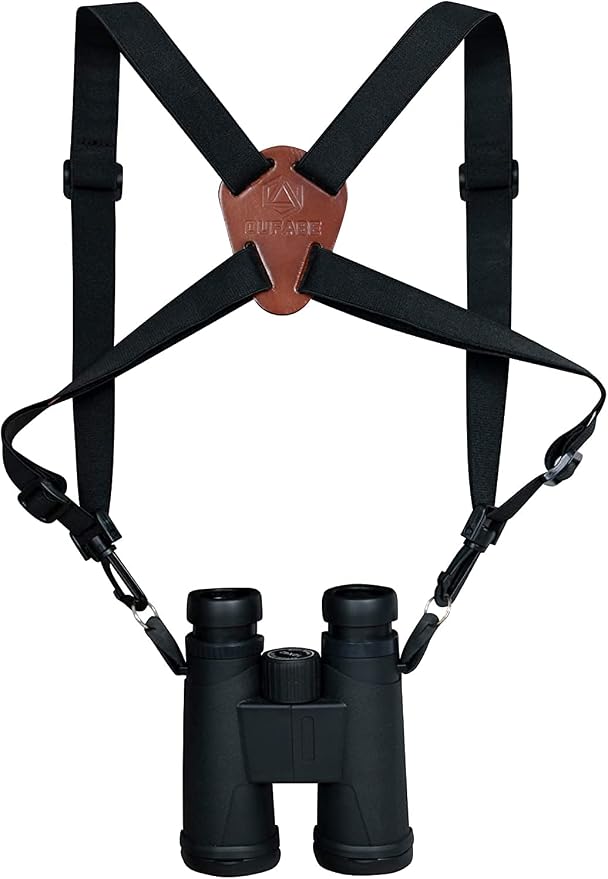
Double-stitched nylon and Lycra construction with premium leather accents delivers maximum durability and a tactical look built to last. The X-shaped shoulder design evenly distributes weight across your shoulders and back, eliminating neck fatigue during extended wear. Fully adjustable straps reduce chest sway and allow quick sliding into viewing position, fitting all binoculars with a half-inch eyelet as well as heavy cameras.
Check On AmazonIf you click this link and buy, we earn a commission at no additional cost to you.
The Close Focus Advantage of the 8×32 Format
There is one specific technical specification where mid-compact binoculars often punch well above their weight class. That specification is close focus. This refers to the shortest distance at which the binoculars can produce a sharp, resolved image. Many modern 8×32 models are engineered to achieve a close focus of under six feet, which is highly competitive with, and sometimes better than, premium full-size models.
This sounds like a minor detail until you actually take them out into the field. If you spend a lot of time observing birds at backyard feeders, or if you like to look at insects and butterflies along the trail, a short close focus is incredibly valuable. It allows you to examine the intricate feather details of a chickadee that is perched just a few feet away from your window.
Here are a few specific birding styles that benefit heavily from an aggressive close focus distance:
- Observing hummingbirds at nectar feeders positioned near your porch.
- Identifying small warblers and songbirds that flit through low, dense shrubbery right next to the trail.
- Watching shorebirds from a concealed blind where the subjects might wander very close to your position.
- Examining dragonflies or butterflies without having to switch to a different observation tool.
In my experience, people often overlook this feature until they actually need it. Once you try looking at a bird eight feet away only to realize your binoculars cannot focus closer than fifteen feet, you quickly learn why this specification matters for garden birders.

Select HD glass elements with fully multi-coated, dielectric-coated lenses deliver exceptional sharpness, color fidelity, and light transmission while Armortek coating protects exterior surfaces from scratches and oil. Argon-purged and O-ring sealed for waterproof, fog-proof performance in any conditions. Rubber armor adds a secure grip, and the compact tripod-adaptable build includes twist-up eyecups and a diopter adjustment for comfortable use with or without glasses.
Check On AmazonIf you click this link and buy, we earn a commission at no additional cost to you.
The Dawn Chorus and the Low-Light Penalty
The single biggest limitation of using compact binoculars for birding becomes obvious the moment the sun goes down. The earliest and most active hours of the day for birds are between dawn and roughly eight in the morning. This period, known as the dawn chorus, is characterized by poor, flat, and often heavily shadowed lighting.
This is exactly the environment where a smaller objective lens struggles. An 8×32 binocular produces a 4mm exit pupil, which is the shaft of light that reaches your eye. An 8×42 binocular produces a 5.25mm exit pupil. In bright daylight, your own pupils constrict to about 2mm or 3mm, meaning both binoculars provide more light than your eyes can actually use. You will not see a difference at noon.
Assuming that because two binoculars both have 8x magnification, the image they produce will be equally bright regardless of the time of day.
Recognizing that your eyes dilate in low light, and a smaller objective lens will physically choke off the amount of light you need during the early morning hours.
However, when you are standing in a dark forest at six in the morning, your pupils dilate to take in more light. At this moment, the smaller 4mm exit pupil of the compact binocular becomes a bottleneck. The image you see will look noticeably dimmer and muddier than it would through a full-size pair. A birder who regularly starts their day before full daylight will feel this limitation immediately.
Forest Canopy and Quick Target Acquisition
The low-light penalty is not strictly limited to the time of day. Deep forest birding is a prime example of where environmental shadows test your gear. Even at two in the afternoon, the canopy of an old-growth forest can block a massive amount of ambient light. Trying to identify the subtle eye-ring of a thrush in deep woods shade is significantly harder when your optic is starving for light.
There is also the mechanical challenge of quick target acquisition. If you have ever been on a guided bird walk, you know the panic of someone calling out a warbler in a dense tree. You have about three seconds to find it before it flies. While an 8×32 offers a wonderfully wide field of view to help locate the bird, the slightly tighter viewing window means you have to bring the binoculars to your face with perfect alignment. I have consistently noticed that birders using full-size optics tend to “get on the bird” just a fraction of a second faster because the larger exit pupil is more forgiving of a sloppy mount.
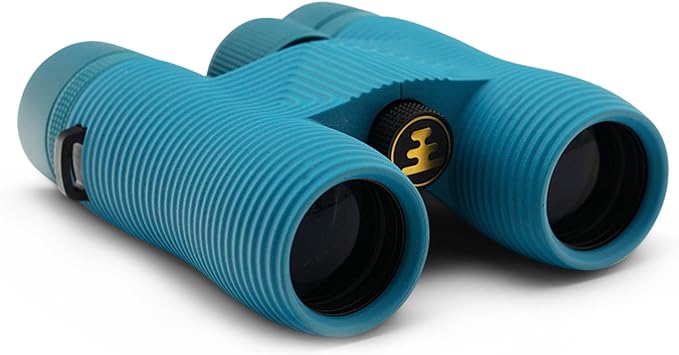
Weighing just 16.7 oz, these compact binoculars feature fully multi-coated optics and a Swiss-designed BaK-4 prism for bright, edge-to-edge clarity across a wide 387 foot field of view. IPX7 rated and nitrogen sealed, they handle submersion up to 3 feet for 30 minutes without compromising performance. A patented wave grip, three-position twist eyecups, and a no-matter-what lifetime warranty make them a confident choice for any adventure.
Check On AmazonIf you click this link and buy, we earn a commission at no additional cost to you.
The Shorebird Challenge and Eye Box Fatigue
Shorebird watching presents a completely different obstacle. When you are scanning mudflats or coastlines, you are typically glassing at long distances for extended periods of time. This is where I see people struggle with the “eye box” of smaller optics, rather than just the brightness.
The eye box is the three-dimensional space behind the eyepiece where your eye can clearly see the full image. Compact binoculars, especially the true pocket 8×25 models, have a very tight and unforgiving eye box. This means your eyes have to be perfectly aligned with the center of the lenses to get a clear picture without black shadows creeping in at the edges.
Over an hour of continuous scanning across a marsh, holding that perfect alignment causes fatigue. You are constantly fighting to keep the image centered. A mid-compact 8×32 handles this significantly better than an 8×25, but it still requires more precision than a full-size 8×42. This physical demand is exactly why choosing between different types of binoculars requires looking beyond just the magnification on the box. If you are planning a dedicated coastal birding trip that involves hours of continuous scanning, a small optic might leave your eyes feeling tired by lunchtime.
The 10×32 Trap: A Double Penalty for Birders
At the optics counter, one of the most frequent requests I received was for 10×32 binoculars. People naturally want more magnification, and pairing 10x with a compact 32mm body sounds like the perfect “reach” setup. For birding, I almost always advised against it.
A 10×32 format introduces a double penalty in the field. First, the exit pupil shrinks down to an incredibly tight 3.2mm. That is nearly as small as an 8×25 pocket binocular, meaning you lose the low-light capabilities that make the 8×32 format viable. Second, 10x magnification amplifies every tiny tremor in your hands. When you combine a shaky, amplified image with a dark, tiny exit pupil, finding a small bird moving rapidly through branches becomes deeply frustrating.
If you need 10x magnification for distant raptors or waterfowl, you need the 42mm objective lens to support it. If you want the lightweight benefits of a 32mm body, stick to 8x magnification.

ED glass virtually eliminates chromatic fringing for razor-sharp, true-to-life images, while ESP dielectric multi-layer prism coatings reflect over 99 percent of light for outstanding brightness and color accuracy. Advanced fully multi-coated lenses maximize light transmission across the full spectrum, and argon purging ensures superior waterproofing and thermal stability. A wide 8.1 degree field of view and long eye relief make these comfortable for extended use with or without glasses.
Check On AmazonIf you click this link and buy, we earn a commission at no additional cost to you.
What the Latest Testing Actually Shows
Despite the physical limitations of smaller lenses, the optical quality of mid-tier compacts has improved drastically over the last decade. A comprehensive 2023 review of two dozen compact models by AllAboutBirds (published by the Cornell Lab of Ornithology) confirmed what many of us have been seeing in recent years. They found that several modern 8×32 options can stand on an even footing with similarly priced full-size binoculars in standard lighting conditions.
The gap in clarity, color resolution, and edge-to-edge sharpness has closed significantly. Ten years ago, stepping down to a compact meant accepting a blurry, subpar image. Today, if you invest in a quality 8×32 for bird watching, you are getting an incredibly crisp picture. The reviewers did, however, specifically flag low-light performance as the one remaining, unavoidable gap.
| Binocular Format | Best Birding Context | Biggest Weakness | Average Weight |
|---|---|---|---|
| 8×25 (Pocket) | Hiking, travel, emergencies | Severe low light loss, tight eye box | 10 to 14 oz |
| 8×32 (Mid-Compact) | Daylight birding, travel, garden feeders | Dawn/dusk shadow performance | 16 to 20 oz |
| 8×42 (Full-Size) | Primary, all-weather, all-hours birding | Heavy around the neck all day | 22 to 28 oz |
This data aligns perfectly with the patterns I have watched repeat at the retail level. Customers who buy modern 8×32 models are almost universally thrilled with the sharpness. The only ones who return them are the dedicated dawn-chorus birders and the hunters who need to glass at last light.

This five-piece kit covers every step of lens care, including a brush for loosening dust, an air blower for dislodging stubborn particles, a 30ml cleaning solution for fingerprints and smudges, and a microfiber cloth for a streak-free finish. Everything packs neatly into an included storage pouch sized for a backpack or day bag, making it easy to keep optics spotless in the field.
Check On AmazonIf you click this link and buy, we earn a commission at no additional cost to you.
Making the Call on Your Birding Setup
Deciding whether to rely on a smaller optic comes down to mapping the tool to your actual habits, rather than an idealized version of them. I always told customers to look at their past three birding trips. If those trips involved walking well-lit trails at nine in the morning, or traveling out of a suitcase, an 8×32 is going to serve you brilliantly. You will carry it more, use it more, and enjoy the physical mobility.
If your trips consistently pull you into the dark woods before sunrise, or if you spend hours scanning distant shorelines, do not compromise on your objective lens. You need the optical forgiveness of a full-size frame.
When you are ready to narrow down your options, look for 8×32 models that specifically prioritize a wide field of view and long eye relief. If you want a broader look at everything that makes a great birding optic, check out our complete guide to binoculars for bird watching. The best binocular isn’t the one with the most impressive specifications on the box. It is the one that is actually hanging around your neck, rather than sitting heavy in your backpack, right at the exact moment a rare migrant finally breaks cover.
FAQs
🦅 Are 8×25 binoculars good enough for birding?
They are acceptable for casual, bright daylight birding or as an emergency pair kept in a glovebox. However, their very small exit pupil makes them difficult to look through for long periods and nearly useless in low light conditions.
🦉 Do compact binoculars work in the woods?
They work fine in open, brightly lit woods, but they struggle in deep forest shade. The smaller lenses cannot gather enough light to reveal subtle color details on birds hiding in the dark canopy.
👓 Can I use compact binoculars with glasses?
Yes, but you must check the specifications carefully. Many budget compacts have very short eye relief, which causes a restricted view for glasses wearers. Look for models with at least 15mm of eye relief to ensure a comfortable field of view.
⚖️ Are 10×32 binoculars better than 8×32 for birding?
In almost all cases, no. A 10×32 binocular has an extremely small 3.2mm exit pupil, making the image darker and much harder to keep steady in your hands. For a mid-compact size, 8x magnification is the much more practical choice for birding.