The Luggage Reality: Air Travel vs Road Trips
When searching for travel optics, the first rule is incredibly simple. The binoculars you actually have around your neck will always beat the premium full-size pair sitting back in your hotel room because they were too heavy to carry. But the calculation of what makes sense to pack changes entirely depending on how you are getting to your destination.
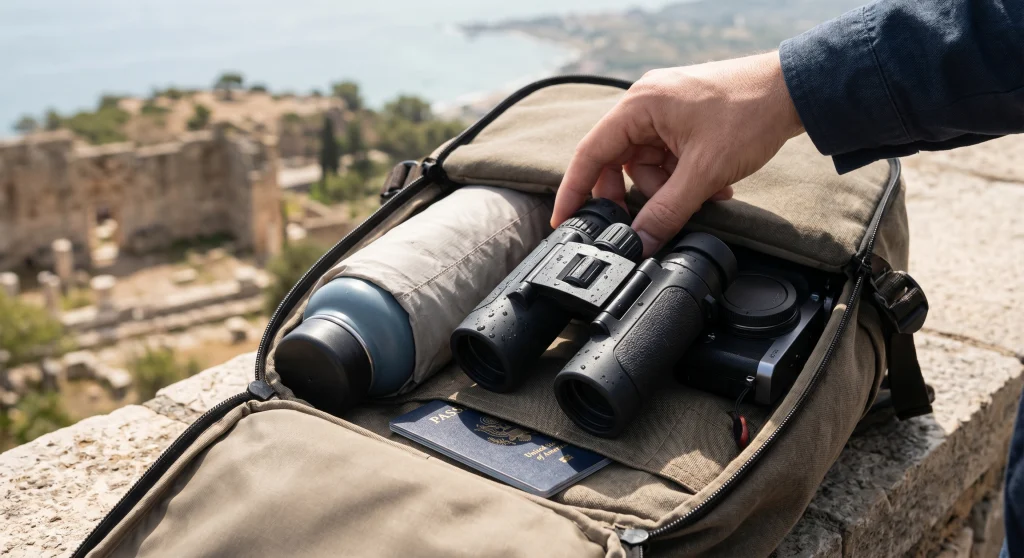
For a standard road trip, the physical volume of a full-size 8×42 in your car trunk does not matter at all. The only constraint is carrying that 24-ounce weight on your chest during a walking tour or a day hike. For air travel, the limit is immediate. A full-size pair inside its protective case eats up a massive chunk of a carry-on bag or an under-seat personal item. A well-built 8×32 mid-size model drops the weight down to roughly 16 ounces and significantly shrinks the footprint, solving a genuine logistical problem before you even reach the airport.
Field Note: I used to ask customers to hold a full-size pair in their hand like a heavy sandwich while browsing other aisles of the store. Nine times out of ten, they would come back to the counter ten minutes later asking to see the mid-size and compact options instead. Neck fatigue on a long travel day is a very real thing.
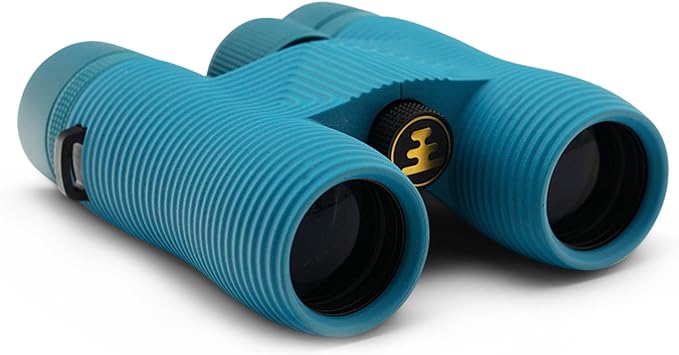
Weighing just 16.7 oz, these compact binoculars feature fully multi-coated optics and a Swiss-designed BaK-4 prism for bright, edge-to-edge clarity across a wide 387 foot field of view. IPX7 rated and nitrogen sealed, they handle submersion up to 3 feet for 30 minutes without compromising performance. A patented wave grip, three-position twist eyecups, and a no-matter-what lifetime warranty make them a confident choice for any adventure.
Check On AmazonIf you click this link and buy, we earn a commission at no additional cost to you.
The Daylight Parity and the Low-Light Gap
The question I heard constantly at the optics counter was how much visual performance you actually give up when you downsize your gear. The honest answer depends entirely on the time of day you plan to look through them.
If your itinerary involves exploring ancient ruins in bright sunlight, watching seabirds from the deck of an ocean cruise, or general daytime sightseeing, you are not sacrificing much at all. In full daylight, your own eye pupil constricts to about two or three millimeters. Since an 8×32 provides a four-millimeter exit pupil, it delivers more light than your eye can physically use. You get a bright, sharp image that performs almost identically to a heavy 8×42, while saving significant weight.
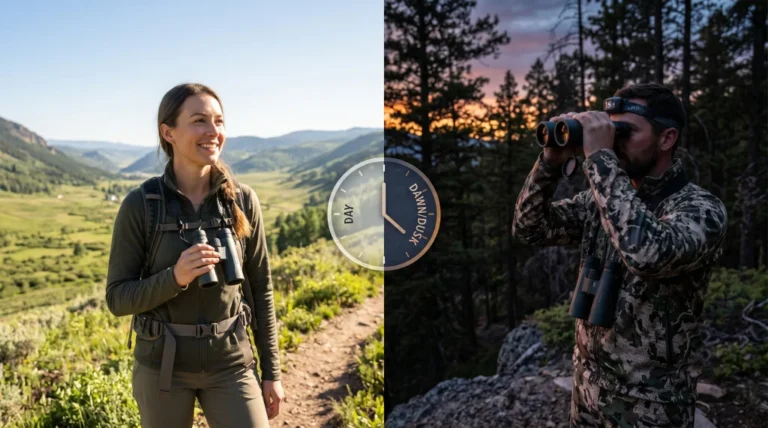
The optical penalty of traveling light only shows up when the sun goes down. If you are trying to spot a leopard in deep shadow at six in the morning, the smaller objective lens of a compact pair simply cannot gather enough ambient light. The image will look noticeably dimmer. Understanding this specific threshold is how you decide if saving those eight ounces is a smart travel hack or a viewing compromise.
To understand how these physical sizes fit into the broader optics market, you can look at the main types of binoculars available to see where the compact category sits.
The Safari Exception and Morning Game Drives
Many people buy travel optics specifically for a bucket-list safari. This is the one travel scenario where I consistently advise people to accept the extra weight of a full-size 8×42. African game drives typically happen twice a day. You head out well before sunrise when predators are active, and you go out again late in the afternoon, often driving back to camp in near darkness.
These low-light hours are exactly when wildlife viewing is at its absolute peak. You are paying a significant amount of money to be there, and a smaller objective lens will struggle to pull details out of the bush at dawn. In this specific case, the optical advantage of a larger exit pupil far outweighs the burden of carrying a heavier pair. You will be sitting in a vehicle anyway, so carrying fatigue is less of an issue.
Taking a tiny 8×25 pocket binocular on a major African safari just to save luggage weight, only to miss seeing the lions moving through the brush at first light because the image is too dark.
Accepting the 24-ounce weight of a quality 8×42 pair for safari trips, ensuring you have maximum light gathering capability during the critical dawn and dusk hours.

BaK-4 prisms and multi-coated optics deliver crisp, clear images with strong light transmission at 10x magnification. Fully waterproof and fog-proof with O-ring seals and nitrogen purging, the rubber-armored body absorbs shock and provides a firm non-slip grip. A large center focus knob, long eye relief, twist-up eyecups, and a limited lifetime warranty complete the package.
Check On AmazonIf you click this link and buy, we earn a commission at no additional cost to you.
The True Pocket Size for Backpacking
When you are carrying everything on your back, the calculation shifts again. For multi-day trekking, even 16 ounces might be too heavy. For anyone taking compact binoculars hiking, the difference between ten ounces in a jacket pocket and two pounds on a chest harness becomes very obvious on a steep trail. This is exactly where the 8×25 format shines.
The visual trade-off here is much steeper. An 8×25 produces an exit pupil of just 3.1 millimeters. They are strictly daytime tools and require much more precise eye alignment to get a clear picture without seeing black shadows around the edges. The field of view is also narrower, meaning you have to work a bit harder to track a moving subject. However, if the alternative is leaving the optics at home entirely, an 8×25 is still infinitely better than squinting at a blurry shape on the horizon.
If you want to read more about whether this specific optical compromise makes sense for your packing style, check out my thoughts on whether compact binoculars are worth it.

Weighing just 11.85 oz, these pocketable binoculars feature fully multi-coated optics and a Swiss-designed BaK-4 prism for crisp, color-accurate views edge to edge across a 357 foot field of view. IPX7 rated with medical-grade O-rings and nitrogen injection, they handle submersion up to 3 feet for 30 minutes without compromise. A patented wave grip, three-position twist eyecups, and a no-matter-what lifetime warranty make them a reliable everyday carry.
Check On AmazonIf you click this link and buy, we earn a commission at no additional cost to you.
Essential Specs to Prioritize for Luggage Constraints
Travel is inherently rough on gear. You are stuffing things into overhead bins, dealing with sudden weather changes, and dropping bags onto hardwood hotel floors. When customers asked me what actually mattered for a trip, I told them to ignore the marketing hype on the box and check for these specific details:
- Full Waterproofing: Look for models sealed with O-rings and purged with nitrogen or argon. Travel exposes your gear to high humidity and sudden temperature shifts from air-conditioned rooms to hot outdoor environments. This sealing prevents internal fogging, which can permanently ruin the glass.
- Rubber Armor: A thick rubber coating does not make the optics invincible if you drop them on concrete, but it does absorb the minor bumps and constant friction of being shoved into a crowded backpack next to water bottles and keys.
- BAK-4 Prisms in Budget Models: If you are shopping at a lower price tier to save money for your trip, pay close attention to the prism glass. You want BAK-4, not BK-7. BAK-4 glass delivers a perfectly round, bright exit pupil, which is critical when you are already dealing with the smaller lenses of a travel binocular.
- Close Focus Distance: Travelers often encounter interesting subjects up close, like a rare frog on a jungle trail or architectural details on a cathedral ceiling. A close focus capability of six to eight feet is a massive advantage on the road.
- Dual-Hinge Folding Design: Some pocket models have two hinges instead of one. This allows the optical barrels to fold completely under the center bridge, minimizing the packed footprint inside your luggage significantly more than single-hinge designs.
Comparing Travel Sizes at a Glance
To make the weight and size differences clearer, here is how the three main travel-friendly sizes stack up against each other based on what I normally see on the market.
| Configuration | Average Weight | Best Travel Use Case |
|---|---|---|
| 8×25 (Pocket) | 10 to 12 oz | Ultralight backpacking, crowded urban travel, backup pair. |
| 8×32 (Mid-size) | 16 to 20 oz | General travel, daytime wildlife, hiking, tropical trips. |
| 8×42 (Full-size) | 22 to 28 oz | Dedicated safari, dawn/dusk observation, minimal walking. |

This ergonomic X-shaped harness evenly distributes weight across your neck, back, and shoulders for fatigue-free all-day carry of binoculars or cameras. Fast-release high-grade plastic buckles and adjustable sliding brackets make setup quick and easy for all body sizes. Backed by a 100% satisfaction guarantee with no-questions-asked returns.
Check On AmazonIf you click this link and buy, we earn a commission at no additional cost to you.
Final Thoughts: Matching the Glass to the Itinerary
The perfect travel binocular does not exist in a vacuum. There is only the right compromise for your specific trip. If your travels are mostly urban sightseeing, daytime coastal cruising, or casual hikes in fair weather, a mid-size 8×32 offers a fantastic balance of highly usable optics and easy packing. If you are counting every single ounce for a major trekking route, stepping down to an 8×25 pocket model ensures you actually carry them up the mountain.
Make this decision based on your itinerary before you start packing, because realizing your optics are too heavy on day two of a ten-day trip is an incredibly frustrating way to travel. The right pair is not necessarily the most powerful one. It is the one you are actually willing to keep around your neck when the moment happens.
Pro Tip: If your trip requires you to bring a heavier full-size pair, ditch the standard neck strap and pack a binocular harness. It redistributes the weight across your shoulders and keeps the optics tight to your chest, changing the fatigue calculation entirely for long days on your feet.
FAQs
✈️ Can you take binoculars on an airplane?
Yes. TSA allows binoculars in both carry-on and checked bags. It is always better to pack them in your carry-on to protect the delicate optical alignment from the rough handling checked bags often receive.
🎒 Are 10×42 binoculars too big for travel?
For casual travel and walking all day, they are usually too heavy. They take up significant space in a daypack and cause neck strain over time. They are only recommended if your trip is heavily focused on wildlife viewing from a vehicle or a stationary blind.
🌧️ Do travel binoculars need to be waterproof?
Yes. Even if you do not plan to use them in the rain, moving them from an air-conditioned hotel room into hot, humid outdoor air will cause internal condensation. A fully waterproof, nitrogen-purged pair prevents this internal fogging.
🕶️ Can I use small travel binoculars with glasses?
You can, but you must check the eye relief specification before buying. Many pocket-sized models have very short eye relief. You need a minimum of 14mm of eye relief to see the full image while wearing prescription glasses.