
The Minimum Eye Relief Numbers You Need to Check
Eye relief is measured in millimeters. It tells you exactly how far your eye can sit from the eyepiece while still allowing you to see the entire field of view from edge to edge. For someone without glasses, 10mm of relief is usually plenty. For a glasses wearer, 10mm means you will see a thick black ring around the image, with the edges clipped off entirely.
Imagine looking through a cardboard paper towel tube. If you hold it right up to your bare eye, you see a wide circle. If you pull it an inch away from your face, the circle shrinks rapidly and the edges go black. That is exactly what happens when compact binoculars lack the optical distance to accommodate the physical gap your frames create between your eye and the eyecup.
In my experience, 14mm is the absolute minimum threshold for anyone wearing glasses. If the spec sheet says 13mm or lower, you will almost certainly experience some edge clipping, even with the rubber eyecups correctly twisted all the way down. For true comfort, especially if your frames sit a bit further from your face, you want to look for 16mm or more. Reaching that 16mm mark is what truly separates the best compact binoculars for eyeglass wearers from the frustrating ones.
Key point: Twisting or folding the rubber eyecups down is a mandatory step for glasses wearers, but it does not magically create optical eye relief. It simply removes a physical barrier. If the built-in specification is only 11mm, folding the cups down will not fix the dark ring around your image.
Buying a compact binocular based entirely on its weight and physical size, assuming you can just press your glasses harder against the eyecup to see the full picture.
Checking the manufacturer specification sheet for an eye relief number of at least 14mm before you even bother looking at the weight or the price tag.
Once you know the number you need, the next step is understanding which physical shape is most likely to deliver it without breaking your budget.
The Shape Factor: Why Porro Prisms Sometimes Win
Most modern compact binoculars use a roof prism design, which features straight barrels that fold up tightly. They look sleek and fit easily into a pocket. However, achieving long eye relief in a compact roof prism is optically challenging and therefore expensive. This is why budget roof prism compacts almost universally fail the glasses test.
If you are on a tight budget but need long eye relief, look at porro prism compacts. These are the models with a distinct W-shape, where the eyepieces are offset from the objective lenses. Because their internal optical path is not as severely compressed into a straight line, budget porro prism compacts often achieve much better eye relief than roof prisms at the exact same price point.
While they do not fold up quite as flat, this slight sacrifice in pocketability is often the best trade-off a glasses wearer can make in the sub-$100 price tier.

A flexible wide-angle porro prism design accommodates a variety of facial structures for comfortable viewing, while fully multi-coated lenses deliver bright, crisp images with excellent color fidelity. Nitrogen-purged and rubber-armored for waterproof, fog-proof performance in extreme weather, with twist-up eyecups and a right-eye diopter for a personalized fit. Backed by Vortex's unlimited, unconditional, fully transferable lifetime VIP Warranty.
Check On AmazonIf you click this link and buy, we earn a commission at no additional cost to you.
Why 8×32 Often Beats 8×25 for Eyeglass Wearers
When comparing types of binoculars for travel or hiking, you will usually encounter two main compact configurations. The true pocket size features a 25mm objective lens, commonly seen as an 8×25. The mid-compact size uses a slightly larger 32mm objective lens, such as an 8×32.
The 8×25 models are incredibly convenient, but their highly compressed housing means they struggle heavily to provide long eye relief. Many budget 8×25 models hover around 11mm to 13mm. Some premium versions push past the 14mm mark, but they are very much the exception rather than the rule.
Field Note: I used to keep a specific 8×25 budget binocular on the counter just to demonstrate this fit issue. A customer with glasses would try it, struggle to see the edges, and ask if the internal prisms were broken. I would then hand them a mid-tier 8×32 from the same brand. The immediate relief on their face was obvious. The larger housing of the 8×32 naturally allows for an optical design that pushes the focal point further back.
Many modern 8×32 models easily achieve 16mm to 18mm of eye relief. While they are slightly heavier, they are still significantly lighter than a full-size optic. Stepping slightly up in size to the 32mm objective is often the safest path to a comfortable view for anyone wearing frames.
| Binocular Format | Typical Eye Relief Range | Usability with Glasses |
|---|---|---|
| Budget 8×25 | 10mm to 13mm | Poor. Severe edge clipping and dark rings. |
| Premium 8×25 | 14mm to 15mm | Acceptable. Full view is possible if frames sit close to the eyes. |
| Standard 8×32 | 15mm to 18mm | Excellent. Very comfortable viewing with almost any frame style. |

Multilayer-coated lenses with silver-alloy prism coating deliver vivid, sharp images from dawn to dusk. O-ring sealed and nitrogen-purged, they stay clear through rain, snow, and humidity. The fiberglass-reinforced polycarbonate body with rubber armor keeps them lightweight yet durable, with turn-and-slide eyecups for comfortable all-day use with or without glasses.
Check On AmazonIf you click this link and buy, we earn a commission at no additional cost to you.
The Challenge of Progressive Lenses and Wide Frames
If you wear progressive or varifocal lenses, using compact binoculars introduces an additional layer of complexity. The distance viewing area on a progressive lens is located in the upper portion of the glass. When looking through an eyepiece, you naturally have to angle your head slightly to look through that specific optical zone.
When you combine this required head tilt with the tight viewing window of a compact binocular, you often encounter distortion or blurriness around the edges. For progressive lens wearers, hitting that 16mm eye relief mark is even more critical because you need extra space to align your eye with both the correct zone of your glasses and the center of the binocular lens.
Your physical eye spacing also matters. Every binocular has an Interpupillary Distance (IPD) range, which is how far the barrels can hinge open or closed to match the distance between your eyes. Compact models often have a narrower maximum IPD than full-size models. If you have a wider face, these compact models often cannot spread their barrels wide enough to match larger inter-ocular distances, causing one side of the image to black out no matter how you adjust them.
Common Mistakes When Checking Compact Specifications
Evaluating small optics can be tedious, but skipping the spec sheet is exactly how you end up with gear you leave at home. Buyers with glasses tend to make a few predictable errors that are easily avoided if you know what to look for.
First, many people assume higher magnification is always better, reaching for a 10×25 instead of an 8×25. As magnification increases in a compact chassis, eye relief almost always shrinks. A 10×25 binocular will frequently have a tighter, less forgiving viewing window than the 8×25 version of the exact same line. Sticking to 8x magnification gives you a much better chance of finding the distance your glasses require.
Second, buyers forget to verify if the manufacturer even lists the specification in the first place. If a company does not list the eye relief number clearly on their website or the retail box, I strongly suggest passing on that model.
Here is a practical checklist to run through before purchasing any compact pair:
- Check the official specification sheet for a confirmed eye relief number of at least 14mm.
- Confirm the magnification is 8x rather than 10x or 12x, which tightens the viewing window and adds hand shake.
- Look for models in the 30mm to 32mm objective lens range for a much safer bet on visual comfort.
- Verify the maximum IPD (Interpupillary Distance) matches your eye spacing, especially if you have a wider face.
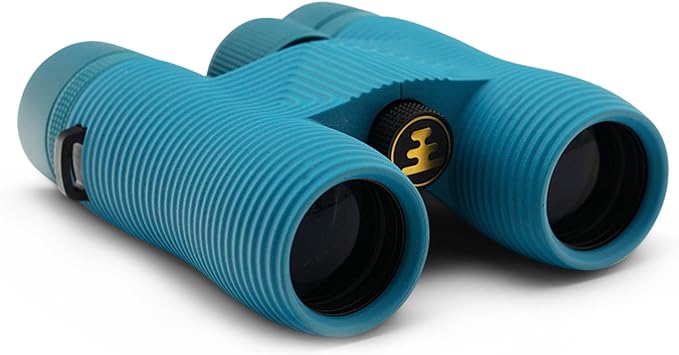
Weighing just 16.7 oz, these compact binoculars feature fully multi-coated optics and a Swiss-designed BaK-4 prism for bright, edge-to-edge clarity across a wide 387 foot field of view. IPX7 rated and nitrogen sealed, they handle submersion up to 3 feet for 30 minutes without compromising performance. A patented wave grip, three-position twist eyecups, and a no-matter-what lifetime warranty make them a confident choice for any adventure.
Check On AmazonIf you click this link and buy, we earn a commission at no additional cost to you.
Understanding the Real-World Compromise
You simply cannot cheat physics. If you want a binocular that weighs less than twelve ounces and fits in the palm of your hand, you are giving up something in return. For people with perfect vision, the main trade-off is low-light performance at dawn and dusk. For those of us wearing glasses, the trade-off is basic, everyday usability.
If you have astigmatism, simply taking your glasses off to use the binoculars is not a viable workaround. The diopter adjustment on a binocular can correct for simple vision differences between your left and right eyes, but neither it nor the center focus wheel can correct for astigmatism. This physical reality makes finding long eye relief absolutely mandatory, not just a nice bonus.
If your primary goal is finding compact binoculars that will actually work for you on a long trip, you must be prepared to accept a small compromise. That usually means spending a bit more money for premium optical engineering, or accepting the slightly larger footprint of an 8×32 format to guarantee a comfortable view.

Multilayer-coated aspherical lenses with advanced anti-reflective coatings deliver sharp, high-contrast, true-to-color views in forests, fields, and low-light conditions. Nitrogen-filled and O-ring sealed for waterproof, fog-proof performance through rain and temperature swings. Rubber-armored for shock absorption and a secure grip, with over 15mm of eye relief and a smooth center focus knob for quick, comfortable adjustments with or without glasses.
Check On AmazonIf you click this link and buy, we earn a commission at no additional cost to you.
Final Thoughts: Usability Beats Portability
A compact binocular that doesn’t fit your face is essentially an expensive paperweight. When you wear glasses, the physical size of the optic is ultimately less important than whether you can actually see through it comfortably. Do not let weight be your only metric.
Carrying a 16-ounce 8×32 binocular that gives you a bright, wide, edge-to-edge image is vastly superior to struggling with a 10-ounce pocket model that feels like looking through a keyhole. Verify the eye relief, consider the prism shape, and choose the tool that lets you focus on the landscape instead of your equipment.
FAQs
📏 What is a good eye relief number for glasses wearers?
You should look for an eye relief specification of at least 14mm. For maximum comfort and a full field of view edge to edge, 16mm or higher is ideal.
🔭 Are 8×25 or 8×32 binoculars better for eyeglasses?
In most cases, 8×32 models are better. The slightly larger physical design makes it much easier for manufacturers to build in longer eye relief compared to the highly compressed 8×25 format.
👁️ Can I use compact binoculars without my glasses if I have astigmatism?
No. Binocular focus wheels and diopters cannot correct for astigmatism. If you have astigmatism, you must keep your glasses on, which makes finding a binocular with long eye relief mandatory.
👓 Do progressive lenses cause problems with compact binoculars?
They can. Progressive lenses require you to look through a specific upper zone for distance viewing. This requires a slight head tilt that can cause distortion if the binocular’s eye relief is too short to allow proper alignment.