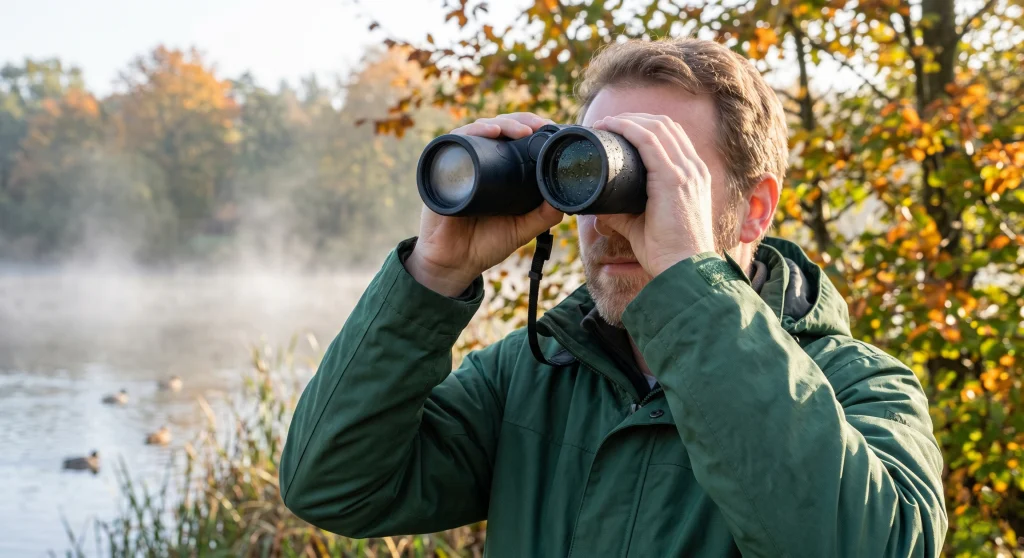
Do I Need Waterproof Binoculars? An Honest Answer Based on How You Actually Use Them
People standing at the optics counter holding two identical-looking boxes frequently ask me the exact same question. They want to know, do I need waterproof binoculars if I never plan to go outside in the rain? It is a perfectly logical thing to ask. If you are just watching birds from your back deck on a sunny Tuesday afternoon, paying extra for weather sealing feels like buying snow tires in Florida.
If we are only talking about rain, the answer is simple. You can easily get away with standard, unsealed optics as long as you put them away when the clouds roll in. The problem is that most people do not realize what happens to the air inside the barrel of their optics when the temperature changes.
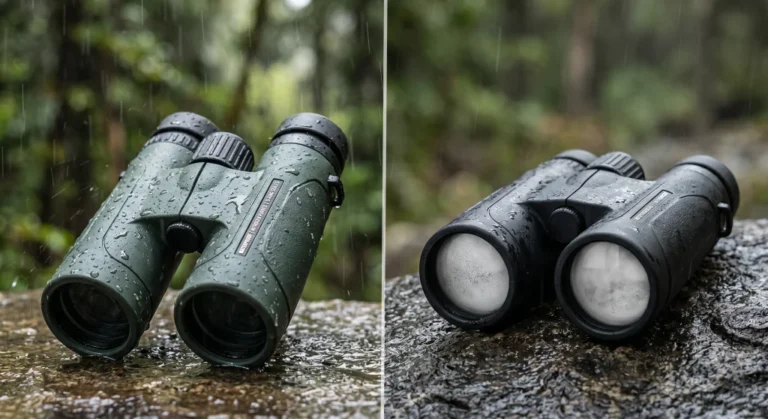
Over the years, I have seen more binoculars ruined by bright, sunny mornings than by actual rainstorms. The damage does not happen all at once. It happens slowly, right inside the lenses where you cannot reach it. Understanding how this process works will help you figure out if making the upgrade is actually necessary for your specific routine.
The Obvious Case: Rain, Boats, and Wet Environments
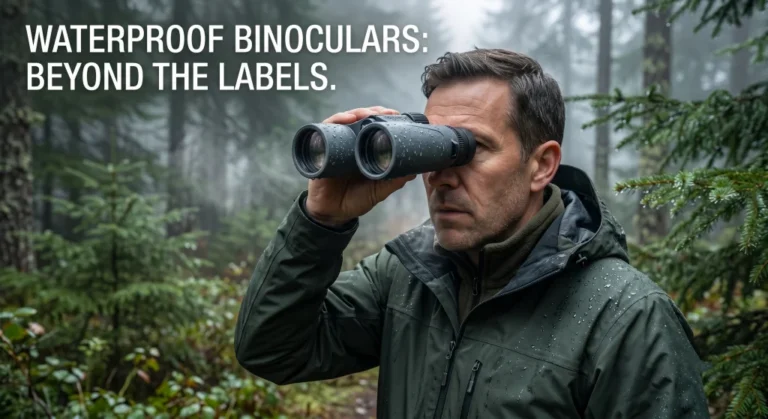
Let us cover the straightforward scenarios first. If you spend time on a boat, hike in the Pacific Northwest, or hunt in areas where weather changes rapidly, full weather sealing is completely non-negotiable. In these environments, water exposure is not a possibility. It is an absolute certainty.
When unsealed binoculars get wet, moisture seeps past the focus wheel and the eyepieces. Once water gets inside the optical chassis, it sits on the internal prisms and lenses. You cannot take them apart to wipe the lenses down, because realigning the internal prisms requires specialized factory equipment that costs thousands of dollars.
Warning: The terms “water-resistant” and “weatherproof” do not mean the same thing as fully waterproof. A water-resistant model can survive a light sprinkle, but it will not survive being dropped in a puddle or exposed to heavy, sustained rain.
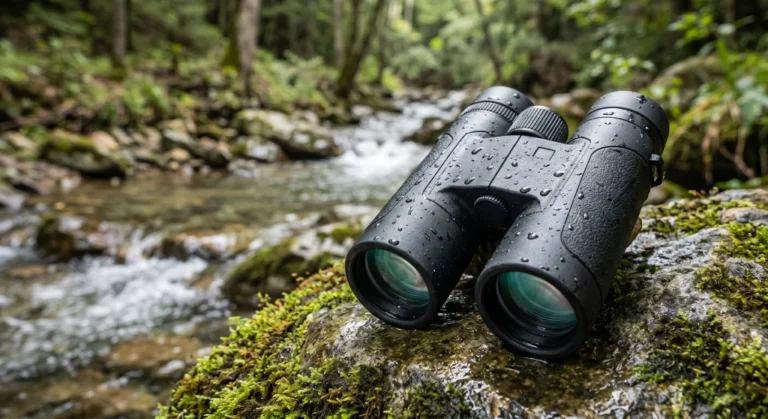
For anyone spending time near the ocean, lakes, or dense, damp forests, the decision is already made for you. You need equipment that is sealed with O-rings to physically block water from entering the chassis. If you are still exploring the different types of binoculars available, make sure you strictly limit your search to fully sealed models for these activities.

Multi-coated lenses and BaK-4 prisms deliver sharp, color-accurate images across a wide 7 degree field of view, making it easy to track birds and wildlife in any lighting. The rubber-armored polycarbonate body is waterproof, nitrogen-purged, and tripod-adaptable for steady extended sessions. Backed by a Celestron Limited Lifetime Warranty and US-based support from a California optics brand with over 60 years of experience.
Check On AmazonIf you click this link and buy, we earn a commission at no additional cost to you.

Multilayer-coated lenses with silver-alloy prism coating deliver vivid, sharp images from dawn to dusk. O-ring sealed and nitrogen-purged, they stay clear through rain, snow, and humidity. The fiberglass-reinforced polycarbonate body with rubber armor keeps them lightweight yet durable, with turn-and-slide eyecups for comfortable all-day use with or without glasses.
Check On AmazonIf you click this link and buy, we earn a commission at no additional cost to you.
What to Do If Your Binoculars Are Already Fogged
If you are reading this because your current optics just fogged up from the inside, you have a practical decision to make. First, do not put them in a bag of rice, and definitely do not try to unscrew the eyepieces yourself. Bring them into a warm, dry room and let them sit at room temperature. The fog will usually dissipate on its own after a few hours.
However, you need to understand that once that moisture barrier is breached, the fogging will happen again the next time the temperature drops. The moisture is now trapped inside. At that point, the cost of sending unsealed binoculars back to the manufacturer for a professional cleaning and resealing is almost always higher than just buying a new, fully waterproof pair. Once fungus sets in, the optics are essentially ruined.

Fully multi-coated lenses and phase-coated BaK-4 prisms deliver bright, crisp, color-accurate images across all lighting conditions, with a wide 7.4 degree field of view for easy tracking. The rubber-armored polycarbonate body is waterproof, nitrogen-purged, and tripod-adaptable for extended sessions. Backed by a Celestron Limited Lifetime Warranty and US-based support.
Check On AmazonIf you click this link and buy, we earn a commission at no additional cost to you.
When You Can Genuinely Skip Weather Sealing
I always try to give people a straightforward answer, which means admitting that there are a few specific situations where you truly do not need weather sealing. So, do binoculars need to be waterproof to be useful? Not always. There are a handful of scenarios where you can save your money and buy a basic, unsealed pair without any anxiety.
The most common exception is indoor use. If you are buying a small pair of optics exclusively to watch operas, theater performances, or indoor stadium sports, weather sealing offers absolutely no benefit. The temperature in those environments is controlled, and it never rains inside a theater.
Buying a heavy, rubber-armored, fully submersible marine binocular just to sit in the balcony of a climate-controlled concert hall. You are paying for heavy features you will never use.
Buying a lightweight, unsealed compact binocular for indoor events, and saving your budget for a dedicated, fully sealed pair for your outdoor hiking trips.
The other exception is budget equipment for children. If you are spending thirty dollars on a starter pair for a young child to use in the backyard, do not worry about weather sealing. At that price point, any claims of waterproofing are highly suspect anyway, and the optics will likely be dropped on the driveway long before internal fogging becomes an issue.
Pro Tips for Unsealed Optics: If you decide to stick with standard binoculars, you have to manage the moisture yourself to prevent damage. Store them inside your house, not in a cold garage or a damp basement. Toss a few silica gel packets into your carrying case. When bringing them from a cold outdoor environment into a warm house, leave them inside their closed case for a few hours so they can equalize to the room temperature slowly.

Each non-toxic, cobalt-free silica gel packet absorbs up to 30 percent of its weight in moisture, making them safe for storing food, spices, medications, and valuables. Fully reactivatable in an oven, microwave, or sunlight for repeated use, and each 5g packet covers approximately 600 cubic inches of container space. Comes in a 50-pack measuring 2.16 by 1.77 inches per packet, ideal for protecting optics, electronics, leather goods, and more.
Check On AmazonIf you click this link and buy, we earn a commission at no additional cost to you.
Final Thoughts: Making the Right Call for Your Gear
The reality of outdoor gear is that you cannot always control the environment. You can only control what you carry into it. If your binoculars only live on your kitchen counter for looking at the bird feeder through a window, you can absolutely save your money and skip the weatherproofing.
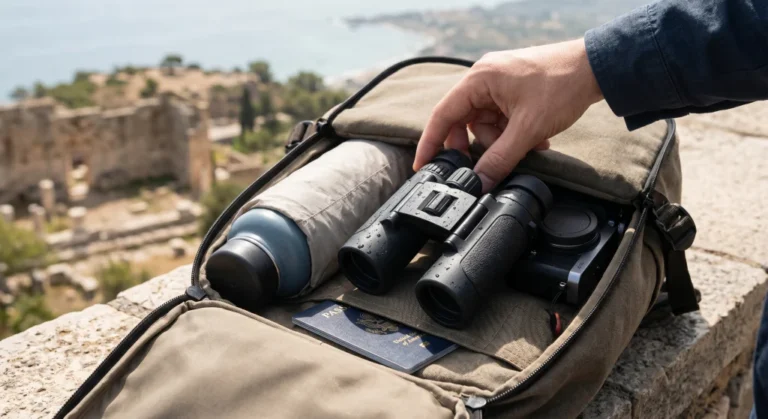
But if you plan to put them in a backpack, leave them in a truck console, or carry them up a trail, the upfront cost of weather sealing pays for itself the very first time the temperature drops. If you are ready to explore your options, head over to our main guide on what waterproof binoculars actually mean to make sure you get exactly the protection you are paying for.
FAQs
💦 Are waterproof binoculars necessary for everyday backyard birding?
If you only birdwatch from your patio in nice weather, they are not strictly necessary. However, if you store them in a cold garage or leave them on a sunny windowsill, you run the risk of internal condensation. Fully sealed models prevent this completely.
💸 Are waterproof binoculars worth it if I never go out in the rain?
Yes, because rain is only one factor. The main benefit of fully sealed optics is that they prevent internal fogging and stop lens fungus from growing when you move between warm and cold environments.
🌫️ Do binoculars need to be waterproof to be fogproof?
Yes. Fogproofing requires replacing the ambient air inside the barrel with an inert gas. The only way a manufacturer can keep that gas permanently trapped inside is by building a fully waterproof, O-ring sealed chassis. You cannot have a genuinely fogproof binocular that is not also waterproof.
🔍 Should I get waterproof binoculars for indoor concerts and theaters?
No. Indoor venues are climate-controlled and free from rain, humidity, and extreme temperature swings. You can safely buy standard, unsealed binoculars for indoor events to save money and reduce the physical weight of the equipment.