The Appeal of Ditching the Chest Harness
The idea of swapping a heavy optics rig for a single tube is incredibly tempting. From what I have seen behind the optics counter, hunters often walk in wanting exactly this setup. They hold a 12×50 monocular, drop it in a shirt pocket, and think they have solved their weight problem. Sometimes they have, but often they are setting themselves up for a miserable time on the mountain.
The core appeal of a monocular is pure physical freedom. A full-size binocular requires a harness. It sits on your chest, traps heat, accumulates sweat, and gets in the way when you are crawling through brush or drawing a bow. A monocular eliminates all of that interference.
There is a growing trend of hunters making this switch. GearJunkie contributor Morgan Nowels famously hunted multiple backcountry trips using only a Maven M.2 12×50 monocular. He said the freedom from a clunky chest harness made the whole approach worth it. I hear this exact sentiment constantly. You get high magnification in a device that slides into a jacket pocket, and when you are done, it disappears entirely. For a very specific type of hunter, this is the perfect setup.

Built from rain-resistant 500D Cordura, this hunting chest pack fits binoculars up to 6 by 7.1 inches with a dedicated 4.1 by 3.1 inch rangefinder pouch and MOLLE webbing for fully customizable gear organization. Silent magnetic closures deliver stealthy one-handed access without noisy zippers or velcro. Breathable padded straps adjust from small to extra-large for all-day comfort on extended hunts.
Check On AmazonIf you click this link and buy, we earn a commission at no additional cost to you.
The Hidden Wall of Depth Perception
Here is where the monocular dream usually hits reality. The problem is not the glass or the magnification. The problem is your brain. When you compare hunting binoculars vs monocular setups, you are really comparing two different ways your brain processes visual information.
When you use two eyes, your brain processes 3D space naturally. You have depth perception. You can easily tell if a patch of brown is a deer bedded behind a sagebrush or just a stump sitting in front of it. When you look through a single tube, your brain has to work incredibly hard to interpret a flat image as a 3D landscape.
Field Note: I once had a customer come back after an elk hunt in Colorado. He had bought a premium monocular specifically to save weight. He told me that after two hours of glassing a basin, he had a splitting headache and his vision felt entirely out of focus. He hadn’t bought bad glass. He had just hit the wall of depth perception fatigue.
This fatigue is the deciding factor. If you are glassing an alpine basin for three hours trying to pick out an animal, a monocular will punish you. Your eye will tire, your concentration will drop, and you will miss things. For open-country hunts where you are staring through optics for long periods, binoculars remain the absolute standard because they allow your brain to relax while you observe.
How Terrain Decides the Debate
The decision between these two optical tools rarely comes down to personal preference. It almost always comes down to the terrain under your boots. I tell hunters to look at their environment before they look at their optics. The way you hunt dictates how long you keep your optic raised to your eye.
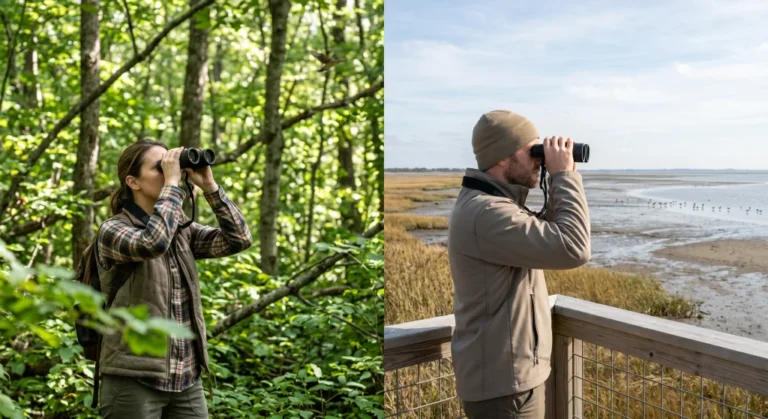
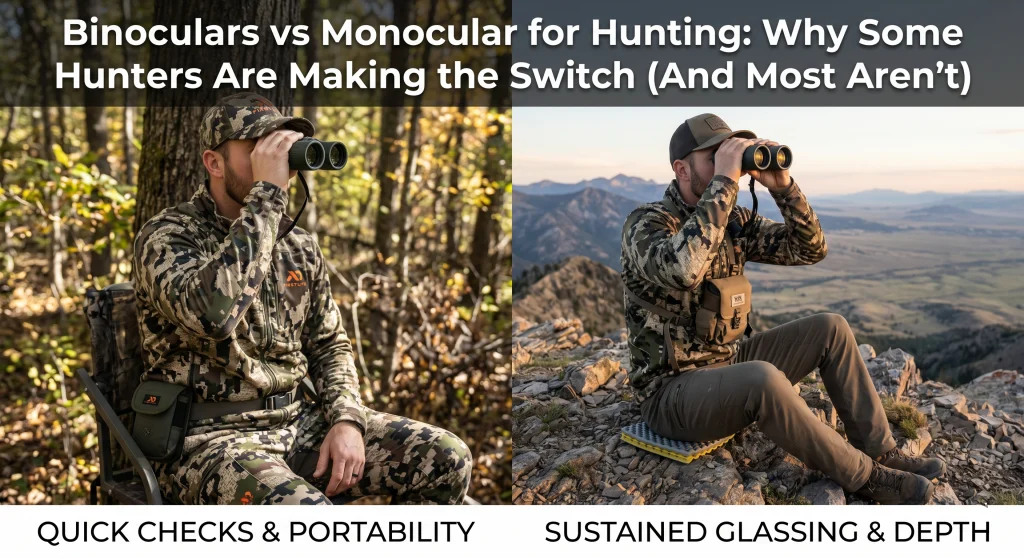
Hunting east of the Mississippi often means sitting in a tree stand in dense hardwoods. You might only glass for short bursts to check a specific movement in the brush or confirm antler size on an approaching deer. You are not scanning vast ridgelines. For this environment, anyone looking for binoculars or monocular deer hunting advice will find that a monocular is entirely adequate. It is light, fast, and does the job without the bulk.
| Hunting Environment | Typical Glassing Time | Best Optic Choice |
|---|---|---|
| Eastern Hardwoods (Tree Stand) | Brief checks (1-5 minutes) | Monocular works exceptionally well |
| Dense Brush / Swamp | Quick identification under 100 yards | Monocular or compact binoculars |
| Western Spot-and-Stalk | Extended periods (1-4 hours) | Full-size binoculars mandatory |
| Open Plains / Agriculture | Long distance scanning | Full-size binoculars mandatory |
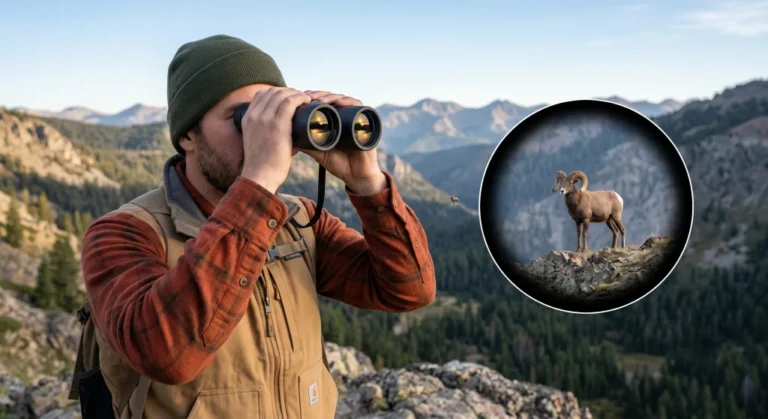
Western hunting is an entirely different game. You find a high vantage point, sit down on a pad, and pick apart a mountain mile by mile. In this environment, depth perception is your primary tool for separating a bedded animal from the brush around it.

Multi-layer lenses with FMC coating deliver 99.9% light transmittance and ghost-free clarity through a built-in BAK-4 prism, making it capable in low-light conditions. The rubber-armored body is non-slip, shock-absorbing, and weather-resistant, with a smooth single-finger focus knob and adjustable eyecup for comfortable use with or without glasses. Includes a smartphone adapter and tripod for hands-free extended observation and photo capture.
Check On AmazonIf you click this link and buy, we earn a commission at no additional cost to you.
Magnification, Weight, and Weather
If you do decide to pack a monocular, the magnification rules shift slightly. That 12×50 Maven is popular because it maxes out distance identification, but holding 12 power steady in one hand is notoriously difficult. If you just need a quick optic for the eastern woods, an 8×32 or 10×42 monocular is significantly faster to get on target when you are trying to track a buck moving through a timber gap.
There is also a physical advantage beyond just getting rid of the harness. A standard 10×42 binocular with a chest rig weighs anywhere from 24 to 30 ounces. That large 12×50 Maven monocular drops you to about 17 ounces. If you scale down to a standard 8×32 or 10×42 monocular, you are carrying just 10 to 12 ounces in a pocket. You literally cut your optics weight in half or more.
One more advantage worth mentioning: the single-tube design is fundamentally easier to waterproof. Because a monocular has no moving central hinge, it is less vulnerable to moisture ingress. At lower price tiers, a budget monocular often survives rain and fog better than budget binoculars at the exact same price point.

Select HD glass elements with fully multi-coated lenses deliver exceptional edge-to-edge sharpness, color fidelity, and light transmission in a compact roof prism design. Nitrogen-purged and O-ring sealed for waterproof, fog-proof performance in any conditions, with rubber armor for shock resistance and a secure grip. Tripod-adaptable and backed by Vortex's unlimited, unconditional, fully transferable lifetime VIP Warranty.
Check On AmazonIf you click this link and buy, we earn a commission at no additional cost to you.
The Backup Optic Strategy
There is a third option that many serious hunters eventually land on. They stop treating it as an either-or choice. Instead of trying to force one tool to do everything, they carry both, assigning specific jobs to each optic based on their strengths.
Here is how a typical dual-optic setup looks in the field for a serious backcountry hunter:
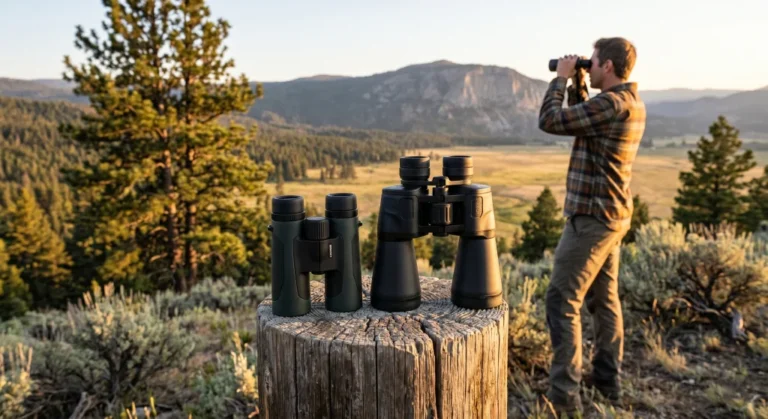
- Primary Glass: A quality 10×42 binocular sitting in a chest harness, used for all deep observation work from a seated position.
- Quick-Check Glass: A compact 8×32 or 10×42 monocular tucked into a waist belt or thigh pocket for the hike in.
- The Transition: When moving between vantage points, the heavy binoculars go into the backpack to save chest strain. If a quick movement catches your eye on the trail, the pocket monocular comes out for a three-second identification.
This hybrid approach gives you the absolute best of both worlds, provided you are willing to carry the extra few ounces. If you want a broader look at how these tools compare outside of the hunting context, check my full breakdown of the binoculars vs monocular decision. Alternatively, if you are just starting to learn about optical numbers and what they mean in the field, my guide on binoculars explained is the best place to begin.

ED Prime glass with Ultra Wide Band Coating delivers exceptional clarity, color fidelity, and resolution even in low-light conditions at 10x magnification. O-ring sealed and rubber-armored for waterproof, fog-proof performance in any weather, with a smooth fast-focus knob and twist-up eyecup for comfortable use with or without glasses. Compact enough to pocket or toss in a backpack for any adventure.
Check On AmazonIf you click this link and buy, we earn a commission at no additional cost to you.
Final Thoughts: Matching the Tool to the Time
You cannot cheat physics, and you cannot cheat human biology. A monocular is a fantastic piece of gear when used for quick identification. It is the perfect tool for a hunter sitting in a tree stand who just wants to check the brush line without fighting gear.
However, it is the wrong tool for picking apart a landscape for hours on end. Let the terrain dictate your equipment. If you only need to identify movement for a few minutes, drop a monocular in your pocket. If the landscape demands patient observation, two eyes will always beat one.
FAQs
🌲 Is a monocular good for deer hunting?
It depends entirely on how you hunt. For stand hunting where you only make quick checks lasting a few minutes, a monocular is excellent and keeps your chest clear for archery. For open terrain hunting, it causes too much eye fatigue.
🎯 Can I track a moving animal easily with a monocular?
Tracking a moving target is noticeably harder with a monocular than with binoculars. You lose depth perception and your field of view is typically narrower, making it easier to lose the animal in heavy timber.
⚖️ Why do binoculars cost more than a monocular of the same quality?
A binocular requires two identical optical tubes built to exact matching specifications, plus a complex hinge mechanism to keep them perfectly aligned. A monocular is only half the material and does not require alignment calibration.
👓 Do I need a specific eye relief for a hunting monocular if I wear glasses?
Yes. Just like binoculars, you need a minimum of 14mm to 15mm of eye relief to see the full image while wearing eyeglasses. Anything less will result in a dark ring around the edges of your view.