The Double Trade-Off Most Buyers Miss
When someone is trying to choose between 8×42 vs 10×50 binoculars, they usually approach it like a simple upgrade decision. They assume the 10×50 is just a bigger, more powerful version of the 8×42. That is not how optics work in practice. You are actually changing two completely different variables at once.
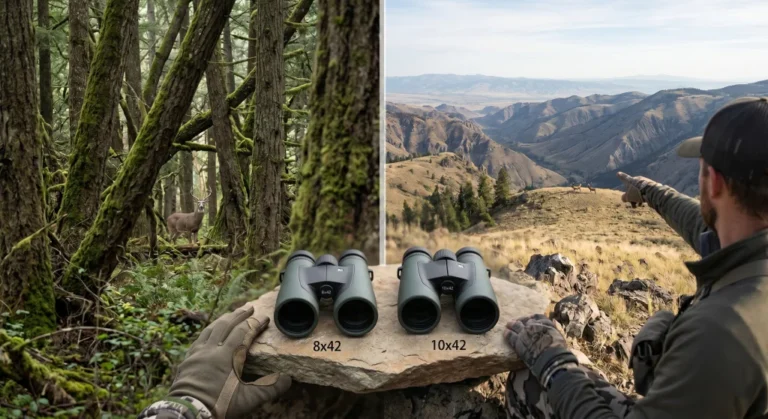
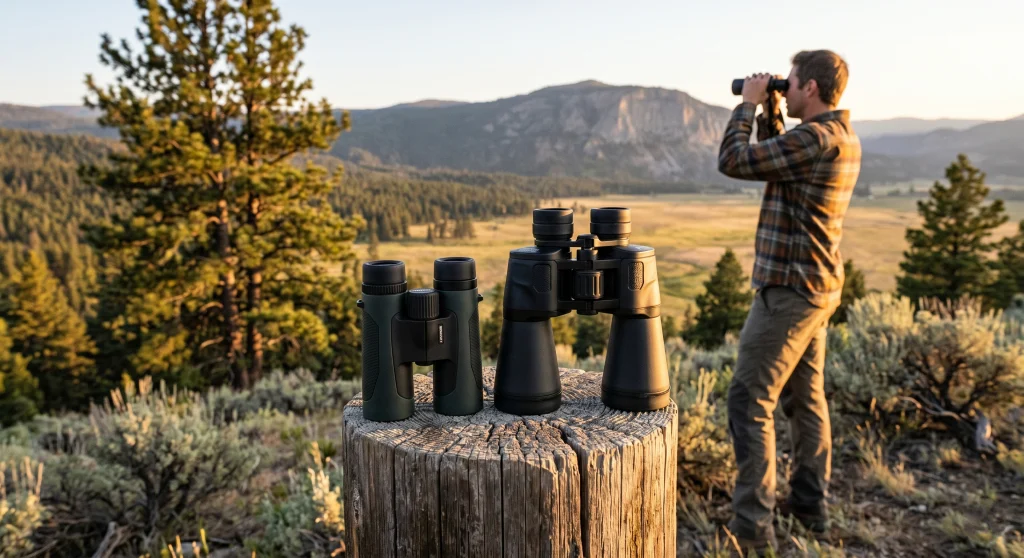
With an 8×42, you have a moderate magnification paired with a standard objective lens. With a 10×50, you are jumping up 25 percent in magnification while also increasing the objective lens diameter to 50mm. This changes the physical balance of the instrument, the field of view, the depth of field, and the way your eyes receive light.
Field Note: I have watched this confusion play out more times than I can count at the counter. A customer will test an 8×42, like it, and then ask to see the 10×50 because they want “a little more power.” They put the 10×50 to their eyes and immediately comment on how much heavier the front of the barrels feel, and how much harder it is to find the exit sign at the back of the store. They changed two variables at once and got a completely different optical tool.
If you are standing in a store wondering which is better 8×42 or 10×50, the answer is never about one being universally superior. The 8×42 is the most popular all-around configuration in the world for a reason. The 10×50 is the most popular specialty upgrade for people who have very specific needs at dawn and dusk. To know which one you need, we have to isolate what those two different sets of numbers actually do in the field.
The Case for 8×42: Speed and Stability
The primary advantage of an 8×42 binocular is how forgiving it is to use. That forgiveness comes in three specific forms: field of view, stability, and eye placement.
Because the magnification is kept to 8x, the field of view (FOV) remains wide. A typical 8×42 will give you a viewing window of somewhere between 330 and 430 feet at 1,000 yards depending on the specific model. By comparison, a 10×50 from the same manufacturer will almost always have a narrower FOV, typically sitting between 280 and 330 feet. This sounds like a minor spec difference until you try to find a fast-moving object in dense brush. A wider FOV means you acquire your target faster. You do not have to be perfectly aligned to catch the movement in the edge of your glass.
Stability is the second major factor. Every bit of handshake you have is amplified by the magnification power of your optics. At 8x, most adults can hold a binocular perfectly steady for minutes at a time without straining. The image remains calm. Your brain does not have to work hard to process a vibrating picture.
Finally, we have the exit pupil. If you have read my foundational guide where I have binoculars explained in detail, you know that dividing the objective lens by the magnification gives you the exit pupil. For an 8×42, that is 5.25mm. That creates a generous shaft of light hitting your eye. Even if you do not hold the binoculars perfectly centered, your eye still catches the full image. It is an incredibly easy, comfortable optic to use.

Fully multi-coated lenses and phase-coated BaK-4 prisms deliver bright, crisp, color-accurate images across all lighting conditions, with a wide 7.4 degree field of view for easy tracking. The rubber-armored polycarbonate body is waterproof, nitrogen-purged, and tripod-adaptable for extended sessions. Backed by a Celestron Limited Lifetime Warranty and US-based support.
Check On AmazonIf you click this link and buy, we earn a commission at no additional cost to you.
The Case for 10×50: Distance and Low Light
If the 8×42 is about speed and comfort, the 10×50 is about raw capability at the margins of the day. You are trading away that wide field of view and compact weight to get two specific optical superpowers.
The first is obviously distance detail. A 25 percent increase in magnification matters when you are looking at something far away. If you are trying to count antler points on a ridgeline or identify the exact color pattern on a duck sitting across a marsh, 10x will give you the resolving power that 8x simply cannot match. You get a larger image projected to your eye.
The second advantage is light gathering. A 50mm objective lens has roughly 40 percent more surface area than a 42mm lens. That is a massive increase in the amount of glass collecting ambient light. The exit pupil works out to 5.0mm (50 divided by 10). While that is slightly smaller than the 8×42, it is still large enough to keep the image incredibly bright as the sun goes down.
Key point: In real-world head-to-head testing conducted by optics professionals, jumping from a 42mm to a 50mm objective lens typically buys the user an extra 5 to 10 minutes of viewable light during evening glassing. In situations where legal hunting light is fading, that extra 10 minutes is an eternity.
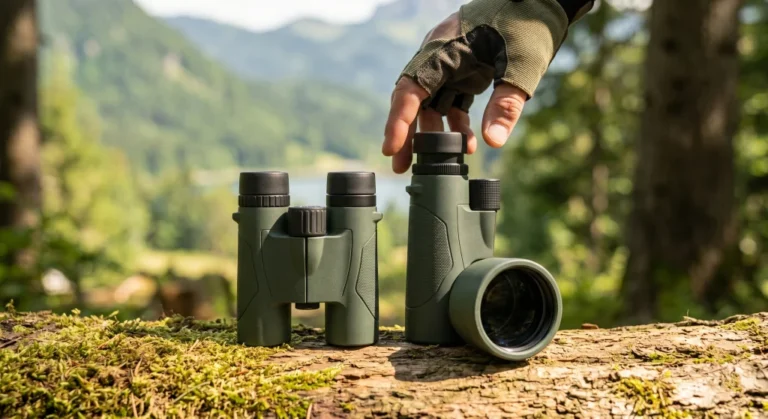
The cost of this performance is weight and balance. 50mm lenses require bigger, heavier glass elements at the far end of the binocular. This makes them noticeably heavier and more barrel-heavy than an 8×42. Over a long day of hiking, you will absolutely feel that difference on your neck or in your harness.

Made from strong, stretchy nylon webbing with a leather center back patch and tough retaining clips, this lightweight cross-back harness evenly distributes weight across both shoulders for fatigue-free all-day carry. Raising binoculars to viewing position is smooth and effortless, with gear resting flush against the chest when not in use. Compatible with most binoculars, cameras, and rangefinders.
Check On AmazonIf you click this link and buy, we earn a commission at no additional cost to you.
How Habitat Decides the Winner for Birders
When evaluating 8×42 vs 10×50 for birding, the decision almost entirely comes down to the environment you spend the most time in. Most birders are better served by the 8×42, but there are exceptions.
If you bird in forests, dense scrub, or heavy brush, target acquisition speed is everything. A warbler hopping between oak branches is not going to wait for you to find it. The wider field of view of the 8×42 allows you to raise the optic and instantly have the bird in frame. Furthermore, the 8×42 usually offers a significantly better close-focus distance. Many 8×42 models can focus on an insect or bird just 6 feet away, whereas a 10×50 typically needs 10 to 15 feet to achieve focus.
However, if you are a pelagic birder scanning the ocean, or if you spend your time at hawk watches staring at open sky, the 10×50 becomes highly relevant. In wide open spaces, you do not need a massive field of view to find a bird. You need the magnification to identify field marks on a raptor riding a thermal a quarter-mile away, and you need the 50mm objective to keep that high-magnification image bright.
The Terrain Split for Hunters
The debate over 8×42 vs 10×50 for hunting is one of the oldest arguments in outdoor gear. The truth is that the right choice is dictated by the geography under your boots.
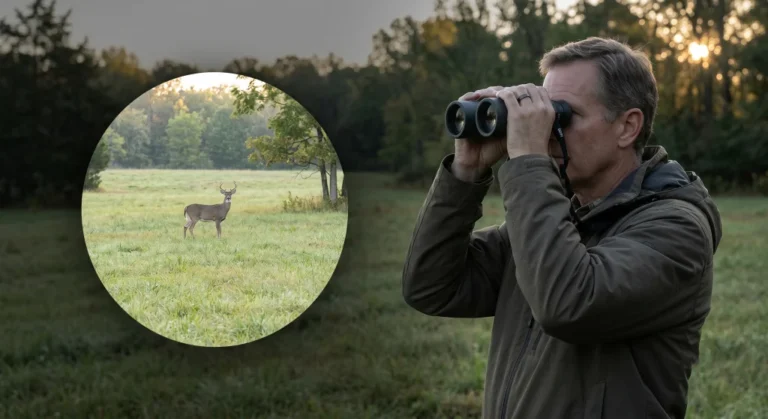
For eastern whitetail hunters sitting in tree stands in dense hardwoods, an 8×42 is nearly perfect. You are rarely glassing past 150 yards. You need to be able to pull up your optics quickly, find a deer moving through thick timber, and evaluate it in the low light of dawn. The 8×42 gives you the speed and the brightness you need without unnecessary weight.
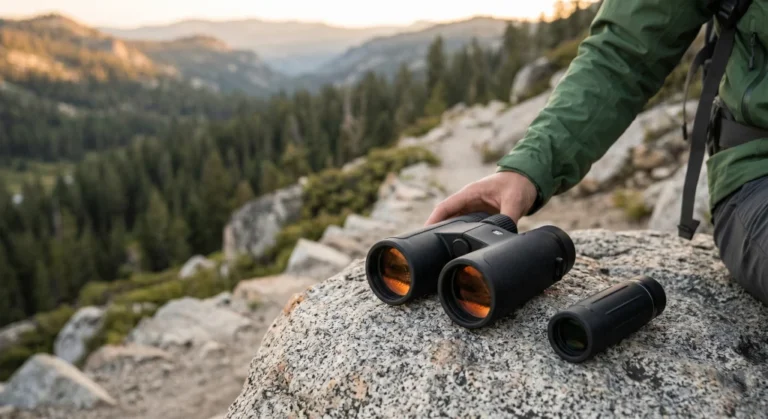
Meanwhile, western hunters pursuing elk or mule deer face a completely different reality. They often sit on a vantage point before dawn, waiting for enough light to glass a mountain face 600 yards away. In this scenario, the 10×50 is a powerhouse. The 50mm objective drinks in the pre-dawn light, and the 10x magnification allows them to judge an animal’s size from a massive distance. Because they are often glassing while seated and resting their elbows on their knees, the extra weight and handshake of the 10×50 is minimized. For a deeper dive into these terrain rules, my complete guide on binoculars for hunting breaks this down further.
If you find that you only need to evaluate the magnification difference and you want to stick with a lighter 42mm frame, my guide on 8×42 vs 10×42 binoculars explores that specific comparison.

Select HD glass elements with fully multi-coated, dielectric-coated lenses deliver exceptional sharpness, color fidelity, and light transmission across the larger 50mm objectives, while Armortek coating protects exterior surfaces from scratches and oil. Argon-purged and O-ring sealed for waterproof, fog-proof performance in any conditions. Includes a GlassPak chest harness and backed by Vortex's unlimited, unconditional, fully transferable lifetime VIP Warranty.
Check On AmazonIf you click this link and buy, we earn a commission at no additional cost to you.
Stargazing and Marine Use: When Aperture is Everything
If you point your binoculars at the night sky, the rules change entirely. For astronomy, aperture, the size of the objective lens, is the single most important specification. The 50mm lenses on a 10×50 pull in significantly more starlight than a 42mm optic ever could.
When looking at the Moon, the Pleiades star cluster, or the Andromeda Galaxy, the 10×50 resolves detail that the 8×42 simply cannot reach. Its 5.0mm exit pupil is practically perfect for dark-adapted eyes. While a 7×50 is often recommended as the safest beginner astronomy binocular for its wide field, the 10×50 is the natural step up for anyone wanting more resolution in the dark.
On the water, the situation flips. The standard marine binocular is a 7×50 because anything above 7x magnification becomes nearly impossible to hold steady on a rocking boat. If you are forced to choose between an 8×42 and a 10×50 for a sailboat, the 8×42 is actually the safer bet because it is easier to stabilize, even though the 10×50 would technically gather more light in a dark harbor.
The Upgrade Path: Adding a 10×50 to Your Gear
A significant portion of buyers looking at a 10×50 already own an 8×42. They want to know if buying the bigger optic will actually change what they see, or if it will just gather dust in the closet.
If you already own an 8×42 and are considering the 10×50 as an upgrade, run this diagnostic test: Do you regularly find yourself packing up and walking out of the woods, or off the viewing platform, because it is getting too dark to see detail? If you are constantly glassing in that final 30 minutes of twilight, or trying to pick out an animal across a wide valley at dawn, the 10×50 will give you capabilities you currently lack.
If you only use your binoculars during full daylight, save your money. The 50mm objective will not show you anything your 42mm cannot already see when the sun is up. If you are leaning toward the larger glass, reading up on exactly what 10×50 means on binoculars will help you understand the weight and balance trade-offs before buying.

This simple, quick-attach adapter transfers the weight of your binoculars onto a tripod for fatigue-free extended glassing sessions, revealing fine details that handheld viewing would miss. Standard quarter-inch 20 threading on both the top and base fits virtually any tripod-adaptable binoculars and most tripods or car window mounts.
Check On AmazonIf you click this link and buy, we earn a commission at no additional cost to you.
Making the Final Decision
To cut through the confusion, you need to evaluate your needs across two specific questions. Do not think about what sounds better on paper. Think about what you actually do when you step outside.
- Question 1: Do you need distance detail or target acquisition speed? If your targets are far away and stationary, lean toward the 10×50. If your targets are close, moving, or surrounded by dense cover, you need the wider field of view of the 8×42.
- Question 2: Are you actively observing 30 minutes before sunrise? If you only use your binoculars during daylight hours, a 50mm objective is dead weight. Your pupils shrink in the sun, meaning you cannot even use the extra light the 50mm lens provides. If you live for the first and last hours of light, the 10×50 earns its keep.
To make the physical differences clearer, here is how the specs generally fall across these two setups.
| Feature | Typical 8×42 | Typical 10×50 |
|---|---|---|
| Field of View (at 1000 yds) | 330 – 430 feet | 280 – 330 feet |
| Exit Pupil | 5.25mm | 5.0mm |
| Average Weight | 22 – 26 ounces | 28 – 34 ounces |
| Close Focus Distance | 5 – 8 feet | 10 – 15 feet |
| Handheld Stability | Excellent | Moderate (requires steady hands) |
The numbers in that table represent the physical realities you will deal with. You cannot cheat the math. You have to decide which setup serves your time in the field better.
Final Thoughts: Finding Your Fit
For the vast majority of people buying their first serious optic, the 8×42 is the right choice. It is lighter, faster, easier to hold steady, and incredibly forgiving. It does almost everything well. But if you have a specific need to see fine detail at long distances, and you regularly find yourself glassing in the fading light of dusk, the 10×50 is a specialized tool built exactly for that purpose. Be honest about where and when you use them, and the numbers will make the choice for you.
FAQs
🔭 Which is better 8×42 or 10×50?
Neither is universally better. The 8×42 is better for general use, fast target acquisition, and handheld stability. The 10×50 is better for long-distance observation and gathering maximum light during dawn and dusk.
🦌 Which is better for hunting, 8×42 or 10×50?
It depends entirely on your terrain. Generally, eastern woods hunters prefer 8×42 for quick target acquisition in dense cover. Conversely, western hunters glassing open country at long distances heavily prefer the 10×50 for its detail and low-light gathering.
🦉 Are 10×50 binoculars good for birding?
They are excellent for specific types of birding like hawk watching or scanning shorelines where birds are distant and stationary. For typical forest or backyard birding, they are usually too heavy and have too narrow a field of view to track fast-moving birds effectively.
⚖️ How much heavier is a 10×50 compared to an 8×42?
A typical 10×50 binocular will weigh about 6 to 8 ounces more than a comparable 8×42 from the same product line. Because that extra weight is concentrated in the larger front lenses, they can feel significantly more barrel-heavy in the hands.