The Shift in How I Look at a Binoculars Warranty
When I first started working at the optics counter, a binoculars warranty was the last thing on my mind. I spent my time talking to customers about prism types, light transmission, and field of view. I assumed that if someone bought a good piece of equipment, they would take care of it, and everything would be fine. My job was simply to match the right specs to the right person.
What changed my view was not a spec sheet or a training manual. It was seeing customers return to the counter after their trips. They were not returning because their binoculars had a manufacturing defect. They were returning because life happened, and they needed help.
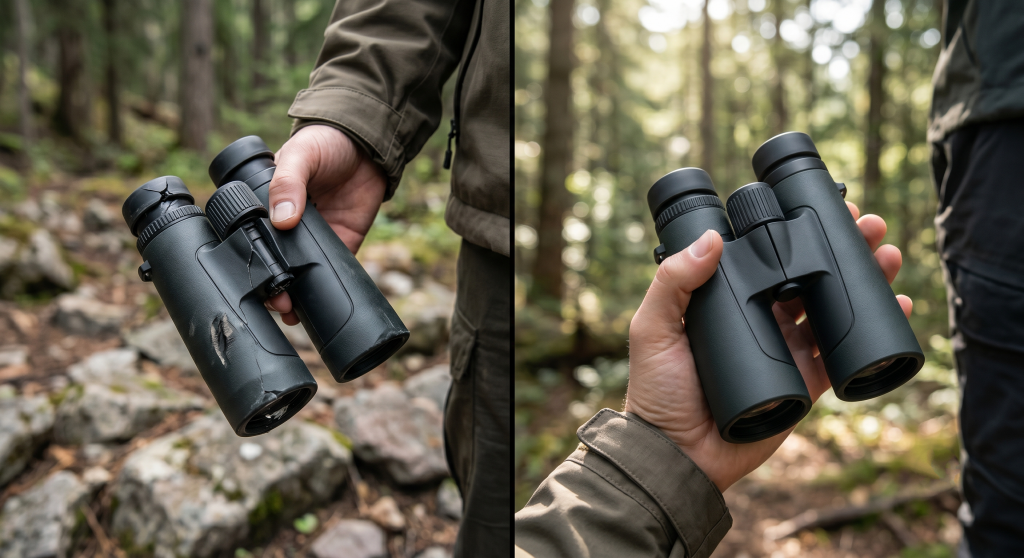
I distinctly remember a customer who bought a beautiful, premium pair of binoculars for a bucket-list hunting trip to Alaska. Two weeks after he got back, he came into the store holding them in two pieces. He had taken a hard fall and landed right on his chest harness. He assumed his coverage would handle the repair. I had to be the one to tell him that his specific policy only covered manufacturing defects. He had to pay almost full price to replace them.
But it was not just one guy falling in Alaska. I saw this pattern repeat every single week. A parent would come in holding birding binoculars their kid dropped on the driveway asphalt. A guy returning from an offshore fishing trip would bring in optics completely seized up by saltwater corrosion. Someone else left their gear on the roof of a car and drove away. The people who bought from brands with limited coverage felt completely abandoned. The people who bought from brands with unconditional support felt taken care of.
Field Note: The most common thing people said when returning broken optics was, “I didn’t even drop them that hard.” Binoculars are precision instruments. It takes very little impact to knock internal prisms out of alignment, resulting in a double image. Most people do not realize their optics are broken until they look through them, get an immediate headache, and wonder what went wrong.
The Reality of a Binoculars Warranty Comparison
When you look at a binoculars warranty comparison across different brands, the fine print is where the reality lives. Many boxes proudly display the words “Lifetime Warranty” in bold letters. Most people read that and assume they are protected forever, regardless of what happens. But in the outdoor gear industry, “lifetime” does not always mean unconditional.
I noticed a clear difference in how claims played out for my customers. One group had to argue for their coverage. They had to submit forms, provide original receipts, and prove the damage was a factory error rather than their own fault. The other group got immediate resolution with zero questions asked.
What “Unconditional” Actually Means
What does a true unconditional lifetime policy look like in practice? According to outdoor gear resources like GearJunkie, companies offering these policies will repair or replace your optics regardless of how the damage happened. You do not need a receipt. You do not need to register the product. There are no hoops to jump through. If your dog chews up the rubber armoring, it is covered. If you drop them in the campfire, it is covered.
This approach is widely considered the best binoculars warranty style in the industry. For example, a user on a popular outdoor forum named Uncle Zo shared his real claim experience. He sent in an older, heavily damaged pair of Fury HD binoculars. Because that specific model was no longer in production, the company sent him a brand new Fury HD 5000 as a direct upgrade. The Vortex warranty binoculars policy is built on this exact type of seamless replacement, and it builds massive customer loyalty.
The “Defects Only” Trap
Contrast that with a limited policy. A standard binoculars lifetime warranty often includes a major catch. It only covers defects in materials and workmanship. Accidental damage is your cost entirely.
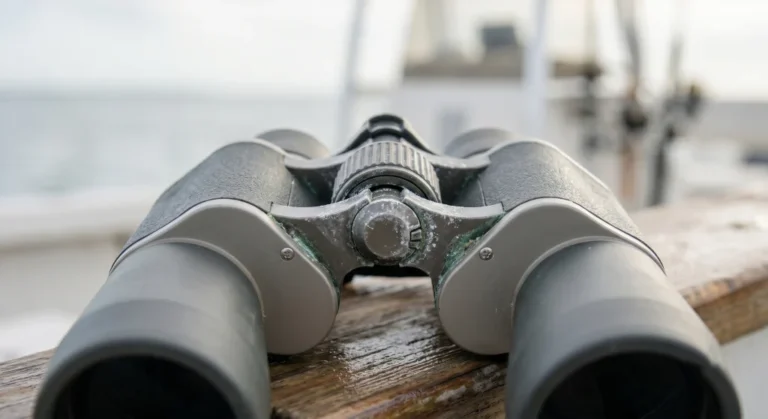
For a piece of equipment that lives in backpacks, bounces around your neck in the rain, and rests on hard boat decks, “defects only” covers a very narrow range of what actually happens in the field. Certain practical scenarios make limited policies especially risky. If you spend time on boats where wet hands lead to dropped gear, or if you frequently loan your optics to friends and family, the chances of accidental damage skyrocket. Here are common things a limited policy usually refuses to cover:
- Drops and impact damage that knock the internal prisms out of alignment.
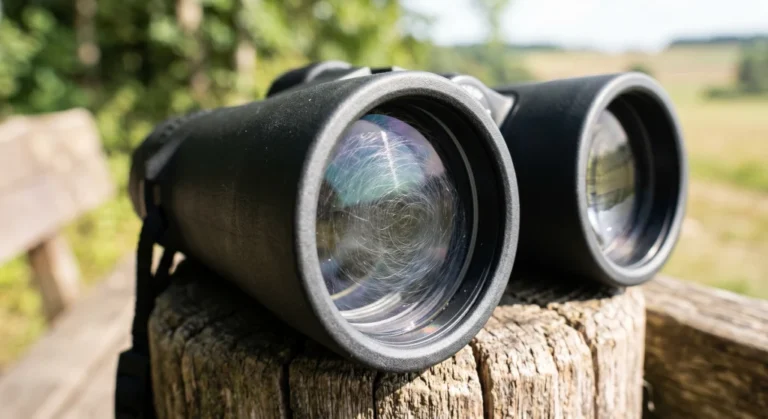
- Scratches on the objective lenses from wiping away grit.
- Water damage if the internal seals were compromised by a previous drop.
- Melted rubber armor from leaving the binoculars on a hot car dashboard.
| Warranty Type | What It Covers | Real-World Reality |
|---|---|---|
| Unconditional Lifetime | Everything, regardless of fault. | You drop them off a cliff, sweep up the pieces, mail them in, and get a repaired or new pair. No receipt required. |
| Limited Lifetime | Manufacturing defects only. | If the focus wheel breaks under normal use, you are covered. If you drop them and the focus wheel breaks, you pay for the repair. |
| Standard 1 or 2-Year | Manufacturing defects for a short window. | Very restrictive. Usually requires you to save the original receipt and register the product within 30 days of purchase. |
Is a Premium Binoculars Warranty Worth It?
People at the counter frequently asked me if paying a bit more for a better policy made the binoculars warranty worth it. My recommendation evolved directly from what I saw during my time at the store. If you are looking at two models with roughly equivalent optical quality, you should always choose the one with the stronger coverage. It is not even a contest.
If the optical quality is not exactly equal, you need to factor the coverage into the total cost of ownership. A $500 pair of binoculars with an unconditional lifetime policy has a completely different real cost profile than a $500 pair with a two-year, defects-only policy. The first one is a permanent purchase that you will never have to buy again. The second one is a financial risk every time you take it out of the case. This is a critical factor when understanding why some binoculars are expensive. You are not just paying for better glass. You are paying for a safety net.
Key Point: Unconditional coverage also completely changes the resale value of the optics. Because these policies typically follow the product rather than the original buyer, you can sell the binoculars five years later, and the next owner is fully protected. That keeps the used market value incredibly high. Limited policies almost never transfer to a second-hand buyer.
The Reality of Customer Service (What I Couldn’t Say at the Counter)
While working retail, I technically could not stand behind the counter and say that one brand’s customer service was universally terrible while another’s was perfect. We sold them all, and I had to remain neutral. But I absolutely knew the truth based on the returns I processed. Having to tell a customer that their expensive optics were essentially a total loss because they tripped over a log is an awful feeling.
Not every brand offered the same experience after the sale. The brands that made my job easier by taking generous, unconditional care of my customers were the ones I recommended more readily, even without being asked. When you are standing on a freezing ridge line or pitching around on a boat deck, you need to know the company stands behind their gear.
To make sure you are getting the right features before worrying about the warranty, I recommend starting with our full guide on what binoculars specs actually mean. And if your primary activity takes you into rough terrain, finding dedicated binoculars for hunting with an unconditional policy is not just a nice bonus. It is a mandatory requirement for surviving the backcountry.
Sources & References
- GearJunkie: Binoculars Warranty Comparison
- Uncle Zo: Real Vortex VIP Warranty Claim Experience
FAQs
🛡️ Does a lifetime warranty cover dropping my binoculars?
It depends entirely on the type of policy. An unconditional lifetime warranty covers drops, accidents, and user error. A limited lifetime warranty only covers manufacturing defects, meaning you will have to pay out of pocket if you drop them.
🧾 Do I need a receipt to claim a binoculars warranty?
For unconditional policies, you generally do not need a receipt or product registration. The warranty covers the optic itself, regardless of who owns it. For limited or short-term policies, you almost always need to provide the original purchase receipt.
🤝 Does a lifetime warranty apply if I buy used binoculars?
Unconditional warranties typically follow the product, meaning they automatically transfer to you even if you buy them second-hand. Limited warranties are almost always restricted to the original retail purchaser.
⏱️ How long does a warranty repair actually take?
Turnaround times vary by brand and season. Top-tier unconditional warranty providers often process claims and ship replacements within two to three weeks. Brands with limited policies or overseas service centers can sometimes take two to three months.
🦅 Is Vortex the only brand with an unconditional warranty?
No. While Vortex is famous for popularizing the VIP unconditional warranty, several other brands have adopted similar “no questions asked” lifetime policies to stay competitive in the market.
💰 Are expensive binoculars worth it just for the warranty?
In many cases, yes. Factoring in the replacement cost of a dropped pair of budget binoculars, spending more upfront for a premium pair with unconditional coverage often saves you money in the long run.