The $2,000 Walk-In
A customer walked up to the optics counter holding a pair of Swarovski binoculars. These were premium optics worth over $2,000. He told me the image had been getting progressively cloudier for months. Meticulous in his care, he actually cleaned them after every single use. That right there was the most common binoculars lens cleaning mistake I encountered. He was slowly destroying his optics precisely because he was trying to take care of them.
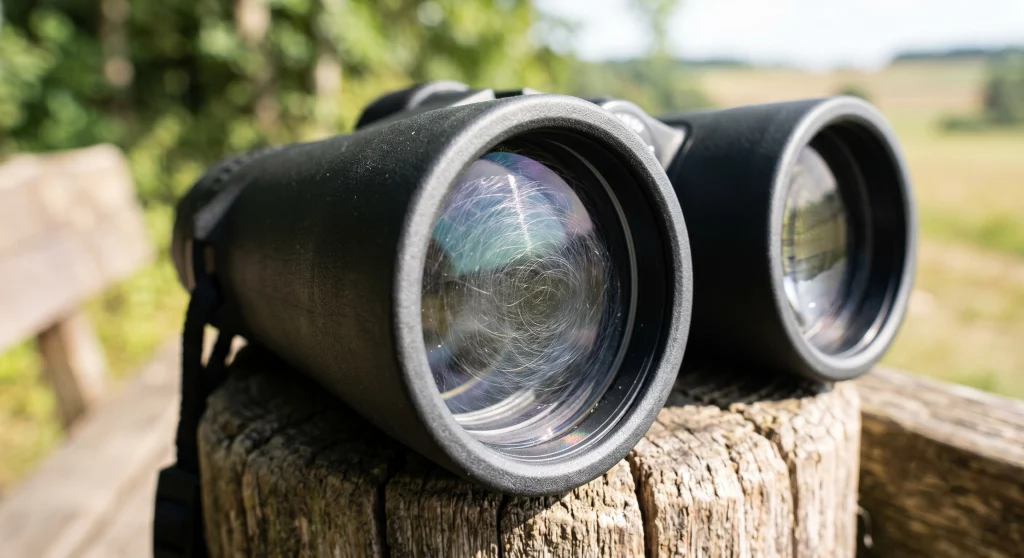
When I angled the objective lenses under the harsh fluorescent store lights, the problem was immediately obvious. There were thousands of microscopic scratches swirling across the exterior glass. They formed distinct, overlapping circular patterns. A damaged binocular coating looks almost like a faint, iridescent spiderweb when caught in the right light, and his lenses were covered in it.
I asked him what he usually used to wipe them down out in the field. He admitted he typically just used the tail of his polo shirt, or occasionally a random cotton rag he kept in his truck. Every time he did that, he was dragging trapped dust, sand, and dried salt across a surface that is measured in molecules. He thought he was polishing the glass, but he was actually sanding it.
Why Shirts and Paper Towels Destroy Glass
It is incredibly common for people to assume that if a fabric feels soft against their skin, it is safe for optical equipment. It simply does not work that way. The fibers themselves might be soft, but clothing acts like a sponge for environmental abrasives. A cotton or polyester shirt traps microscopic grit from the wind, sweat, and trails.
I frequently watched customers perform a specific variation of this habit right at the counter: the breath-then-wipe technique. They would exhale on the glass to create condensation, assuming the moisture made wiping safer. In reality, that condensation turned microscopic field dust into a wet paste, which they immediately scrubbed into the glass with their sleeve.
This damage is not limited to the large front glass. The smaller eyepiece lenses often take even more abuse. They constantly collect sweat, eyelash oils, and sunscreen, prompting users to rub them clean far more frequently, wearing down the coatings at an accelerated rate.
The Audubon Society is very clear on this rule. They state explicitly that you should never clean binoculars with your tie, handkerchief, the tail of your shirt, paper towels, facial tissue, T-shirts, or newspaper. All paper products contain fine wood fibers which will scratch your coatings immediately. If you want to know how to clean binoculars wrong, reaching for a napkin from your lunch cooler is the fastest method.
I saw a second, equally destructive version of this pattern all the time at the shop. Customers would prep their gear before a weekend trip by wiping the lenses down with paper towels from their kitchen because they were handy. The damage from cleaning binoculars with paper products happens even faster than damage from cotton clothing. The wood pulp fibers are coarse, and they leave a network of fine scratches that kill contrast.
| Cleaning Material | Effect on Optical Coatings |
|---|---|
| Paper Towels / Tissues | Severe damage. Wood fibers act as fine abrasives, scratching coatings immediately. |
| Shirt Tails / Clothing | Moderate to severe damage. Fabric traps field dirt and salt, dragging it across the lens. |
| Pre-moistened Glasses Wipes | Risk of damage. Many contain wood-based paper fibers or harsh chemicals not meant for multi-coated optics. |
| Dedicated Optical Microfiber | Safe. Designed to lift oils without scratching, but only if used on a dust-free lens. |
The Reality of Irreversible Damage
The hardest part of my job on the retail floor was explaining to people that this specific problem could not be fixed. You cannot buff out a scratched coating, and you cannot send the binoculars to a local camera shop to have the layers reapplied. Those anti-reflective layers are baked onto the glass in tightly controlled factory environments.
Once that microscopic layer is compromised, it is gone forever. The underlying glass might not be cracked, but the optical performance is ruined. As the experts at space.com accurately point out, if you damage the coating, you have damaged the lens, and therefore the binoculars. There is no middle ground.
I had to tell the customer with the Swarovskis that his optics were not technically broken, but they were permanently degraded. He had lost the brilliant light transmission and sharp contrast that usually explain why high-end binoculars cost so much in the first place. His $2,000 instrument now performed like a cloudy $100 pair. For a deeper look at what those delicate layers actually do for your image quality, you can read my guide explaining how binocular lens coatings work.
How to Actually Maintain Your Optics
The fix for this widespread issue is entirely preventative. The general consensus among serious field users on platforms like BirdForum is that you should keep them clean rather than constantly cleaning them. For the vast majority of your time outdoors, a simple bulb blower and a soft optical brush are the only maintenance tools you will ever need.
If you absolutely must remove a smudge, the rule is simple: never wipe first. Use a manual squeeze bulb blower to puff away the loose grit, perhaps follow with a soft brush, and stop there. Only when the physical grit is entirely gone should a clean, dedicated optical microfiber ever touch the glass. Use light pressure and let the cloth lift the oil naturally.
Field Note: A microfiber cloth is only safe as long as it is perfectly clean. Dropping your lens cloth in the dirt and reusing it is just as destructive as using a sandy shirt tail.
Interestingly, while some optics brands offer incredible replacement policies, physical abrasion from improper care often falls into a gray area. Relying on a company to replace optics you ruined by scrubbing them with a paper towel is a gamble. I discuss how these policies play out in the real world in my breakdown of what binocular warranties actually cover.
Final Thoughts on Protecting Your Investment
The customer with the clouded Swarovski binoculars left the store deeply frustrated, but he understood exactly what went wrong. He ended up buying a fresh lens pen and a blower bulb before he walked out. He could not fix his current pair, but he knew he would never make the same mistake on his next set.
Treat the glass on your binoculars with paranoia. Resist the urge to wipe away a speck of dust with your clothing, because a little dust rarely affects your view, but rubbing it in will ruin the lens. Finally, inspect the inside of your lens caps. I have seen customers meticulously clean their optics, only to snap on a cover lined with trapped trail dirt, pressing grit directly against the glass they just polished.
FAQs
👕 Is it safe to wipe binoculars with my shirt?
No. Clothing fabrics trap microscopic dirt, sand, and sweat. Wiping your lenses with a shirt acts like sandpaper on the delicate anti-reflective coatings, causing permanent micro-scratches.
🧻 Can I use paper towels to clean binocular lenses?
Never use paper towels, facial tissues, or toilet paper. These products contain coarse wood pulp fibers that will immediately scratch optical coatings.
💧 Should I use window cleaner on my binoculars?
Do not use household glass cleaners. The harsh chemicals, particularly ammonia, can strip away the specialized chemical coatings applied to binocular lenses.
🌬️ What is the best way to get dust off binocular lenses?
The safest method is to use a manual squeeze bulb blower to puff the dust away without touching the glass. For stubborn particles, use a soft, dedicated optical brush.
✨ Can scratched binocular lenses be repaired?
Scratched lens coatings cannot be repaired, buffed out, or reapplied. If the damage is severe enough to ruin the image, the entire lens or the binocular itself must be replaced.