How to Use Binoculars for Stargazing: Why You’re Wasting the First 20 Minutes of Every Session

How To Use Binoculars For Stargazing

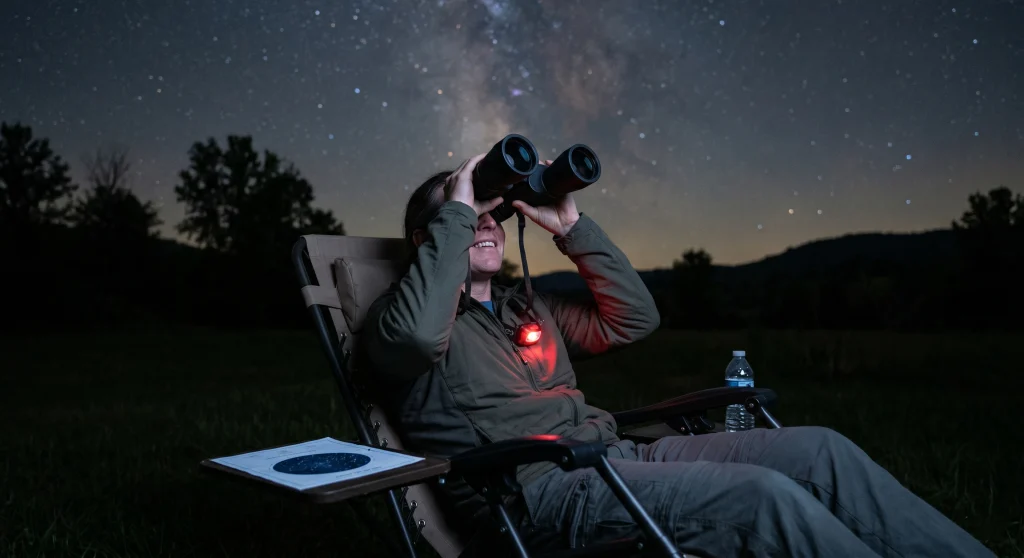
The most common reason people struggle with astronomy binoculars has nothing to do with the optics. It comes down to how human eyes process light in the dark. Looking at a phone screen between observations instantly resets twenty minutes of dark adaptation, rendering even the best glass ineffective. This guide covers the exact pre-session protocol … Read more

Are Night Vision Binoculars Good for Stargazing? The Nuanced Answer Astronomy Beginners Need
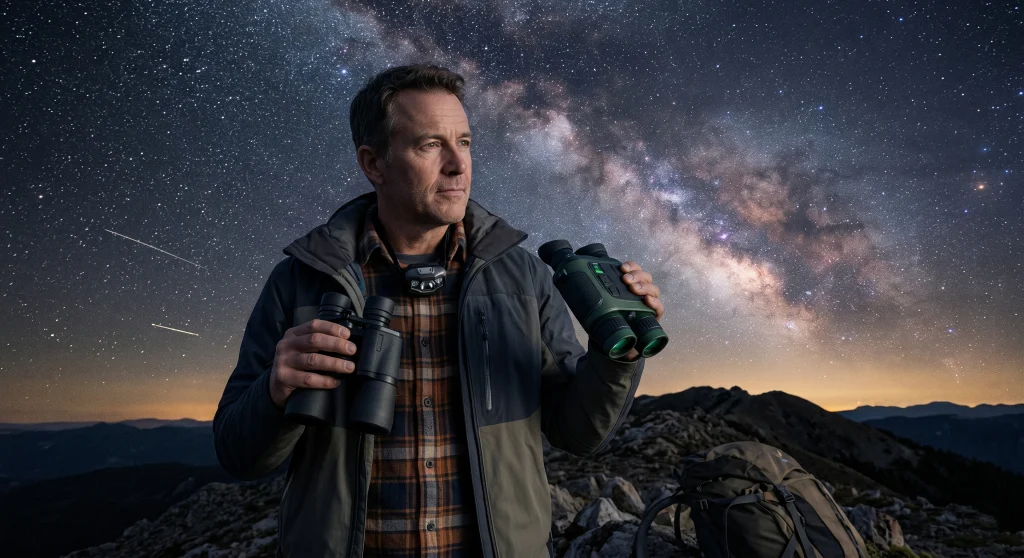
Are Night Vision Binoculars Good For Stargazing

If you are wondering whether to buy night vision equipment for astronomy, the answer depends entirely on what you want to look at. Night vision is incredible for tracking moving satellites and revealing the broad, glowing sweep of the Milky Way in real-time. However, for seeing crisp details on planets or deep-sky galaxies, standard optical … Read more
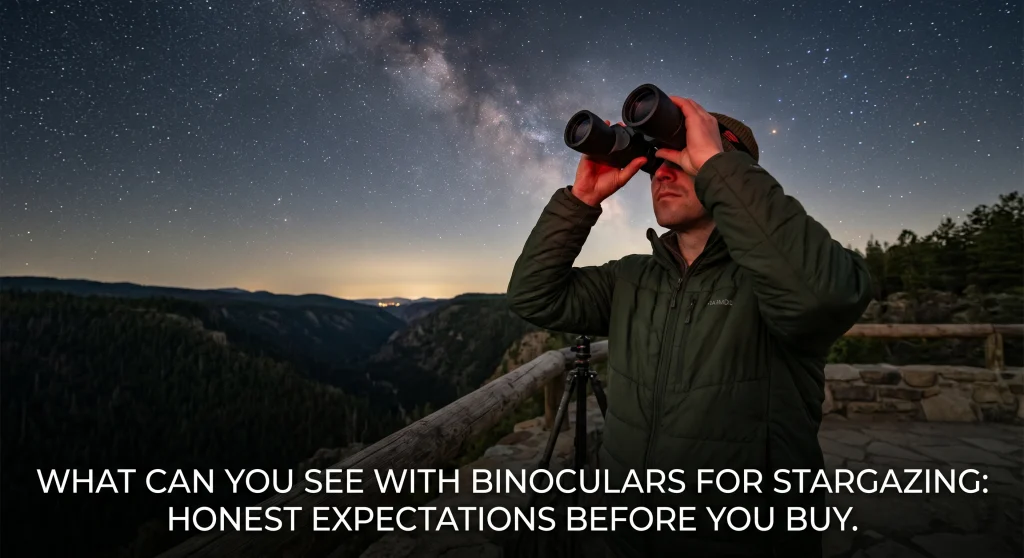
What Can You See With Binoculars for Stargazing: Honest Expectations Before You Buy

What Can You See With Binoculars Stargazing

The biggest frustration for new backyard astronomers comes from expecting their optics to reveal what space telescope photos show. Binoculars will not show you the brilliant colors of nebulae or the clear rings of Saturn. However, they will give you spectacular views of lunar craters, reveal Jupiter’s moons, and allow you to see the Andromeda … Read more

Binoculars for Stargazing: Why Aperture Beats Magnification (And What You Can Actually See)

Binoculars For Stargazing

For stargazing, the rules that apply to daytime binoculars shift significantly. Instead of focusing on magnification or portability, your primary concern becomes aperture and how much light the objective lenses can gather from the night sky. This guide breaks down exactly which specs matter for astronomy, why classic Porro prism designs often win out, and … Read more