The Core Difference Between Bow and Rifle Optics
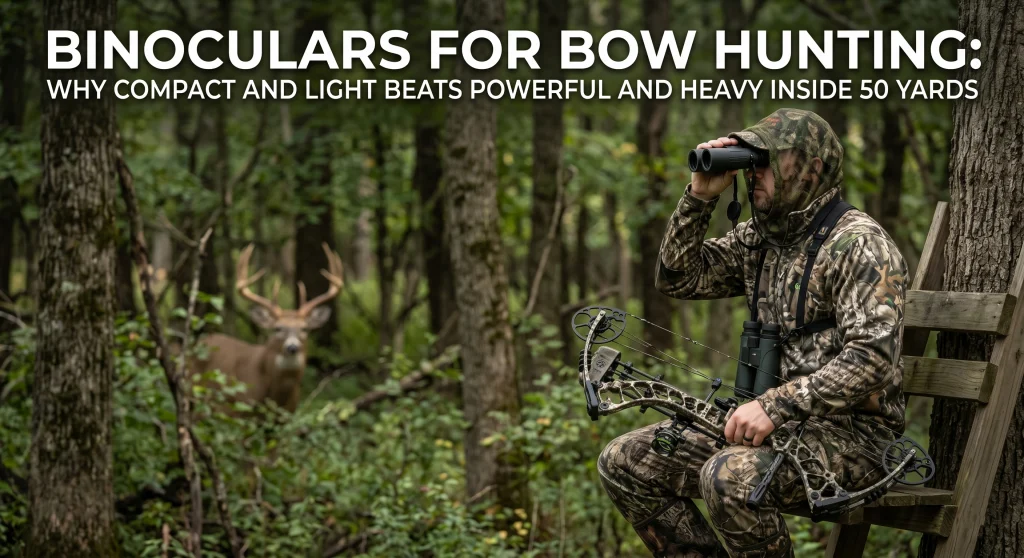
Choosing optics for archery requires setting aside the “bigger is better” mindset that works for rifle hunting on open ridges. Once you climb into a tight tree stand, your visual ranges shrink, and the physical challenge of operating gear with a bow in hand becomes the priority. Let’s look at why standard hunting glass often fails bow hunters, and what specs actually matter when your target is inside 50 yards.
The Range Reality and Magnification Factor
Most archery shots happen well inside of 50 yards. In dense eastern timber, your effective shooting lanes might only stretch 20 or 30 yards. At these close distances, high magnification is not just unnecessary. It is an active disadvantage that will cost you opportunities.
If you try to find a moving buck through 12x magnification at 25 yards, you are going to see a shaky blur of brown fur. You will struggle to locate the vitals quickly because the optic is zoomed in too far to give you context. High magnification creates a very narrow field of view. Lower magnification, like an 8x or even a 7x, provides a much wider picture of the woods.
This wider view lets you pick up movement faster and track an animal through the trees without constantly losing them behind branches in the lenses. In my experience, 8x is the absolute maximum magnification you want for typical archery setups. Anything higher makes close-range scanning incredibly frustrating and jerky. You want your eyes to transition naturally from looking at the woods to looking through the glass. An 8x magnification provides that smooth, comfortable transition.
The Real Cost of Weight and Noise
Archery hunters live and die by stealth. You are moving slowly in the pre-dawn darkness, navigating through thick brush, and trying not to make a single unnatural sound. Every extra ounce hanging around your neck adds to your physical fatigue. Worse, large and heavy optics increase the chance of your gear clanking against a tree step, your climbing sticks, or your bow riser.
This is where the difference between a compact 8×32 and a standard 8×42 becomes very real. A typical 8×42 binocular weighs around 24 to 28 ounces. A quality 8×32 mid-compact comes in closer to 16 or 18 ounces. That difference might sound completely trivial when you are standing comfortably in a retail store. After eight hours sitting rigid in a stand or hiking three miles on a spot-and-stalk through a swamp, your neck and shoulders will absolutely feel the difference.
Buying heavy 10x50s for a timber stand, assuming more glass means seeing more deer.
Choosing an 18-ounce 8×32 that stays out of the way of your bowstring and does not strain your neck.
Veteran users on the HuntingChat forums frequently point this out, noting that an 8×32 is ideal for the woods because you simply do not need massive power at close range, and the smaller footprint makes a huge difference over a long day. When you are packing in a climbing stand, a heavy jacket, and your weapon, shaving half a pound off your chest harness is a massive victory.

Select HD glass elements with fully multi-coated, dielectric-coated lenses deliver exceptional sharpness, color fidelity, and light transmission in a compact package, while Armortek coating protects exterior surfaces from scratches and oil. Argon-purged and O-ring sealed for waterproof, fog-proof performance in any conditions, with rubber armor for shock resistance and a secure grip. Tripod-adaptable and backed by Vortex's unlimited, unconditional, fully transferable lifetime VIP Warranty.
Check On AmazonIf you click this link and buy, we earn a commission at no additional cost to you.
The Mechanics of Single-Handed Operation
Think carefully about the physical reality of a hunt. You often hold a heavy compound or traditional bow in one hand. When you need to check a ridgeline, confirm a trail, or look at a suspicious shape in the brush, you only have one free hand to operate your optics.
Full-size binoculars are inherently difficult to hold steady and focus with a single hand. Their weight distribution and barrel width require a two-handed grip to keep the image stable. Compact binoculars for bow hunting, particularly the 8×25 or 8×32 roof prism designs, shine in this exact scenario. Their narrow profile allows you to wrap a single hand securely around the barrels and adjust the central focus wheel with your index finger.
Field Note: I used to talk to guys who would leave their binoculars in the truck because they felt too clumsy trying to juggle them with a bow. The moment I handed them a sleek 8×32 roof prism, their entire perspective changed. They realized the optic could be an extension of their hand rather than a bulky anchor bouncing against their chest.

Multi-coated lenses and BaK-4 prisms deliver sharp, color-accurate images across a wide 8.2 degree field of view in a pocket-friendly, lightweight design. The rubber-armored polycarbonate body is waterproof and nitrogen-purged for fog-proof performance in rain, snow, and humidity. Backed by a Celestron Limited Lifetime Warranty and US-based support.
Check On AmazonIf you click this link and buy, we earn a commission at no additional cost to you.
The Low-Light Compromise: 32mm vs 42mm
The most common hesitation I hear about dropping down to a smaller objective lens is the fear of losing low-light performance. It is true that a 42mm lens gathers more light than a 32mm lens. However, we need to look at how that translates to real-world archery hunting.
The brightness of an image is largely determined by the exit pupil, which is the objective lens divided by the magnification. An 8×42 delivers a 5.25mm exit pupil. An 8×32 delivers a 4.0mm exit pupil. At the darkest end of legal shooting light, your own pupil might dilate to 5mm or 6mm. In that specific window of dawn or dusk, the 42mm will look slightly brighter.
If you exclusively hunt deep, dark creek bottoms where legal light vanishes fast, a 42mm objective might earn its keep. But for the vast majority of standard timber hunting, the 4.0mm exit pupil of an 8×32 provides more than enough light to identify a target during legal hunting hours.
When to Glass versus When to Range
A frequent misconception is that if you are hunting at close range, you do not need binoculars at all, and a laser rangefinder is sufficient. But as seasoned bow hunters on ArcheryTalk frequently remind beginners, hunters who don’t carry binoculars are missing out on seeing probably ten times the number of animals in the woods. Your optics serve a completely different purpose than your rangefinder.
You do not use your binoculars to range a target during the final seconds before a shot. You use them for pre-dawn scouting on the walk to the stand. You use them to watch non-target animals during long, quiet sits, which keeps you engaged, still, and alert. Most importantly, you use them to confirm target identification, checking antler restrictions or looking for hidden branches in your shooting lane long before you ever decide to pick up your bow.
The reason many bow hunters leave their glass behind is a muscle-memory problem. They assume that when a buck suddenly appears at 30 yards, they will not have the time or the reflexes to fumble with binoculars. That is true if your gear is poorly managed. The solution is not to abandon the optics, but to optimize how you carry them.
A low-profile, snug chest harness is non-negotiable for archery. You need to be able to retrieve the optic, check a lane with one hand, and drop it silently back to your chest in one fluid motion. If you practice this motion, glassing becomes second nature and does not interfere with your readiness to draw.
Pro Tip: Always secure your optics tight against your chest. A standard neck strap will let the binoculars swing forward and potentially hit your bowstring when you lean down from a tree stand to execute a shot.

Built from rain-resistant 500D Cordura, this hunting chest pack fits binoculars up to 6 by 7.1 inches with a dedicated 4.1 by 3.1 inch rangefinder pouch and MOLLE webbing for fully customizable gear organization. Silent magnetic closures deliver stealthy one-handed access without noisy zippers or velcro. Breathable padded straps adjust from small to extra-large for all-day comfort on extended hunts.
Check On AmazonIf you click this link and buy, we earn a commission at no additional cost to you.
Matching the Optic to Your Hunting Style
The final decision comes down to the specific environment where you spend the most time waiting for an animal. If you primarily sit in tight timber stands where visibility is strictly limited to short ranges, a compact 8×25 or 8×32 is your best tool.
If you hunt open agricultural field edges, do creek bottom spot and stalk work, or occasionally mix your archery season with rifle season, a mid-size 8×42 offers a highly versatile compromise. It gives you slightly better low-light gathering for distant targets while still being smaller than a massive 10×50. If you are entirely focused on whitetails, you might also want to look into how the requirements change for deer hunting specifically.
To help clarify your decision, here is a quick breakdown of how these sizes stack up in the field.
| Binocular Size | Best Bow Hunting Application | Key Tradeoff |
|---|---|---|
| 8×25 Compact | Deep timber, long hikes, extreme stealth | Struggles slightly in very low dawn light |
| 8×32 Mid-Compact | The all-around sweet spot for stand hunters | Slightly larger footprint on the chest than a true compact |
| 8×42 Full Size | Field edges, spot-and-stalk, mixed weapon seasons | Heaviest option, requires a highly secure harness |
Before making your final choice, ask yourself these three practical questions:
- Will I be carrying a climbing stand in addition to my weapon on every hunt? (If yes, go lighter).
- Do I hunt dense pine thickets or open agricultural edges? (Dense thickets heavily favor a wider field of view).
- Am I trying to count antler tines at 200 yards, or just confirming the presence of an animal at 50?
For a broader look at how different activities shape your optic choices, you can review our full binoculars buying guide. If you hunt multiple seasons, checking out the general requirements in our binoculars for hunting overview will also help you balance your gear. Alternatively, if weight is your absolute primary concern, dive deeper into the world of compact binoculars.
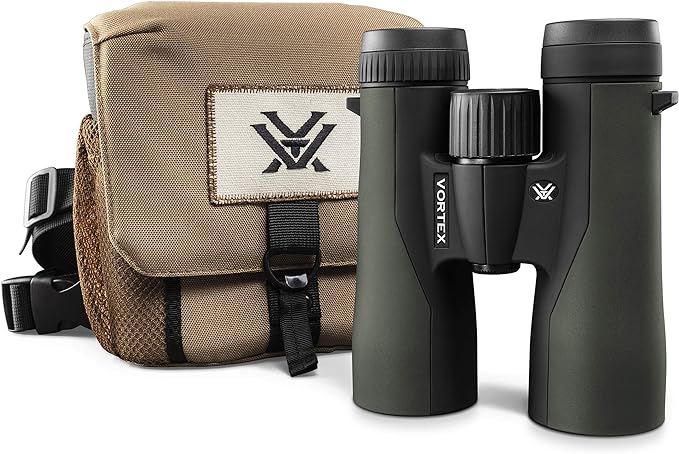
Select HD glass elements with fully multi-coated lenses deliver exceptional edge-to-edge sharpness, color fidelity, and light transmission in a compact roof prism design. Nitrogen-purged and O-ring sealed for waterproof, fog-proof performance in any conditions, with rubber armor for shock resistance and a secure grip. Tripod-adaptable and backed by Vortex's unlimited, unconditional, fully transferable lifetime VIP Warranty.
Check On AmazonIf you click this link and buy, we earn a commission at no additional cost to you.
Final Thoughts: Stop Over-Glassing the Woods
Archery hunting is an up-close, highly intimate game. Your gear needs to reflect that reality. Pushing through the woods with an oversized, overpowering optic is like trying to use a sledgehammer for finish carpentry.
Drop the magnification down to 8x. Prioritize a wide field of view so you do not lose a moving animal in the trees. Shed the extra ounces by choosing a 32mm or even 25mm objective lens if you spend all your time in tight stands. When that critical moment arrives and you need one hand to hold your bow and the other to confirm a target moving through the brush, you will be incredibly glad you chose the smaller, smarter tool for the job.
If you have figured out exactly which size profile fits your hunting style, below are the specific models I consistently recommend in each category, based on how they actually perform in the woods.
FAQs
🏹 What is the best magnification for bow hunting?
An 8x or 7x magnification is ideal for archery hunting. Anything higher, like a 10x, provides a field of view that is too narrow for tracking moving animals at close range in the woods.
🦌 Should I carry binoculars and a rangefinder?
Yes, they serve completely different purposes. Binoculars are used to find animals, monitor their movement, and check for clear shooting lanes. The rangefinder is only used at the very end to confirm the exact yardage for your pin.
🎒 Are compact binoculars good for early morning light?
A quality 8×32 compact performs very well in typical hunting light. While an 8×42 will give you a slightly brighter image during the first five minutes of legal light, the 8×32 is more than sufficient for most hunters in the timber.
👓 Can I use my rifle hunting binoculars for archery?
You absolutely can, but you might find standard 10×42 rifle optics heavy and bulky in a tight stand. They also require more movement to stabilize, which can easily give away your position to a close-range deer.